

Introduction: Why the Material is the Heart of the Seals
In the world of engineering, few components are as fundamental yet as complex as the industrial seals. At its core, a seal is a device engineered to prevent the passage of fluids and contaminants between two surfaces. This simple yet critical function underpins safety, efficiency, and reliability in countless applications, ranging from aerospace to pharmaceuticals. But what truly defines a seal’s capability? While design and geometry are important, the performance of any seal ultimately comes down to one key factor: the sealing material it is made from.
The material is the heart of the seal. It dictates how rubber seals, PTFE seals, or metal seals will respond to extreme temperatures, aggressive chemicals, high pressures, and constant mechanical stress. A seal made from the wrong material will not just fail—it can cause costly downtime, equipment damage, and serious safety hazards. Therefore, understanding the properties of different sealing materials is not merely an academic exercise; it is essential for designing and maintaining reliable machinery.
This guide provides a deep dive into the major families of sealing materials used in modern industrial seals. We explore the strengths and limitations of elastomers, fluoropolymers, engineering plastics, and metals. By understanding these materials, engineers can make informed decisions when selecting a seal for any application. As a trusted partner in sealing technologies, QZSEALS leverages extensive expertise in material science to provide both standard and customized solutions, ensuring rubber seals or advanced industrial seal is perfectly matched to its operational environment.
Table of Contents
- 1. Chapter 1: Elastomers (Rubbers) – The Foundation of Flexibility
- 2. Chapter 2: Fluoropolymers – Unmatched Chemical Resistance
- 3. Chapter 3: High-Performance Engineering Plastics
- 4. Chapter 4: Metal Seals – For the Most Extreme Environments
- 5. Chapter 5: The Art of Material Selection – A Practical Guide
- 6. Conclusion: The Right Material Makes the Difference
Chapter 1: Elastomers (Rubbers) – The Foundation of Flexibility
Elastomers, commonly referred to as rubbers, are the workhorses of the industrial seals world. Their defining characteristic is elasticity—the ability to be deformed under force and then return to their original shape. This property makes them ideal for creating a tight barrier when compressed into a groove. Common rubber seals are found in millions of applications.
Nitrile (NBR)
- Properties: Nitrile is the most widely used and cost-effective sealing elastomer. Its main advantage is excellent resistance to petroleum-based oils, fuels, and hydraulic fluids. It also has good abrasion and tear resistance.
- Common Applications: Nitrile is the standard choice for general-purpose O-rings, gaskets, and oil seals in the automotive and industrial sectors. The simple and effective TC oil seal is frequently made from FKM rubber.
- Limitations: Nitrile has poor resistance to weathering, sunlight (UV), and ozone. Its temperature range is typically limited to -40°C to 120°C (-40°F to 250°F).
Fluoroelastomer (FKM)
- Properties: Commonly known by the trade name Viton®, FKM is a high-performance elastomer. It is prized for its exceptional resistance to high temperatures (up to 200°C / 400°F) and a broad range of chemicals, oils, and fuels.
- Common Applications: FKM is used in demanding applications where other elastomers would fail. This includes automotive fuel systems, high-temperature engine metal with rubber seals like the crankshaft seal, chemical processing equipment, and aerospace applications.
- Limitations: FKM is significantly more expensive than NBR and has poor performance at very low temperatures.
Silicone (VMQ)
- Properties: Silicone stands out for its vast operating temperature range, remaining flexible from as low as -60°C up to 230°C (-75°F to 450°F). It has excellent resistance to weathering, ozone, and UV light, and is physiologically inert.
- Common Applications: Due to its clean nature, silicone is widely used in the food & beverage and pharmaceutical industries. Its wide temperature range also makes it a good choice for static rubber seals in aerospace applications or as the core of Encapsulated O-Rings.
- Limitations: Silicone has poor tensile strength and low abrasion resistance, making it unsuitable for most dynamic sealing applications.
Ethylene Propylene Diene Monomer (EPDM)
- Properties: EPDM’s primary strengths are its outstanding resistance to environmental factors like ozone, sunlight, and weathering. It is also highly resistant to water, steam, and automotive brake fluid.
- Common Applications: This material is a top choice for outdoor applications, such as a car’s door weather seal, window rubber seals, and in water and steam systems. Its chemical resistance profile makes it suitable for certain pump seals handling water-based fluids.
- Limitations: EPDM has very poor resistance to all petroleum-based products (oils, greases, and fuels). Using it in a petroleum environment will cause it to swell and rapidly degrade.
By understanding these materials, engineers can make informed decisions when selecting a seal for any application. For further insights on industrial seal materials and advanced solutions, see Freudenberg Sealing Technologies – Modified Sealing Solutions.
Chapter 2: Fluoropolymers – Unmatched Chemical Resistance and Low Friction
Fluoropolymers are a family of plastics that contain fluorine atoms. This chemical structure gives them a unique set of properties, most notably an almost universal chemical inertness and an extremely low coefficient of friction.
PTFE (Polytetrafluoroethylene)
- Properties: PTFE is a remarkable material. It is resistant to nearly all industrial chemicals, has one of the lowest friction coefficients of any solid, and has a very wide service temperature range.
- Design Considerations: Unlike elastomers, PTFE is a rigid plastic. It is not elastic and will not spring back into shape after being compressed. It is also prone to “creep” or cold flow under pressure.
- Common Applications: PTFE’s properties make it an excellent problem-solver. It is machined into PTFE gaskets for chemical pipelines and is used as the primary sealing element in PTFE oil seals for high-speed shafts. It is the jacket material of choice for nearly all spring energized seals, where a metal spring provides the energy that the rigid PTFE lacks. It is also available as a PTFE cord for creating custom-sized static gaskets.
FEP and PFA
- Properties: FEP (Fluorinated Ethylene Propylene) and PFA (Perfluoroalkoxy) are cousins of PTFE. They share its excellent chemical and temperature resistance but have a key difference: they can be melt-processed.
- Common Applications: The most significant application for FEP and PFA in the sealing world is as the outer jacket for encapsulated O-rings. This innovative design combines the energizing, elastic properties of a rubber core with a seamless, protective outer layer of chemically inert FEP or PFA.
Chapter 3: High-Performance Engineering Plastics
Engineering plastics are a step up from common commodity plastics. They are designed to offer superior mechanical strength, dimensional stability, and temperature resistance, often bridging the performance gap between plastics and metals.
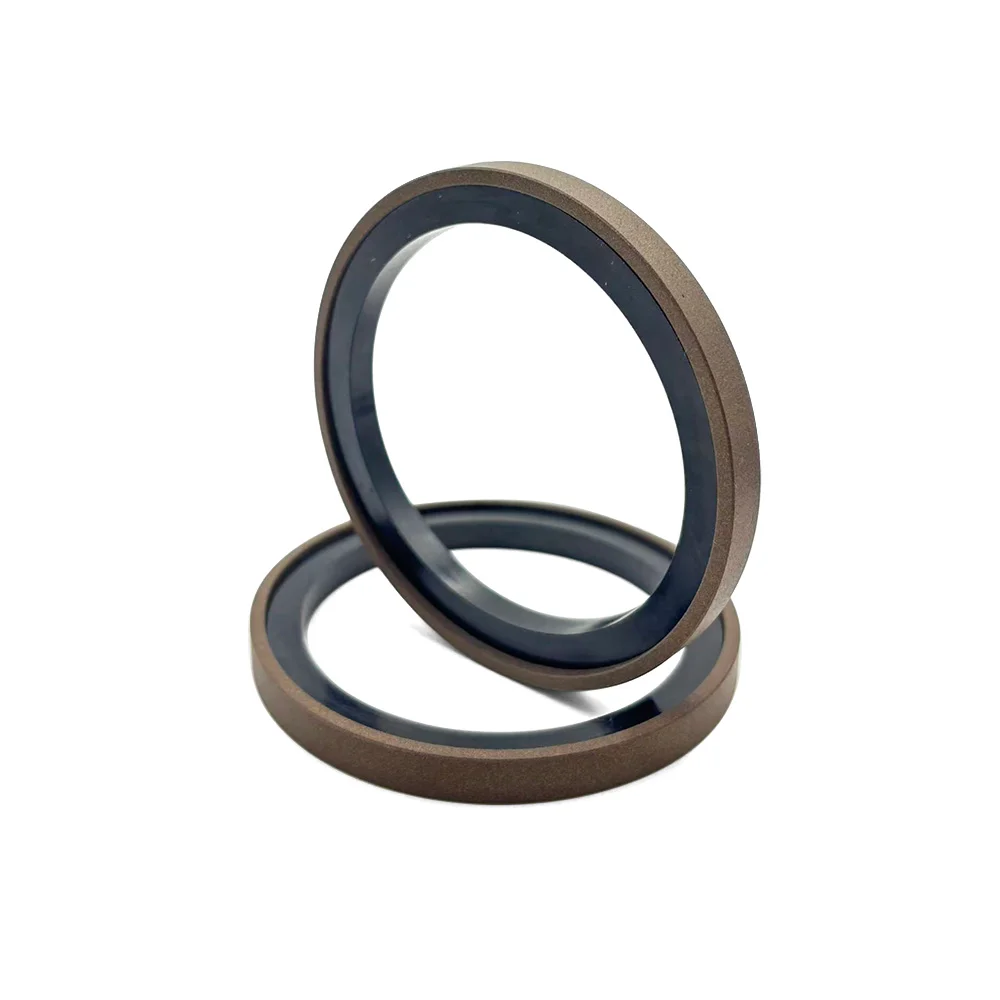
PEEK (Polyether Ether Ketone)
- Properties: PEEK is one of the highest-performing thermoplastics available. It maintains its excellent mechanical strength, stiffness, and wear resistance even at very high temperatures (continuous use up to 250°C / 480°F). It also has superb chemical resistance.
- Common Applications: Due to its robustness, PEEK is used for components that face extreme stress. It is an ideal material for backup rings in high-pressure hydraulic systems, as valve seats, and for critical components in compressors. The PEEK Valve Plate is a perfect example, as it must withstand high temperatures and repeated mechanical impacts.
- Limitations: The primary limitation of PEEK is its high cost. Its use is generally reserved for applications where no other plastic can perform.
Polyurethane (PU)
- Properties: Polyurethane is a unique polymer that combines the elasticity of rubber with the toughness and durability of metal. It is known for its exceptionally high abrasion resistance, high tensile strength, and excellent resistance to extrusion under pressure.
- Common Applications: PU is the premier material for heavy-duty dynamic sealing. It is the material of choice for the most demanding hydraulic seals, including piston seals, rod seals, and wiper seals used in construction, mining, and industrial machinery.
PET (Polyethylene Terephthalate)
- Properties: PET is a strong, stiff, and hard plastic with excellent dimensional stability and low moisture absorption. It offers good chemical resistance and low friction.
- Common Applications: PET is often used for precision mechanical components, such as bearings, gears, and insulators. In the context of industrial components, its properties make it suitable for applications like PET Balls, which can be used in check valves or as mixing media.
Chapter 4: Metal Seals – For the Most Extreme Environments
When an application involves conditions so extreme that any polymer would melt, shatter, or degrade, engineers turn to metal seals. These industrial seals are the ultimate solution for the most demanding sealing challenges.
When to Choose a Metal Seal
Metal seals are required when one or more of the following conditions are present:
- Ultra-High Temperatures: From 300°C (600°F) up to 1000°C (1800°F) or more.
- Cryogenic Temperatures: Approaching absolute zero.
- Extreme Pressures or Ultra-High Vacuum: Where outgassing from polymers would be an issue.
- High Radiation: In nuclear applications where radiation would destroy polymer chains.
Types of Metal Seals and Materials
- Metal O-Rings (Hollow): A common design, the hollow metal O-ring is a tube bent into a circle and welded. When compressed, the tube deforms, creating a very high-stress contact point with the flange surfaces for a robust seal.
- Common Materials: The choice of metal depends on the application. Stainless steels are common for general use. For the highest temperatures and most corrosive environments, nickel-based superalloys like Inconel® are used. Explore the options at our metal sealing rings category page.
Chapter 5: The Art of Material Selection – A Practical Guide
Choosing the right sealing materials involves a careful balancing act between performance requirements, service life, and cost. A systematic approach is crucial. The industry-standard STAMPS method is an excellent framework for this process:
- S – Size: The physical dimensions required for the seal.
- T – Temperature: The minimum and maximum operating temperatures.
– A – Application: The specifics of the application (e.g., static, dynamic, rotary, reciprocating).
- M – Media: The fluids, gases, or chemicals the seal will contact.
- P – Pressure: The operating pressure, including any potential spikes or vacuum conditions.
- S – Speed: The surface speed for any dynamic seals.
By carefully evaluating each of these parameters, an engineer can narrow down the potential material candidates and select the one that offers the optimal blend of properties for the job. For example, a high-pressure, dynamic hydraulic application (high P, high A) with petroleum oil (M) and moderate temperature (T) would strongly point toward Polyurethane (PU). A static, high-temperature (high T), chemically aggressive (M) application would point toward a PTFE Gasket or a Metal Seal.
Need Help Selecting a Material?
The world of sealing materials is complex. Our engineering team is here to help. Contact us with your application parameters, and we will provide a tailored recommendation to ensure optimal performance and reliability. Let QZSEALS be your material science partner.
Conclusion: The Right Material Makes the Difference
The journey through the world of sealing materials reveals a clear truth: there is no single “best” material. The optimal choice is always a function of the specific application. A seal’s ability to perform its duty reliably over its expected lifespan is a direct result of the careful selection of its core material.
This selection process requires a deep understanding of the interplay between temperature, pressure, media, and motion. At QZSEALS, our core technology and expertise are rooted in this understanding. We provide our partners with advanced knowledge in rubber, silicone, plastic, and metal sealing materials, offering seals technical support in material selection, product design, and maintenance. By leveraging our experience, you can be confident that you are not just buying a seal, but a reliable, engineered solution built from the perfect material for the job. You can explore our full range of material options on our sealing material page.