

Introduction: Deconstructing the Deceptively Simple “Sealing Rings”
In the lexicon of mechanical engineering, few terms are as ubiquitous and broadly encompassing as sealing rings. Although often perceived as a simple geometric component, the sealing rings represent a vast universe of sealing ring materials, configurations, and performance categories. From everyday elastomeric O-rings used in household fixtures to advanced metallic sealing technology found in aerospace turbines, the term “sealing rings” encompasses an extensive taxonomy of mechanical sealing applications.
This wide-ranging classification necessitates a structured approach to understanding. Simply viewing sealing rings as “circular seal” is insufficient for any serious engineering endeavor. A deeper knowledge is required to navigate the complexities of material selection, design configuration, and application-specific performance. A failure to appreciate the nuanced differences between a hydraulic Piston Seals and a compressor piston ring, or between a standard O-ring and an Encapsulated O-Ring, can lead to incorrect specification, premature failure, and significant system integrity issues. This guide provides a definitive taxonomy of the sealing rings. We will classify and dissect the major families of these critical components, exploring their underlying principles, examining their diverse forms, and analyzing the material science that governs their performance. The objective is to build a comprehensive framework for understanding, selecting, and successfully implementing the correct sealing rings for any given application, from the most basic to the most extreme.
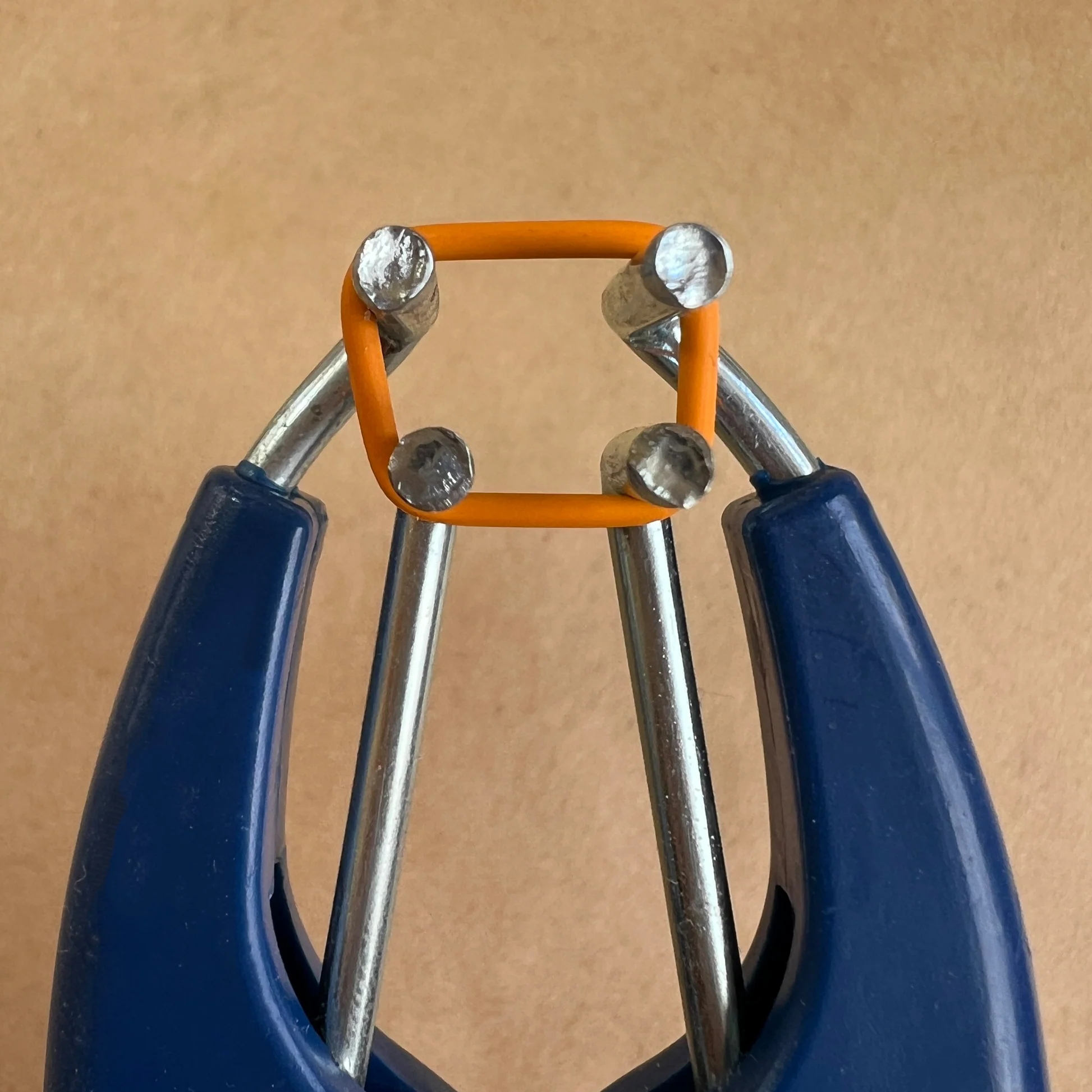
The Universal Principle: Why the Ring Dominates Sealing Geometry
The prevalence of the ring shape in sealing technology is not accidental; it is a direct consequence of fundamental physics and the common geometries of mechanical systems. The vast majority of sealing applications involve containing pressure within or around cylindrical components like shafts, pistons, rods, and pipes. The ring is the natural geometric solution to interface with these circular cross-sections, offering several intrinsic advantages.
- Uniform Force Distribution: When a ring is installed in a groove and compressed (either radially or axially), the forces are distributed evenly around its circumference. This uniform loading is critical for creating a consistent sealing line without high-stress points that could lead to localized failure or leakage.
- Pressure Energization: The circular geometry is perfectly suited to the principle of pressure energization. System pressure acting on one side of a sealing ring forces it more tightly against the sealing surfaces on its other sides. For example, pressure inside a cylinder pushes a piston ring outwards against the bore, and an O-ring outwards into the corners of its groove. This self-sealing mechanism allows the ring to adapt to increasing pressure, enhancing its effectiveness.
- Efficiency of Material: The ring shape is an efficient use of material, providing the maximum sealing perimeter for a given amount of material in a cylindrical application.
- Simplicity of Gland Design: The grooves required to house sealing rings are typically simple circular channels, which are relatively easy to machine with high precision using standard turning and boring operations.
Whether it is the squeeze on an elastomeric O-ring or the compressive load on a metallic gasket, the fundamental goal is the same: to utilize the unique properties of the ring shape to generate a continuous, uninterrupted barrier against the escape of fluid or the ingress of contaminants. The diversity of sealing rings arises from the different sealing ring materials and design strategies used to achieve this goal under a vast spectrum of operating conditions.
A Primary Classification: The Three Families of Sealing Ring Materials
The most logical way to begin classifying the vast world of sealing rings is by their primary material of construction. The material dictates the ring’s fundamental properties—its elasticity, temperature range, chemical resistance, and strength—and thus its suitability for a given application. We can group virtually all sealing rings into three major families: elastomeric, polymeric, and metallic.
1. The Elastomeric Sealing Rings Family
This is the largest and most common family, characterized by materials that exhibit rubber-like elasticity. They seal by being squeezed into a gland, storing mechanical energy like a spring to exert a continuous sealing force. They are highly conformable and can seal effectively on surfaces with minor imperfections. Their main limitation is their relatively narrow range of temperature and chemical compatibility compared to other families.
2. The Polymeric Sealing Rings Family
This family consists of rings made from more rigid plastics and fluoropolymers, such as PTFE, PEEK, and Polyurethane. These materials are not true elastomers and have limited elasticity. Therefore, they often rely on system pressure or mechanical energizers (like springs) to create a sealing force. Their key advantages are extremely low friction, outstanding chemical resistance, high strength, and a wide temperature range. They are the problem-solvers of the industrial world.
3. The Metallic Sealing Rings Family
This is the most robust family, designed for the ultimate extremes of temperature, pressure, and radiation where no polymer can survive. These rings are made from materials like stainless steel and high-nickel alloys. They have very little conformability and require high clamping loads and exceptionally fine hardware finishes to function. They offer unmatched durability and performance in the most demanding environments.
In-Depth Analysis: The Polymeric Sealing Rings Family
Polymeric rings represent a significant step up in performance from standard elastomers and are central to modern industrial machinery, especially in hydraulic, pneumatic, and compressor systems. Polymeric sealing solutions leverage engineered plastics and fluoropolymers to achieve low friction, high wear resistance, and broad chemical inertness.
1. Hydraulic and Pneumatic Rings
This is the primary domain of polymeric sealing rings, where they are used in a system-based approach within cylinders and actuators.
- Piston Rings (Glyd Rings & Compact Seals): Unlike the simple squeeze of an O-ring, these are precision-profiled rings designed for dynamic sealing on a piston. The GSF Piston Seal (Glyd Ring) is a classic example, consisting of a filled PTFE ring that provides the low-friction, wear-resistant sealing surface against the cylinder bore. For more information on industrial sealing solutions and materials, engineers can refer to SKF Sealing Solutions here, which provides detailed data on polymeric, elastomeric, and metallic seals used in hydraulic and rotary applications.It is energized by a separate O-ring that provides the elasticity the PTFE lacks. More advanced versions, like the SPG Piston Seal and the heavy-duty SPGW Piston Seal, are multi-part compact rings that often integrate anti-extrusion elements and guide rings into a single component for high-pressure applications.
- Rod Seal Rings (U-Cups): These rings, typically made from high-performance Polyurethane (PU), are the primary external seal in a cylinder. Their U-shaped cross-section is designed to be pressure-energized, creating a tight seal against the reciprocating rod. Their primary material, PU, offers exceptional abrasion and tear resistance, which is critical for a long service life.
- Wiper Rings (Scrapers): Positioned at the exterior of the rod gland, these rings serve the critical function of scraping contaminants from the rod upon retraction. They are typically made from tough Polyurethane and are the first line of defense in protecting the entire hydraulic system from abrasive particles.
2. Guiding and Support Rings
While not primary sealing elements, these polymeric rings are essential for the proper function of any sealing system.
- Wear Rings & Guide Rings: These are solid rings made from materials like filled PTFE, POM, or fabric-reinforced composites. They are placed on the piston and in the rod gland to absorb side loads and prevent metal-to-metal contact between moving parts. By keeping the piston and rod perfectly centered, they maintain a consistent extrusion gap for the primary seals, which is crucial for preventing seal failure at high pressures.
- Backup Rings: These are thin, hard rings, often made from contoured PTFE or a hard thermoplastic, installed in the groove next to an elastomeric O-ring. Their sole purpose is to prevent the O-ring from being extruded into the clearance gap under high pressure. They provide no sealing function themselves but act as a critical support structure.
3. Specialized Polymeric Rings
- PTFE Jacket Rings for Spring Energized Seals: The outer component of a spring energized seal is a precision-machined polymeric ring. This jacket provides the chemical, thermal, and frictional properties for the seal, while the internal spring provides the energy. This demonstrates the use of a polymeric ring as one part of a more complex composite seal.
- Ring Gaskets (PTFE): While high-performance gaskets can be any shape, many, like those used on standard pipe flanges, are ring-shaped. A PTFE Gasket in a ring form is the go-to solution for sealing aggressive chemicals in flanged connections.
In-Depth Analysis: The Elastomeric Sealing Rings Family
This family represents the most widely recognized type of sealing rings. Their defining characteristic is high elasticity, allowing them to conform easily to hardware surfaces and store energy when compressed, providing a reliable sealing force.
1. The O-Rings: The Archetypal Sealing Rings
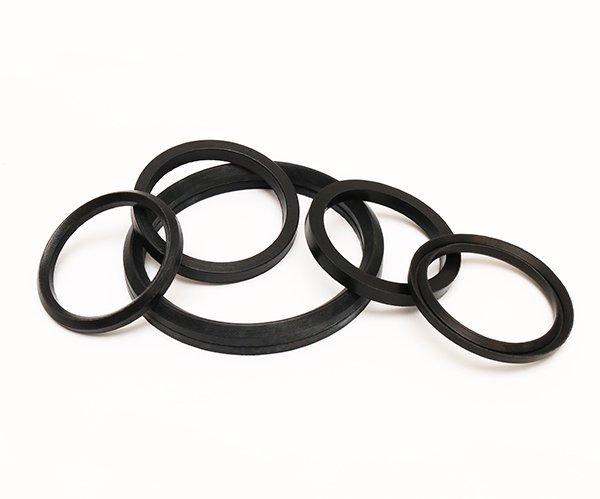
The O-Rings are the most prevalent sealing rings in the world due to its simplicity, effectiveness, and low cost. It is a solid elastomer loop with a circular cross-section. It seals in two ways: initially, the “squeeze” from its installation in a smaller groove creates a seal. Then, system pressure further energizes the ring, pushing it into the gland’s corners to create an even tighter barrier. O-rings are used in countless static and dynamic applications, from simple pipe fittings to complex hydraulic actuators. Their performance is defined by the chosen elastomer compound (e.g., NBR, FKM, EPDM), which must be matched to the application’s temperature and media.
2. Advanced Elastomeric Variants
- Encapsulated O-Rings: For applications with aggressive chemicals that would degrade a standard elastomer, the Encapsulated O-Ring is a highly effective solution. It features a core of a standard elastomer (like FKM or Silicone) to provide the elasticity, which is then seamlessly sheathed in a thin, protective jacket of FEP or PFA fluoropolymer. This construction delivers the chemical inertness of PTFE combined with the live, resilient sealing force of an elastomer.
- X-Rings (Quad-Rings): An X-ring is an evolution of the O-ring, featuring a four-lobed cross-section. This design offers several advantages over a standard O-ring, particularly in reciprocating applications. The four-lobed profile provides greater stability in the groove, making it highly resistant to the spiral failure (twisting) that can plague O-rings. It also creates two sealing points per side for enhanced redundancy.
In-Depth Analysis: The Metallic Sealing Rings Family
When operational conditions surpass the limits of all polymers, the metallic sealing rings family provides the ultimate solution. These rings are designed for the most extreme applications and demand a high level of precision in both their manufacture and the hardware they are installed into.
1. Metal O-Rings
The hollow metal O-ring is the direct counterpart to the elastomeric O-ring, designed for extreme service. It is made from a metal tube (stainless steel, Inconel®) that is formed into a ring and welded. The hollow cross-section allows it to compress and act like a spring. To enhance their sealing ability on hardware surfaces that are not perfectly smooth, they are often plated with a soft, conformable metal like silver or nickel. They are the standard choice for sealing in ultra-high vacuum chambers, nuclear applications, and gas turbines where temperatures and radiation levels are extreme.
2. Compressor Piston Rings
In many large, oil-lubricated reciprocating compressors, the piston rings are made of metals like cast iron or bronze. Similar to their polymeric counterparts, they are split to allow for installation and thermal expansion. They seal by conforming to the cylinder bore under their own tension and the force of gas pressure. Their metallic nature allows them to withstand the high temperatures and pressures of gas compression in a lubricated environment.
3. The Spring as Sealing Rings
In a fascinating application of the term, the energizing springs within other seals are themselves high-performance metallic rings. The Helical Spring or the meander V-spring used in a spring energized seal is a continuous metal ring designed to provide a specific mechanical force. While it doesn’t directly contact the fluid, its integrity as a force-generating ring is what enables the entire polymeric sealing rings to function.
Selection Criteria: A Systematic Approach to Choosing the Right Ring
Given the vast diversity, selecting the correct sealing rings require a systematic evaluation of the application’s demands. The STAMPS framework provides an excellent checklist for this process.
- Size: The dimensions of the ring and its corresponding groove are paramount. This determines the initial squeeze (for elastomers) or fit (for polymers) and is critical for proper function.
- Temperature: The full operating temperature range, including any thermal cycling, will be a primary filter. It will determine whether an elastomer, a polymer, or a metal is required.
- Application: Is the ring static or dynamic? If dynamic, is it reciprocating or rotary? A ring designed for static face sealing will fail in a high-speed reciprocating rod application. The design of the ring’s profile must match the application’s motion.
- Media: The chemical compatibility of the ring’s material with the fluid or gas being sealed is non-negotiable. This includes not just the primary process fluid but also any cleaners or lubricants in the system.
- Pressure: The maximum system pressure will dictate the ring’s required strength and extrusion resistance. High pressures may necessitate a shift from a soft elastomer to a hard polymer or require the use of support components like backup rings.
- Speed (for dynamic rings): The surface speed in a dynamic application is a critical factor. High speeds generate significant frictional heat, often requiring low-friction polymeric rings like PTFE instead of elastomers.
Conclusion: A Universe of Solutions in a Simple Shape
The term “sealing rings” is a gateway to a universe of highly specialized engineering solutions. From the resilient elasticity of the O-ring to the strength and stability of the polymeric piston ring and the unyielding durability of the metallic O-ring, each design represents a specific answer to a unique set of challenges. The simple, elegant geometry of the ring has been adapted, modified, and enhanced with advanced materials and design principles to create a component that is fundamental to nearly every aspect of modern technology.
A successful outcome in any sealing application hinges on recognizing this diversity and moving beyond a generic understanding. It requires a detailed analysis of the operational environment and a precise matching of the application’s demands with the specific capabilities of a chosen sealing rings family and design. By embracing this taxonomic approach, engineers and designers can confidently select the right component, ensuring the safety, efficiency, and long-term reliability of their mechanical systems.