

Introduction: The Misconception of the “Simple” Static Seal
The Core Principles of Static Sealing: Generating and Maintaining Stress
Regardless of the seal’s type or material, its ability to function is governed by a fundamental principle of physics: the generation of a contact stress at the sealing interface that is greater than the pressure of the fluid being contained. This “seating stress” is the compressive force that causes the seal material to flow into the microscopic imperfections of the hardware surfaces, closing off any potential leak paths. Achieving a successful static seal is a two-part challenge: first, generating sufficient initial seating stress, and second, maintaining that stress over time and through changing conditions.
1. Initial Seating Stress
This initial stress is almost always generated by mechanical loading, typically through the tightening of bolts on a flange. The applied torque on the bolts translates into a clamping force, which compresses the seal. The seal material must be soft and compliant enough to conform to the surface irregularities under this load, but also strong enough to resist being crushed or irreversibly damaged.
2. Material Conformability and Surface Finish
The effectiveness of the seal is a direct interplay between the seal’s material properties and the hardware’s surface finish. A rougher flange surface, with deeper peaks and valleys, requires a softer, more conformable seal material (like a soft elastomer or graphite) to fill these voids. Conversely, a very hard seal, such as a solid metal ring, requires exceptionally smooth and flat mating surfaces to achieve a seal, as it has very little ability to flow into imperfections.
3. Stress Retention and Material Recovery
Generating the initial stress is only half the battle. Over time, all materials under a constant compressive load will experience some degree of stress relaxation or creep. This is the tendency of a material to deform permanently, causing a reduction in the “push-back” force it exerts on the flanges. Furthermore, operational factors like thermal cycling (heating and cooling) cause the hardware and the seal to expand and contract. A successful seal material must possess good recovery or resilience, allowing it to adapt to these changes and maintain a continuous sealing force. A material with poor compression set (the permanent deformation after a compressive load is removed) will quickly lose its sealing ability in a cycling application.
The Spectrum of Static Sealing Solutions: From Gaskets to Advanced O-Rings
The vast range of static sealing applications has led to a wide array of solutions, each suited to different levels of pressure, temperature, and media compatibility. The most common of these are gaskets and O-rings.
1. Gaskets: The Ubiquitous Flange Sealers
A gasket is a mechanical seal that fills the space between two or more mating surfaces, generally to prevent leakage from or into the joined objects while under compression. They are the workhorses of piping, pressure vessels, and machinery housings.
- Soft-Cut Gaskets: These gaskets are typically cut from sheet materials such as elastomeric rubber, compressed non-asbestos fiber (CNAF), or flexible graphite. Among them, non-asbestos gaskets made from CNAF materials are widely used in modern industrial sealing because they provide reliable performance without the health risks associated with traditional asbestos products. Soft-cut gaskets are highly conformable and can adapt well to minor flange imperfections. They also require relatively low bolt loads to achieve an effective seal, which makes them particularly suitable for low-pressure applications and equipment with less-than-perfect flange surfaces. Because of these characteristics, Non-asbestos gaskets are commonly used in pipelines, pumps, valves, and general industrial equipment where dependable static sealing is required.
- Composite Gaskets (e.g., spiral wound): These are a more robust design, consisting of a V-shaped metal strip spirally wound with a softer filler material like graphite or PTFE. This construction gives them the strength of a metal gasket combined with the sealing properties of the soft filler, making them suitable for a very wide range of pressures and temperatures.
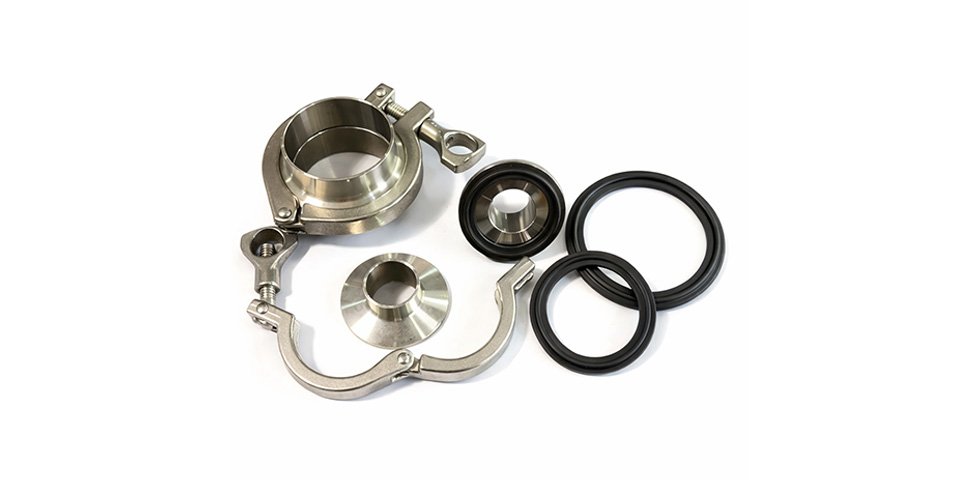
- PTFE Gaskets: For applications requiring exceptional chemical resistance, PTFE gaskets are are an outstanding choice. Polytetrafluoroethylene is inert to nearly all industrial chemicals and offers a wide service temperature range, making it highly suitable for aggressive processing environments. However, virgin PTFE is prone to creep under long-term load, so filled PTFE grades (such as glass-filled or silica-filled PTFE) are often used to improve rigidity and creep resistance, particularly in applications with fluctuating temperatures and pressures. In sealing systems where additional support is required, components such as spiral cut PTFE back up rings are frequently used alongside elastomer seals to prevent extrusion and enhance overall sealing stability under pressure. Together, these PTFE-based sealing solutions are widely applied in the chemical processing, pharmaceutical, and food and beverage industries, where reliability and chemical compatibility are critical.
2. O-Rings in Static Applications
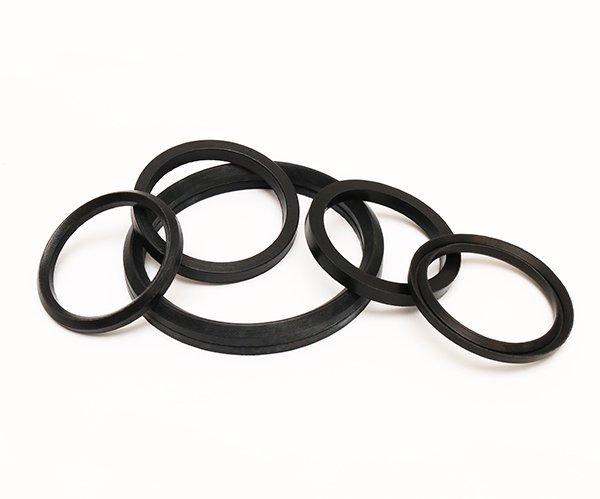
While famous for their dynamic capabilities, O-rings are one of the most reliable and effective seals for static applications when designed correctly, and their design principles are widely standardized in international sealing specifications such as ISO 3601. They are typically installed in a precisely machined groove and can be used in two primary static configurations:
- Static Axial Seal (Face Seal): The O-ring is compressed in a groove on the face of a flange, sealing against a flat mating surface. This is a very common and reliable method for sealing covers, caps, and flanges.
- Static Radial Seal: The O-ring is compressed radially in the groove, sealing against the inner or outer diameter of a cylinder and bore. This is used to seal plugs, ports, and nested cylindrical components.
The key to a successful static O-ring seal is the groove design, which must provide the correct percentage of “squeeze” or compression on the O-ring’s cross-section (typically 15-30%) without overfilling the groove. For applications with aggressive chemicals that would attack standard elastomers, encapsulated O-rings provide an ingenious solution. They consist of an elastomeric core (like FKM or Silicone) for resilience, which is seamlessly encapsulated in a thin jacket of FEP or PFA fluoropolymer. This provides the chemical inertness of PTFE with the energizing properties of an elastomer, creating a highly effective static seal for challenging media.
Advanced Solutions: Sealing at the Extremes of Performance
When the application’s demands—in terms of temperature, pressure, or media—exceed the capabilities of conventional gaskets and elastomers, a more advanced class of static seals is required. These are typically composite or all-metal constructions designed for ultimate reliability.
1. Spring Energized Seals for Static Applications
While often associated with dynamic applications, spring energized seals are exceptional problem-solvers in challenging static face seal applications. They consist of a precision polymer jacket, usually made from a PTFE-based compound, and a metallic spring energizer.
Why use a spring energized seal in a static application?
- Extreme Temperatures: In cryogenic applications, elastomers become brittle and lose their ability to seal. In high-temperature service, they degrade. The PTFE jacket and metal spring maintain their properties over a vast temperature range.
- Hard Vacuum: In vacuum applications, the outgassing of elastomers can be a problem. Specially formulated PTFE compounds have very low outgassing properties. The spring ensures a positive sealing force even without system pressure.
- High Pressure with Thermal Cycling: In systems that experience wide temperature swings, the differential expansion and contraction between the hardware and the seal can cause a standard seal to leak. The spring provides a live, resilient force that constantly adapts to these changes, maintaining seal integrity. A meander V-spring is often used in these seals to provide a consistent and responsive load.
- Media Incompatibility: The PTFE jacket offers near-universal chemical resistance, far surpassing even the most advanced elastomers.
2. Metal Seals: The Final Frontier of Static Sealing
For the most extreme environments—those involving ultra-high temperatures, intense radiation, corrosive chemicals, and ultra-high vacuums where no polymer can survive—all-metal seals are the only viable solution. They offer a level of performance and durability that is unmatched, but they demand a correspondingly high level of precision from the mating hardware.
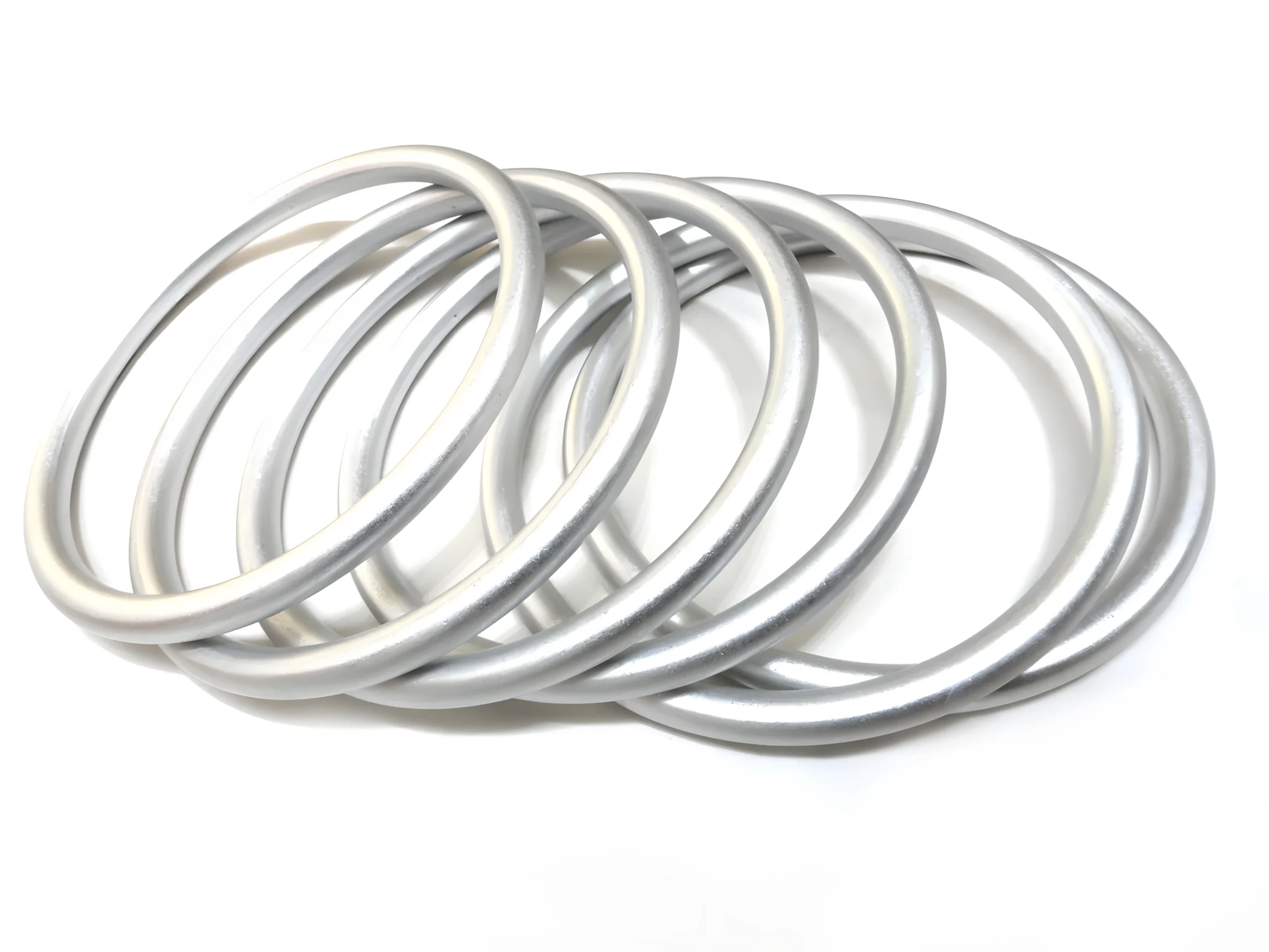
- Hollow metal O-rings: These are the most common type of metal O-ring seal used for high-demand static applications. They are constructed from metal tubing—typically stainless steel or a high-temperature nickel alloy like Inconel®—which is bent into a ring and welded. The hollow cross-section allows the ring to act like a spring, providing the resilience needed to maintain a reliable seal under demanding conditions. To improve sealing performance on less-than-perfect surfaces, they are often coated or plated with a softer metal such as silver, nickel, or PTFE. When compressed between two flanges, the soft plating flows into microscopic surface imperfections while the parent metal provides the structural “push-back” force. Because of this design, high-pressure metal O-ring seals are widely used in critical environments such as aerospace systems, semiconductor equipment, and other high-performance industrial applications. These high-temperature metal O-ring seals can operate from cryogenic temperatures to over 800°C (1500°F), making them suitable for extreme sealing conditions.
- Metal C-Rings and E-rings: These are other variations of spring-energized metal seals, where the cross-section is shaped like a “C” or an “E”. The open side of the “C” faces the system pressure, allowing the pressure to energize the seal and increase the sealing force against the flanges. They generally require less clamping force than hollow O-rings but have a more limited pressure capacity.
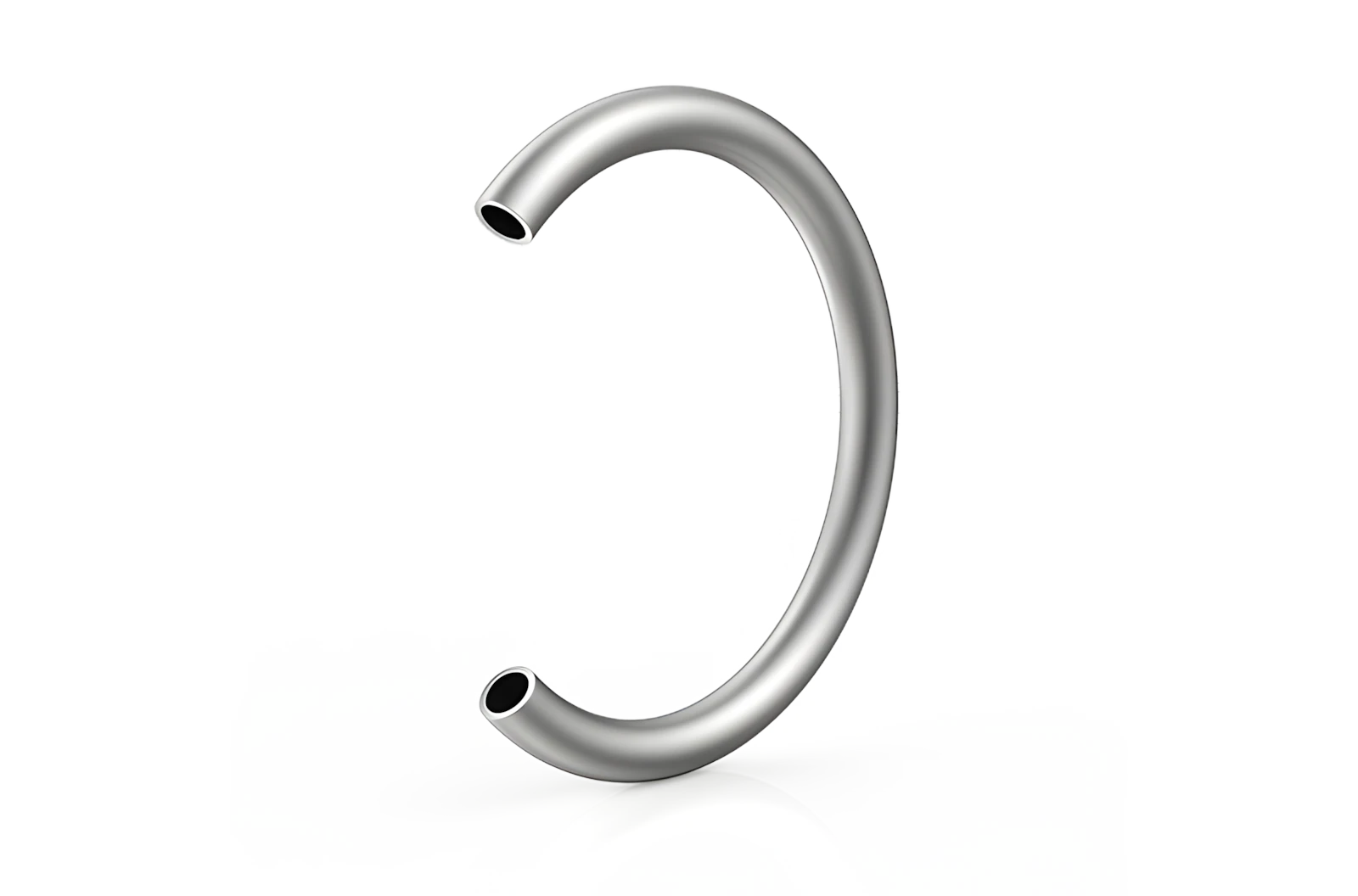
The successful implementation of any metal seal is critically dependent on the hardware. Flange surfaces must be exceptionally smooth, flat, and free of any radial scratches. The clamping force provided by the bolting must be sufficient and uniform to deform the metal seal into its sealing configuration.
Critical Design Parameters for Achieving High-Integrity Static Sealing
Achieving a reliable, leak-free static seal, especially in a critical application, is not just about choosing the right product. It is about a holistic design process that considers the entire bolted joint or gland as a complete system.
1. Hardware and Flange Design
- Surface Finish: As discussed, the required surface finish is dictated by the seal type. Soft gaskets can tolerate rougher surfaces (e.g., 3.2-12.5 µm Ra / 125-500 µin Ra), while metal seals demand extremely smooth finishes (e.g., 0.8 µm Ra / 32 µin Ra or better).
- Flatness and Rigidity: The flange surfaces must be flat and parallel to ensure uniform compression on the seal. The flanges must also be rigid enough to prevent “flange rotation” or “bowing,” a condition where the flanges bend under bolt load, concentrating the pressure on the outer edge of the seal and unloading the inner edge, creating a leak path.
- Alignment: Misaligned flanges can lead to uneven gasket compression and premature failure.
2. Bolt Load and Torque Control
The bolts are the engine that generates the sealing stress. Their importance cannot be overstated.
- Sufficient Seating Stress: The bolt load must be high enough to achieve the minimum required seating stress for the chosen seal material. This information is typically provided by the seal manufacturer. Under-loading is a primary cause of leaks.
- Avoiding Over-Compression: Conversely, excessive bolt load can crush or damage the seal, particularly softer gaskets or composite seals, leading to a loss of resilience and potential failure.
- Uniformity and Pattern: Torque must be applied uniformly across all bolts. A star or crisscross pattern should always be used to tighten the bolts in multiple, incremental steps to ensure the flange closes evenly and the seal is compressed uniformly. The use of a calibrated torque wrench is essential.
3. Managing System Dynamics
- Thermal Cycling: The designer must account for the different thermal expansion rates of the bolts, flanges, and the seal itself. During heat-up, bolts may expand more than the flange, reducing the load on the seal. High-temperature applications often require specialized bolting materials and may need procedures for “hot-torquing” to maintain the seal.
- Pressure Cycling and System Vibration: Fluctuating pressures and mechanical vibrations can cause micromovements in the flange joint, which can fatigue or fret the seal over time. A seal with good elastic recovery is crucial in these dynamic static applications to maintain a constant sealing force.
Conclusion: Engineering Certainty in a Static World
The humble static seal is a component of profound importance, forming the silent, unmoving barrier that ensures the safety, efficiency, and integrity of countless critical systems. The perception of simplicity fades away when faced with the demands of high pressure, thermal extremes, and aggressive media, revealing a complex field of engineering that requires a deep understanding of materials, mechanics, and system interactions. The journey from a simple cut gasket to a precision-engineered, silver-plated hollow metal O-ring is a journey across a vast spectrum of performance and precision.
Achieving high-integrity static sealing is the result of a deliberate, systematic approach. It begins with a rigorous analysis of the application’s demands, leads to an informed selection of the optimal sealing technology, and culminates in a meticulous design of the entire joint, from the flange finish to the bolt-tightening procedure. By affording static seals the same level of engineering respect and detailed attention as their dynamic counterparts, we can design and build systems that offer not just containment, but certainty.