


EPDM rubber, formally known as Ethylene Propylene Diene Monomer Rubber, is a synthetic elastomer widely recognized for its outstanding resistance to environmental ageing, heat, ozone, and weather exposure. For those asking what is EPDM rubber in an industrial context, it refers to a weather-resistant rubber material specifically developed for long-term performance in demanding environments. Since its commercial introduction in the early 1960s, EPDM has evolved into one of the most important rubber materials used in industrial sealing, construction, automotive, and infrastructure-related fields.
Unlike natural rubber, which is prone to degradation when exposed to ultraviolet radiation, oxygen, or ozone, EPDM is specifically engineered to maintain its elasticity and mechanical integrity over long service periods. This stability makes EPDM particularly suitable for demanding environments where long-term reliability is required and frequent replacement is not acceptable.
ASTM Classification and Molecular Structure
According to ASTM D1418, EPDM is classified as an M-class elastomer. This classification indicates a saturated polymethylene backbone, which is the molecular foundation behind many EPDM rubber properties, including excellent resistance to oxidative ageing, ozone, and UV exposure.
EPDM is synthesized through the copolymerization of three key monomers:
Ethylene, which contributes strength and thermal stability
Propylene, which improves flexibility and low-temperature performance
A diene monomer, which introduces reactive sites for crosslinking
The diene component is essential, as it allows EPDM to be vulcanized using sulfur-based curing systems. Common diene monomers include ethylidene norbornene (ENB), dicyclopentadiene (DCPD), and vinyl norbornene (VNB). By adjusting the type and content of the diene, manufacturers can precisely control curing speed, compression set, and long-term mechanical performance.
EPDM Polymer Variability and Formulation Flexibility
When explaining what is EPDM material from a technical and engineering perspective, it is important to understand that commercial EPDM polymers are available in a wide range of molecular weights and compositions. These variations are commonly expressed through Mooney viscosity values (ML(1+4) at 125 °C), ethylene content, diene content, and oil extension levels.
This formulation flexibility allows EPDM to be tailored for specific performance targets, such as:
Improved low-temperature flexibility
Enhanced heat resistance
Optimized compression set
Improved processing behavior for extrusion or molding
As a result, EPDM is not a single material but a family of elastomers, each designed to meet different technical and processing requirements.
Compounding Ingredients and Material Design
In real-world applications, EPDM rubber is always used in a compounded form. The base polymer is combined with various ingredients to achieve the required balance of mechanical strength, elasticity, and durability.
Typical EPDM rubber compounds may include:
Reinforcing fillers (e.g., carbon black) to improve tensile strength and abrasion resistance
Non-reinforcing fillers (e.g., calcium carbonate) for cost control and hardness adjustment
Plasticizers, often paraffinic oils, to enhance flexibility and processability
Stabilizers and antioxidants to improve resistance to ageing and thermal degradation
The selection and ratio of these components directly influence the final properties of the EPDM compound.
Vulcanization and Crosslinking Methods
Crosslinking is a critical step in transforming EPDM from a soft, thermoplastic material into an elastic rubber with permanent shape and strength.
The most common curing systems for EPDM include:
Sulfur vulcanization, offering good elasticity and cost efficiency
Peroxide curing, which provides improved heat resistance and lower compression set
Phenolic resin curing, used for high-temperature or specialty applications
In some industrial processes, high-energy radiation, such as electron beam curing, is employed, particularly in the production of EPDM foams, wire coatings, and cable insulation.
Each curing method affects heat resistance, compression set, and ageing performance differently, allowing EPDM compounds to be optimized for specific service conditions.
Mechanical Performance Overview
EPDM rubber exhibits a well-balanced set of mechanical properties that can be adjusted through formulation and curing techniques. Typical performance ranges include:
Hardness: approximately 30–90 Shore A
Tensile strength: up to 17 MPa
Elongation at break: typically 300% or higher
Density: adjustable from 0.90 g/cm³ to above 2.0 g/cm³
These properties allow EPDM to perform reliably in both static and moderately dynamic sealing environments.
Thermal Behavior and Environmental Resistance
One of EPDM’s defining characteristics is its ability to maintain performance over a broad temperature range. Depending on formulation and curing system, EPDM can operate continuously at temperatures up to 150 °C, while retaining flexibility at temperatures as low as –50 °C.
EPDM also offers:
Excellent resistance to ozone and UV radiation
Strong resistance to water, steam, and hot water
Good chemical resistance to acids, alkalis, alcohols, and polar solvents
However, EPDM is not resistant to oils, fuels, or greases, and prolonged contact with hydrocarbon-based fluids can lead to swelling and loss of mechanical strength. In addition, EPDM may degrade when in contact with bituminous materials, which should be considered during material selection.
Role of EPDM in Long-Term Sealing Performance
With its stable molecular structure and adaptable formulation, EPDM has become a foundational material in the rubber sealing industry. Its resistance to environmental ageing, combined with the ability to maintain long-term elasticity, makes it especially suitable for a wide range of EPDM rubber applications where durability, reliability, and extended service life are critical performance requirements.
This combination of properties explains why EPDM continues to be specified across a wide range of industries and why it remains a benchmark material for weather-resistant rubber compounds.
Advantages of EPDM Rubber
EPDM (Ethylene Propylene Diene Monomer) rubber is widely recognized as one of the most reliable and versatile general-purpose elastomers in industrial sealing and insulation applications. Rather than relying on a single outstanding characteristic, EPDM distinguishes itself through a balanced combination of durability, flexibility, environmental resistance, and long-term cost efficiency. These properties have made EPDM a preferred material across automotive, construction, marine, industrial, and electrical sectors worldwide.
Excellent Weathering, Ozone, and UV Resistance
One of the most important advantages of EPDM rubber is its exceptional resistance to weathering, ozone, and ultraviolet (UV) radiation. Thanks to its saturated polymer backbone, EPDM does not crack, harden, or lose elasticity when exposed to sunlight or outdoor environments for extended periods.
Unlike many other elastomers, EPDM does not bloom or chalk over time. This means that both its surface appearance and mechanical properties remain stable even after years of exposure to harsh environmental conditions. As a result, EPDM is particularly suitable for outdoor sealing applications where long service life, low maintenance, and consistent performance are required.
Outstanding Water and Moisture Resistance
EPDM is one of the most water-resistant rubber materials available. It is essentially impermeable to water and does not absorb moisture, allowing it to maintain dimensional stability and sealing performance in wet, humid, or submerged environments.
When produced as expanded (closed-cell) EPDM sponge, the material forms an airtight and watertight structure while remaining compressible. This makes EPDM ideal for applications requiring reliable sealing under low compression forces, such as doors, hatches, enclosures, and weatherproof joints.
Wide Operating Temperature Range
EPDM rubber performs reliably over a wide temperature range. Standard compounds typically operate between –40 °C and +120 °C, while specialized formulations can tolerate even broader ranges. EPDM remains flexible at low temperatures without becoming brittle and maintains mechanical stability at elevated temperatures without cracking or permanent deformation.
Another key advantage of EPDM is its excellent resistance to thermal cycling. As a proven EPDM rubber sealing material, repeated exposure to fluctuating temperatures does not significantly degrade its physical or mechanical properties, allowing it to maintain consistent elasticity and reliable sealing performance throughout seasonal changes or demanding operational conditions.
Good Chemical Resistance
EPDM exhibits excellent resistance to many polar chemicals, including acids, alkaline solutions, water, steam, alcohols, and a wide range of cleaning agents and detergents. This chemical stability makes EPDM suitable for industrial environments where exposure to aggressive substances is common.
For sealing systems involving water-based fluids, hot water, or chemical cleaning processes, EPDM is often one of the most dependable material choices available.
Elasticity, Flexibility, and Compression Performance
As an elastomer, EPDM combines high flexibility with strong elastic recovery. It can deform under load to accommodate surface irregularities and return to its original shape once the load is removed.
Expanded EPDM sponge materials can typically be compressed repeatedly by approximately one-third of their thickness without suffering from permanent compression set. This makes EPDM especially effective in applications involving vibration, movement, or frequent opening and closing.
Electrical Insulation and Vibration Damping
EPDM is a good electrical insulator, which allows it to be used in electrical and electronic applications requiring reliable isolation. At the same time, its elastic nature provides excellent vibration and sound damping properties.
By absorbing mechanical shock, vibration, and noise, EPDM helps protect adjacent components and improves overall system durability and comfort, particularly in automotive, machinery, and industrial equipment.
Manufacturing Versatility and Cost Effectiveness
EPDM is highly versatile from a manufacturing perspective. It can be processed using injection molding, compression molding, transfer molding, extrusion, calendaring, and foaming techniques. It is available in solid rubber, closed-cell sponge, sheets, membranes, molded parts, and complex extruded profiles.
Because EPDM is widely produced and cost-efficient, it offers an excellent balance between performance and price. Its durability and resistance to ageing also reduce replacement frequency, resulting in a lower total cost of ownership over the product lifecycle.
Disadvantages of EPDM Rubber
Despite its many advantages, EPDM is not suitable for every application. Understanding its limitations is essential for correct material selection and long-term reliability.
Poor Resistance to Oils and Fuels
The most significant limitation of EPDM rubber is its poor resistance to petroleum-based oils, fuels, and greases. Prolonged exposure to mineral oils or hydrocarbons can cause EPDM to swell, soften, and lose mechanical strength.
For applications involving continuous or direct contact with oils or fuels, alternative materials such as Nitrile (NBR) or fluoroelastomers (FKM) are generally more appropriate. Although EPDM can be blended with oil-resistant elastomers in certain cases, pure EPDM should typically be avoided in oil-rich environments.
Limited Flame Resistance
Standard EPDM compounds do not provide strong inherent flame resistance. While fire-retardant EPDM grades are available for specific applications, EPDM should not be selected for environments with high fire risk or direct flame exposure unless certified flame-retardant formulations are specified.
Extreme Temperature Limitations
Although EPDM performs well across a broad temperature range, it is not suitable for extreme high- or ultra-low-temperature environments outside its design limits. Applications such as high-temperature ovens, autoclaves, or deep-freeze systems may require alternative materials like silicone rubber, which can withstand more extreme conditions.
Rubber-to-Metal Bonding Challenges
Compared with some other elastomers, EPDM can be more difficult to bond strongly to metal substrates. Achieving reliable rubber-to-metal adhesion often requires specialized surface treatments, primers, or bonding systems, which may increase manufacturing complexity.
Friction and Noise in Dynamic Applications
In dynamic sealing applications, EPDM can generate friction-related noise, such as squeaking, when sliding against mating surfaces. This issue can usually be mitigated through the use of specialty surface coatings or lubricants, which also help improve wear resistance and chemical stability.
Applications of EPDM Rubber
Thanks to its balanced properties, EPDM rubber is used across a wide range of industries and product categories. Its ability to remain flexible, impermeable, and stable under environmental exposure makes it one of the most widely specified elastomers worldwide.
Sealing and Gasketing
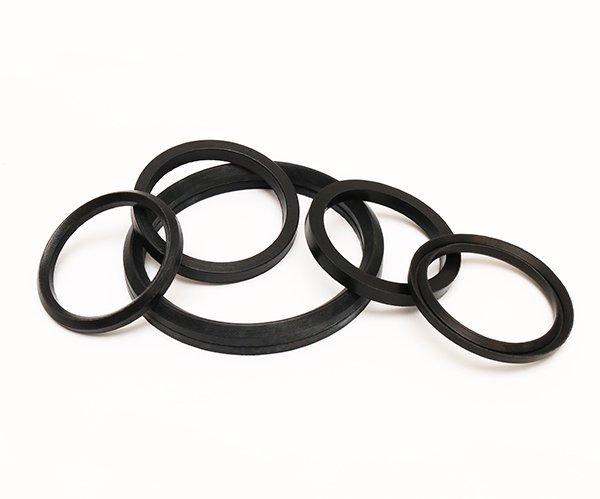
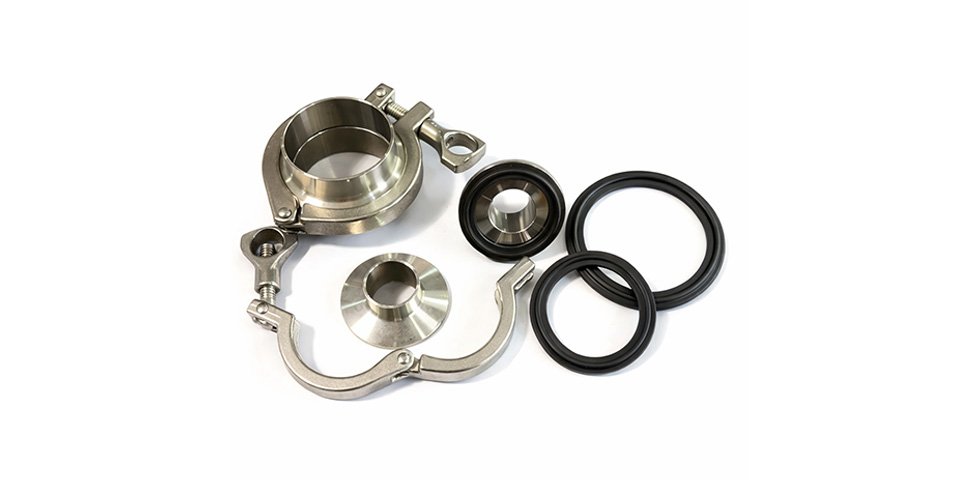
EPDM is extensively used in sealing and gasketing applications where prevention of fluid or air leakage is required while maintaining flexibility. Both solid EPDM and expanded closed-cell EPDM sponge are used to manufacture gaskets, seals, O-rings, washers, and custom profiles.
Solid EPDM is typically selected for applications requiring higher mechanical strength, while sponge EPDM is preferred for low-compression, watertight sealing.
Automotive and Transportation
In automotive and transportation industries, EPDM is widely used due to its resistance to weathering, vibration, and temperature variation. Typical applications include door seals, window seals, trunk seals, hood seals, glass run channels, and weatherstrips.
EPDM is also used in cooling and fluid systems, such as hoses for radiators, heaters, thermostats, EGR systems, and degas bottles. In turbocharged engines, EPDM is used for charge air tubing on the cold side of the intercooler where oil exposure is limited. EPDM O-rings and EPDM O-ring cord are also commonly used in air conditioning systems with synthetic refrigerant oils.
Construction and Building
EPDM is a preferred material in construction due to its long-term durability and low maintenance requirements. It is widely used for roofing membranes, pond liners, expansion joints, window and door seals, garage door seals, and architectural gaskets.
As a roofing and lining material, EPDM does not contaminate rainwater runoff, making it suitable for rainwater harvesting systems and environmentally sensitive projects.
Industrial, Marine, and Electrical Applications
EPDM is commonly used in industrial and marine environments for water gaskets, sealing rings, grommets, hoses, electrical insulation, and protective trims. Its resistance to water, chemicals, and UV exposure allows it to perform reliably in harsh and outdoor conditions, including saltwater environments.
In electrical systems, EPDM is used for cable insulation, wire jacketing, enclosures, and protective seals due to its insulating properties and moisture resistance.
Vibration Control and Safety Surfacing
EPDM is widely used in vibration-damping components such as elastic mounts, flexible connectors, exhaust hangers, edge guards, and bumpers. Its elasticity helps reduce noise and mechanical stress.
Colored EPDM granules are also used in safety surfacing applications, including playground flooring, pool decks, and recreational surfaces, where impact absorption and slip resistance are critical.
Conclusion: EPDM Solutions from QZSEALS
EPDM rubber remains one of the most dependable and cost-effective elastomers for sealing, insulation, and protection applications, offering a well-balanced profile of EPDM rubber advantages and disadvantages. Its key advantages include excellent resistance to weathering, water, ageing, and many chemicals, combined with high flexibility and long service life, which make EPDM suitable for a wide range of industrial environments. At the same time, understanding the disadvantages of EPDM rubber—particularly its limited resistance to oils, fuels, and extreme temperatures—is essential for correct material selection and reliable long-term performance.
At QZSEALS, we go beyond simply supplying EPDM products. We work closely with our customers to understand application conditions, media compatibility, temperature requirements, and installation constraints. Based on this technical understanding, we provide tailored EPDM sealing solutions—including material selection, compound optimization, and custom-designed profiles—that deliver reliable performance and long-term value.
Whether you require standard EPDM seals or application-specific engineering support, QZSEALS is committed to helping you achieve dependable sealing performance through professional technical solutions and consistent product quality.