

FEP vs PFA: Material Differences and Sealing Applications
In the field of high-performance polymer materials, fluoropolymers occupy a unique and indispensable position. Among them, FEP (Fluorinated Ethylene Propylene) and PFA (Perfluoroalkoxy Alkane) are two of the most widely used melt-processable fluoroplastics and are frequently discussed in comparisons of FEP vs PFA material performance. Because both materials share excellent chemical resistance, thermal stability, and electrical insulation properties, they are often considered interchangeable at first glance, particularly when evaluated purely from a general FEP vs PFA chemical resistance perspective. However, in real industrial applications—especially in sealing systems—the difference between FEP and PFA for seals is far from negligible.
Subtle distinctions in molecular structure, thermal endurance, mechanical behavior, and processing characteristics often determine whether a component performs reliably over years of service or fails prematurely. This is especially true in FEP PFA material selection for sealing, where long-term stability under temperature, pressure, and chemical exposure is critical. According to material science principles widely documented by DuPont™ fluoropolymer materials, understanding these performance boundaries is essential for reliable sealing design.
This article provides a comprehensive comparison of FEP and PFA, explaining not only what makes them similar, but more importantly, what separates them in practical engineering use. By understanding these differences, engineers, designers, and procurement professionals can make more informed material selections for demanding environments, including applications involving FEP sealing material, PFA sealing material, and FEP encapsulated O-rings.
Fundamental Material Background and Molecular Structure
Both FEP and PFA belong to the fluoropolymer family and are derived from polytetrafluoroethylene (PTFE), which forms the technical foundation of most FEP vs PFA material comparisons. Like PTFE, their molecular backbones are dominated by strong carbon–fluorine bonds, which are among the most stable chemical bonds in organic chemistry. This structural feature is responsible for their outstanding chemical inertness and resistance to aggressive media, forming the basis of their well-known FEP vs PFA chemical resistance performance.
FEP is a copolymer of tetrafluoroethylene (TFE) and hexafluoropropylene (HFP). The incorporation of HFP disrupts the crystallinity of PTFE, allowing FEP to be melt-processable while retaining much of PTFE’s chemical resistance. Its molecular structure is relatively simple, which contributes to its good flow behavior during processing and makes it a widely used FEP sealing material in industrial applications where cost control and manufacturability are important.
PFA, on the other hand, is produced by copolymerizing tetrafluoroethylene with perfluoroalkyl vinyl ether (commonly PPVE). The presence of perfluoroalkoxy side chains along the polymer backbone results in a material that is chemically very close to PTFE, yet fully melt-processable. These side chains enhance molecular mobility at high temperatures while maintaining structural integrity, which explains why PFA exhibits superior high-temperature performance compared to FEP and is often specified as a premium PFA sealing material in critical sealing systems.
Thermal Performance and Long-Term Heat Resistance
One of the most critical distinctions in any FEP vs PFA material comparison lies in their thermal capabilities. Although both materials are designed for elevated temperature environments, their long-term performance limits differ significantly, directly influencing FEP PFA material selection for sealing applications.
FEP is typically rated for continuous use at temperatures up to around 200 °C. While it can tolerate short-term exposure to higher temperatures—sometimes approaching 260 °C—prolonged operation near this upper limit may result in mechanical degradation or loss of dimensional stability. For many standard chemical processing, fluid handling, and electrical insulation applications, this temperature range is sufficient, which is why FEP remains a popular FEP sealing material in cost-sensitive projects.
PFA offers a substantially higher thermal margin. It is commonly rated for continuous operation at temperatures up to 260 °C, with short-term resistance exceeding 300 °C in certain conditions. This superior heat resistance makes PFA the material of choice in environments where sustained high temperatures are unavoidable, such as semiconductor manufacturing equipment, high-temperature chemical reactors, and thermal fluid transfer systems. In such cases, PFA sealing material provides long-term reliability where FEP would approach its performance limits.
The difference may appear modest numerically, but in industrial practice, an extra 40–60 °C of continuous temperature capability can determine whether a sealing component survives for years or requires frequent replacement. This thermal margin is a key factor in understanding the difference between FEP and PFA for seals.
Mechanical Properties and Structural Reliability
From a mechanical standpoint, PFA generally outperforms FEP in strength and long-term stability. PFA exhibits higher tensile strength, better resistance to creep, and superior performance under sustained mechanical stress. These characteristics are particularly important in applications involving pressure, cyclic loading, or dynamic sealing conditions.
FEP, while slightly lower in tensile and compressive strength, offers greater flexibility, especially at lower temperatures. This increased softness can be advantageous in applications requiring tight bending radii, thin-wall tubing, or components that must accommodate minor misalignments without cracking.
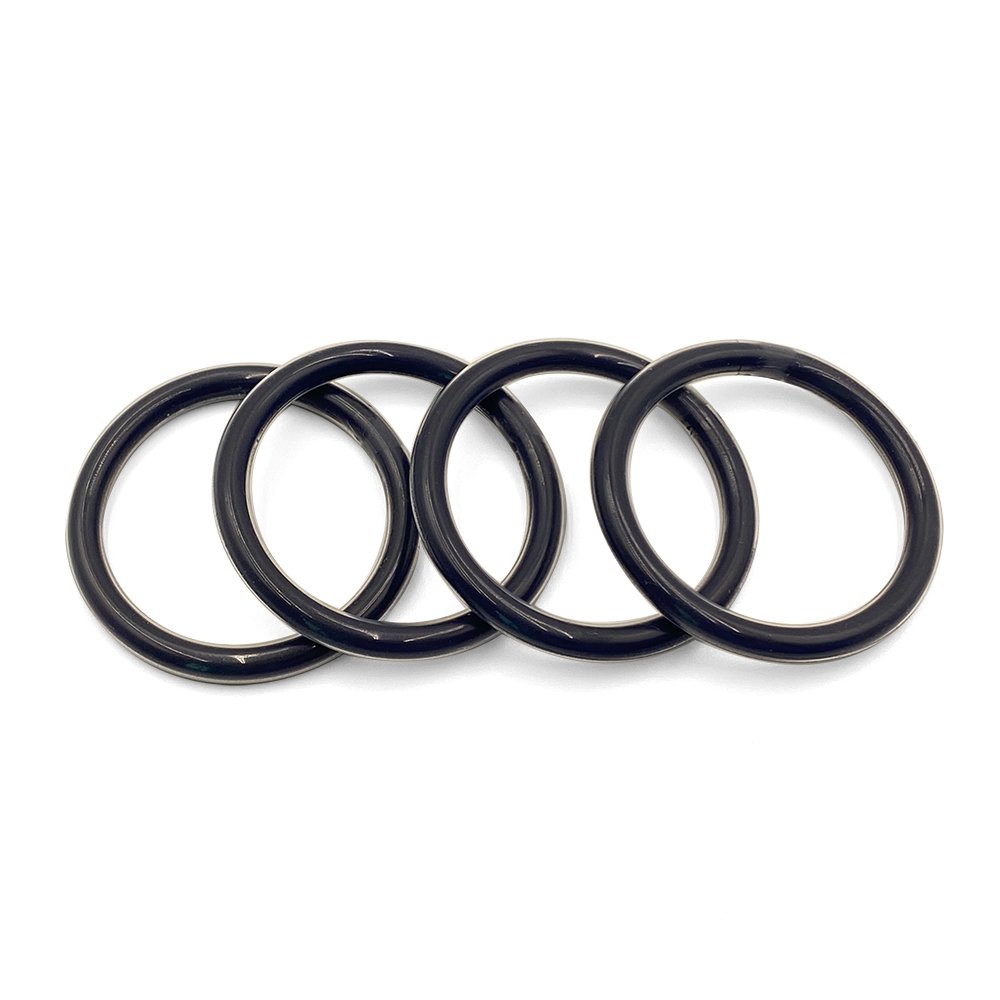
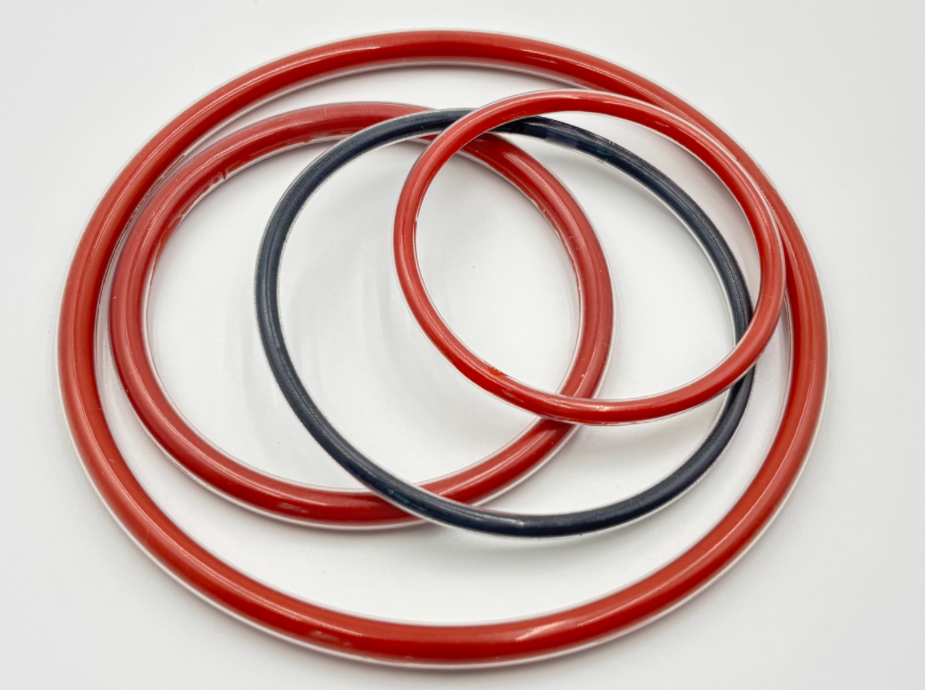
When used as an outer layer in encapsulated O-rings, these mechanical differences become especially relevant. PFA-encapsulated O-rings tend to demonstrate better elastic recovery after repeated deformation, making them more suitable for dynamic or semi-dynamic sealing environments. FEP-encapsulated O-rings, by contrast, are often preferred in static sealing applications where chemical resistance and cost efficiency are the primary concerns.
Chemical Resistance and Purity Considerations
Both FEP and PFA are renowned for their exceptional chemical stability, a defining feature of any FEP vs PFA chemical resistance evaluation. They resist nearly all acids, bases, solvents, and oxidizing agents, including highly aggressive substances such as concentrated sulfuric acid, nitric acid, and various organic solvents. In most chemical environments, either material will perform reliably as a sealing solution.
However, under extreme conditions—such as high concentrations of strong acids combined with elevated temperatures—PFA demonstrates slightly superior resistance, approaching that of virgin PTFE. This enhanced performance makes PFA particularly valuable in ultra-high-purity chemical handling systems, where even minimal material degradation or extractables can be unacceptable.
In industries such as semiconductor fabrication, pharmaceutical production, and high-purity chemical processing, material purity is just as critical as chemical resistance. In these cases, PFA sealing material is often favored due to its lower ionic contamination levels and reduced risk of particle generation over long service periods, further reinforcing its role in advanced FEP PFA material selection for sealing decisions.
Electrical Insulation and Dielectric Behavior
Both materials exhibit excellent electrical insulation properties, including low dielectric constants and high dielectric strength. These characteristics make them ideal for wire and cable insulation, sensor protection, and electronic component encapsulation.
While the differences are subtle, PFA tends to maintain more stable dielectric performance at elevated temperatures and under high-frequency conditions. As a result, PFA is frequently used in high-performance cables for aerospace, semiconductor equipment, and advanced instrumentation, whereas FEP is widely employed in general industrial and communication cables, including applications related to modern telecommunications infrastructure.
Optical Properties and Transparency
Transparency is another area where both materials perform well. FEP and PFA are among the few fluoropolymers that offer high optical clarity, allowing visual inspection of fluid flow or internal processes. PFA generally exhibits slightly higher light transmission, which can be beneficial in applications requiring precise monitoring or optical sensing.
This transparency, combined with chemical resistance, explains their widespread use in laboratory tubing, medical devices, and fluid handling systems where cleanliness and visual confirmation are important.
Processing Characteristics and Manufacturing Considerations
From a manufacturing perspective, FEP is often regarded as easier to process. It melts and flows at lower temperatures, typically within a range of 300 °C to 380 °C, and exhibits relatively good melt flow characteristics. This makes FEP well suited for producing thin-wall tubing, complex geometries, and large-volume components with consistent quality.
PFA requires higher processing temperatures, usually between 350 °C and 420 °C, and has a higher melt viscosity. Processing PFA demands stricter control of temperature, tooling, and residence time to avoid degradation or discoloration. In long-term production, molds often require protective surface treatments, such as chrome plating, to resist corrosion caused by molten PFA.
These processing challenges contribute directly to the higher cost of PFA products. However, for applications where performance margins are critical—such as solvent-resistant PFA seals for industrial paint filtration—the additional manufacturing complexity is often justified by the extended service life.
Cost Considerations and Economic Trade-Offs
Cost is frequently the decisive factor when choosing between FEP and PFA. FEP benefits from more accessible raw materials and simpler processing requirements, resulting in lower overall production costs. For many applications operating within moderate temperature and pressure ranges, FEP provides an excellent balance between performance and affordability.
PFA, by contrast, is positioned as a premium material. Its higher raw material cost, combined with more demanding processing conditions, makes it significantly more expensive. As a result, PFA is typically reserved for applications where its superior thermal, mechanical, or purity advantages are truly necessary, such as custom-shaped PFA gaskets for hazardous waste containers.
In practical terms, FEP can be compared to a reliable industrial workhorse—capable, versatile, and cost-effective—while PFA represents a high-end solution designed for extreme or highly specialized conditions.
Typical Application Areas
FEP is commonly used in electrical insulation for wires and cables, chemical transfer tubing operating at moderate temperatures, laboratory equipment, medical devices, and components requiring high transparency combined with chemical resistance. It is also widely applied in static sealing systems and encapsulated O-rings where operating conditions are well controlled.
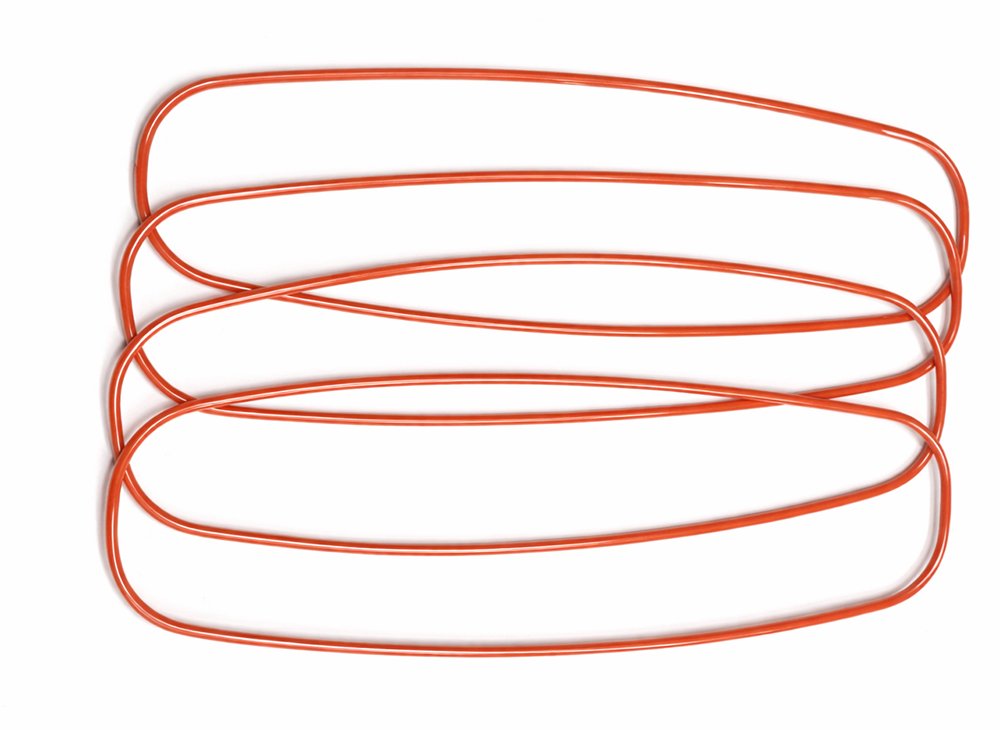
PFA is most often found in high-temperature chemical processing systems, semiconductor manufacturing equipment, pharmaceutical fluid handling, aerospace wiring, and critical sealing applications exposed to extreme thermal or chemical stress. In these environments, the long-term reliability and stability of PFA justify its higher cost. It is the go-to material for PFA encapsulated O-rings for painting filter covers and rectangular PFA encapsulated seals for industrial waste bins.
Practical Material Selection Guidance
Choosing between FEP and PFA should never be based solely on general material descriptions. Instead, the decision should consider the specific operating temperature, chemical exposure, mechanical stress, regulatory requirements, and total cost of ownership.
When continuous operating temperatures exceed 200 °C, or when equipment is subject to prolonged thermal cycling, PFA is generally the safer choice. In strongly corrosive environments combined with high temperatures or purity requirements, PFA again offers a clear advantage. Conversely, for cost-sensitive projects operating within moderate temperature ranges, FEP provides excellent performance with greater economic efficiency.
Conclusion
Although FEP and PFA share a common fluoropolymer heritage and many overlapping properties, their differences are significant enough to influence long-term system performance and reliability. FEP excels in processing convenience, flexibility, and cost efficiency, making it well suited for a wide range of industrial and electrical applications. PFA, with its superior thermal endurance, mechanical strength, and chemical stability, remains the preferred choice for extreme operating conditions and high-purity environments where performance margins are critical.
At QZSEALS, material selection is never treated as a generic specification. Based on operating temperature, chemical exposure, pressure conditions, and service life expectations, we support customers in choosing between FEP sealing material and PFA sealing material to ensure sealing components perform reliably in real-world applications. Whether the priority is cost optimization or maximum resistance under demanding conditions—from industrial paint filtration to hazardous waste management—the right material choice directly impacts system uptime and long-term performance.
Ultimately, the decision between FEP vs PFA is not about which material is “better” in absolute terms, but about understanding the difference between FEP and PFA for seals and selecting the solution best suited to the application. With a clear understanding of their practical differences—and proper engineering support—designers and maintenance teams can achieve both technical reliability and economic efficiency throughout the full service life of the component.