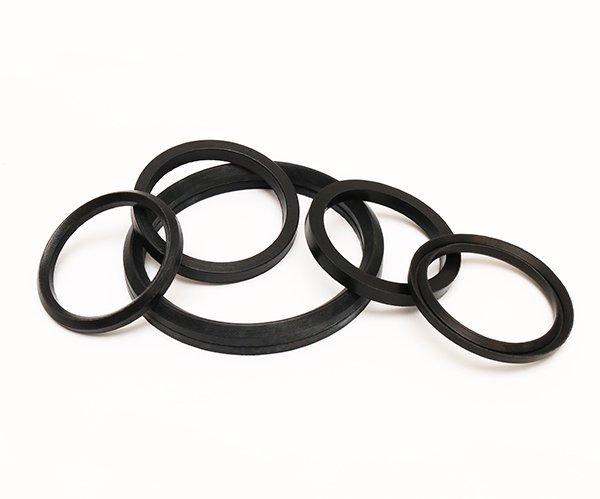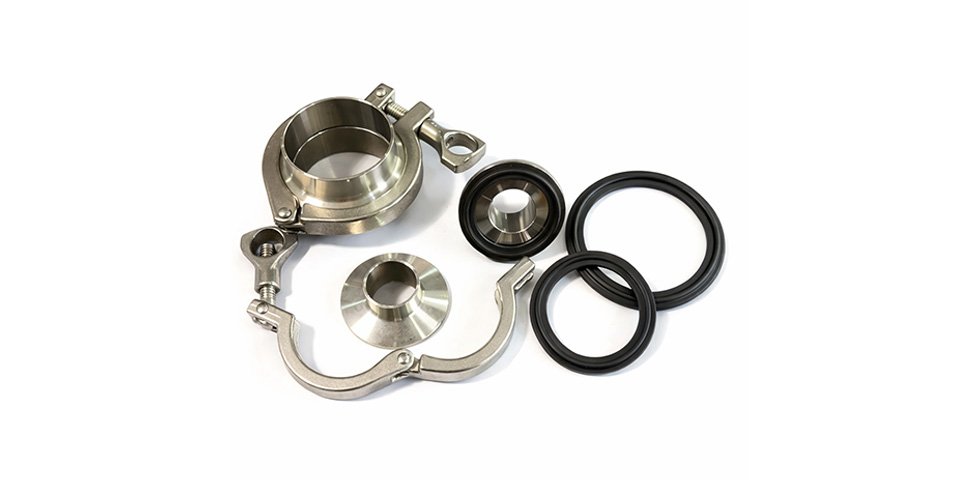



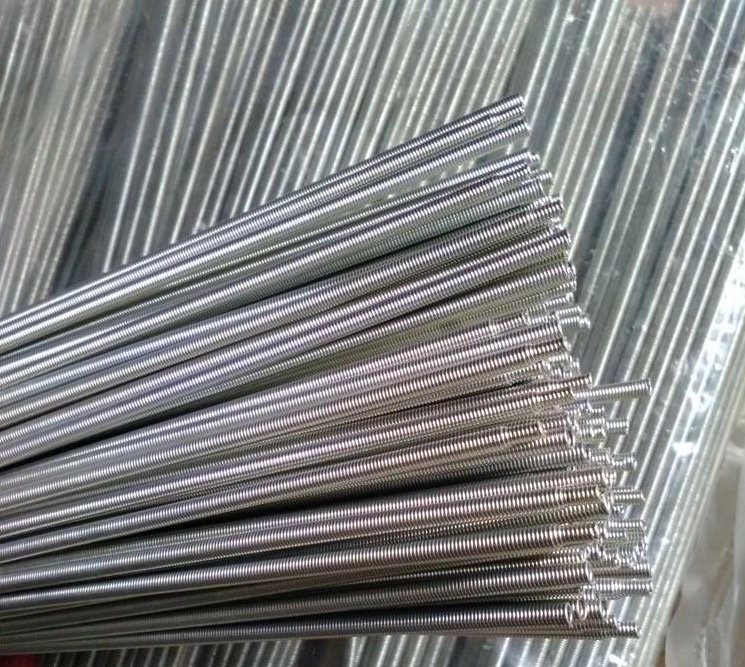
A distinctive feature of a garter spring (lip spring) is its ability to form a continuous ring while fully maintaining all the functional properties of the spring. This ring-shaped configuration is achieved through specially designed conical or tapered ends, which allow one end of the garter spring to be securely screwed or fitted into the opposite end, ensuring a reliable and stable connection during operation.
The garter spring applies a constant and uniform radial force to the sealing lip, helping the seal maintain both dynamic and static integrity. By providing consistent pressure around the shaft, the garter spring effectively prevents grease and lubricant leakage while also protecting the sealing system from the ingress of dust, moisture, and other external contaminants, even under demanding operating conditions.
What is the garter spring in an oil seal for?
Seal Pressure Maintenance
The primary role of a garter spring in an oil seal is to provide a continuous and evenly distributed radial force to the sealing lip, which is usually made from materials such as nitrile rubber, silicone, or other elastomers. This radial force ensures that the sealing lip maintains consistent contact with the shaft surface throughout operation. The CR 21670 Oil Seals (55-90-8mm) is a great example, as its garter spring ensures proper sealing pressure over time.
As oil seals are exposed to changing working conditions—such as temperature fluctuations, pressure variations, shaft runout, and natural material wear—the sealing lip alone may not be able to maintain sufficient contact over time. This is where the garter spring becomes essential. By compensating for wear and dimensional changes, the garter spring helps the seal adapt to these variations and maintain its sealing performance. For instance, the CR 11366 Radial Shaft Seal utilizes this technology to ensure long-lasting sealing power despite these challenges.
In practical applications, the garter spring continuously energizes the sealing lip, creating a reliable barrier that prevents lubricants, oils, and other fluids from leaking out of the system. At the same time, it blocks dust, moisture, and external contaminants from entering the mechanism. This is a vital feature, as it helps to protect critical components and maintain optimal performance. The TC Oil Seal Rotary Shaft Oil Seal demonstrates how the garter spring works to keep contaminants out, ensuring smooth operation under demanding conditions. Thanks to this function, oil seals equipped with a garter spring offer improved reliability, longer service life, and better performance in both dynamic and static sealing conditions.
For more information on the role of oil seals in industrial applications, you can check this resource on oil seals by SKF to explore how seals improve the reliability of mechanical systems.
Compensation for material wear and thermal cycling
Materials used in sealing components, such as sealing sleeves, are inevitably subject to wear, aging, and gradual deformation over time. In addition, thermal cycling during system operation causes the material to repeatedly expand and contract. The garter spring applies a continuous and uniform radial force that compensates for these effects, allowing the seal to adapt to dimensional changes caused by wear and temperature fluctuations. By maintaining consistent compression throughout the service life, the garter spring ensures stable sealing performance and prevents leakage even under changing operating conditions.
Improved compaction efficiency
By applying a continuous and controlled radial force to the sealing element against the shaft, the garter spring significantly enhances overall sealing performance. An effective seal minimizes lubricant loss, which is critical for maintaining proper lubrication, reducing friction, and preventing premature wear or component damage. At the same time, it preserves the reliability and service life of the system by blocking the ingress of dust, moisture, and other external contaminants.
Elimination of misalignment and eccentricity of shafts
In real-world operating conditions, perfect alignment between the shaft and the seal is not always achievable. Shaft eccentricity may occur due to manufacturing tolerances, installation errors, or dynamic operating factors. The spring enables the sealing lip to compensate for these imperfections, allowing it to maintain consistent contact with the shaft and ensuring reliable sealing performance even under non-ideal conditions.
Features and functions of the garter spring in oil seals
Providing radial loading
The primary function of the garter spring is to apply a constant radial load around the shaft at the sealing interface. This consistent pressure ensures uninterrupted contact between the sealing lip of the gland and the shaft, effectively minimizing the risk of leakage and maintaining reliable sealing performance over time.
Material wear compensation in garter spring seals
Over time, the materials used in the sealing lip of an oil seal—such as nitrile rubber, polyacrylate, FKM, or PTFE—may gradually wear or lose elasticity due to continuous mechanical stress and repeated thermal cycles. The garter spring compensates for these changes by consistently maintaining the necessary radial force on the sealing lip, ensuring reliable contact with the shaft and stable sealing performance throughout the service life.
Compensation for Temperature Fluctuations
The materials used in oil seals, together with the garter spring, are engineered to accommodate temperature variations during operation. As temperatures rise and fall, sealing materials naturally expand and contract. The garter spring continuously adjusts the contact pressure of the sealing lip against the shaft, ensuring a stable seal fit and effectively preventing leakage under changing thermal conditions.
Increased Seal Durability
By maintaining consistent radial pressure and compensating for material wear and aging, the garter spring significantly enhances the overall durability of the seal. This extended sealing performance reduces the need for frequent replacements and helps improve the long-term reliability of vehicle and mechanical components.
Tolerance to Vibration and Shaft Misalignment
Automotive components are frequently exposed to vibration and slight shaft misalignment caused by operating loads, manufacturing tolerances, or environmental influences. The garter spring adds controlled flexibility to the sealing system, allowing the sealing lip to adapt to these dynamic conditions while maintaining reliable contact with the shaft. This ensures consistent sealing performance and preserves seal integrity even under non-ideal operating conditions.
Steering Knuckle Oil Seal Spring
The steering knuckle oil seal spring applies a continuous and uniform radial force to the sealing lip, ensuring both dynamic and static sealing integrity around the steering knuckle shaft. This constant pressure effectively prevents grease leakage while blocking the ingress of dust, moisture, and other external contaminants, helping to maintain smooth operation and optimal steering performance.
Designed to accommodate temperature fluctuations during vehicle operation, the oil seal spring compensates for the thermal expansion and contraction of the sealing lip and surrounding components. By maintaining stable contact pressure across a wide operating temperature range, it ensures consistent sealing performance and reliable operation under varying environmental and driving conditions.
By preserving seal effectiveness and protecting critical steering components from contamination and lubricant loss, the steering knuckle oil seal spring plays an important role in extending the service life of the steering knuckle and related parts. This contribution helps reduce premature wear, minimizes maintenance requirements, and lowers the frequency of component replacement.
Spring on the Oil Seal: Causes of Wear and How to Eliminate Them
The oil seal spring (garter spring) plays a critical role in maintaining consistent sealing pressure and preventing lubricant leakage. However, during long-term operation, the spring itself is subject to various wear mechanisms. Understanding these wear factors helps extend service life and ensures stable sealing performance.
Corrosion is one of the most common causes of spring degradation. Exposure to moisture, salts, acidic environments, or aggressive chemicals can lead to material deterioration, reduced mechanical strength, and eventual failure. This can be mitigated by applying protective coatings such as zinc or nickel, improving system filtration, and selecting corrosion-resistant materials like stainless steel (304, 316, or 12Cr18Ni10Ti) or nickel alloys for demanding environments.
Fatigue occurs as oil seal springs are repeatedly compressed and released during operation. Over time, cyclic loading may result in crack initiation and propagation, leading to spring failure. Proper spring design, uniform stress distribution, and routine inspection and maintenance help reduce fatigue-related damage and extend operational life.
Abrasive wear can develop when solid particles are present in the working medium. These particles may cause surface micro-damage to the spring, gradually weakening its structure. Adequate lubrication and effective filtration systems are essential to minimize friction and particle-induced wear.
In high-temperature applications, springs may experience creep, a slow and permanent deformation under constant stress. This leads to a gradual loss of spring force and reduced sealing efficiency. Selecting materials designed for elevated temperatures is key to maintaining stable performance.
Another critical failure mode is stress corrosion cracking, which occurs when tensile stress combines with a corrosive environment. Manufacturing processes such as stress relief or annealing can significantly reduce internal stresses and lower the risk of this type of failure.
By addressing these wear mechanisms through proper material selection, surface protection, and system design, the durability and reliability of oil seal springs can be greatly improved.
Conclusion
The garter spring is a small yet essential component in oil seal systems, playing a decisive role in maintaining sealing pressure, compensating for wear and temperature variations, and ensuring long-term sealing reliability under real operating conditions. From improving sealing efficiency and durability to accommodating vibration, misalignment, and thermal cycling, a properly designed garter spring directly contributes to the overall performance and service life of sealing systems.
At QZSEALS, we believe that reliable sealing performance starts with a deep understanding of real-world applications and operating challenges. Our approach focuses on material selection, structural optimization, and quality control to ensure that each oil seal spring delivers consistent radial force and stable performance throughout its service life. By combining engineering expertise with practical manufacturing experience, QZSEALS is committed to providing dependable sealing solutions that help customers reduce maintenance costs, extend equipment lifespan, and achieve long-term operational reliability.