


The Engineer’s Guide to Seal Failure Analysis: Reading the Clues to Prevent Future Failures
In the world of industrial maintenance and reliability, a leaking industrial seal is more than just a nuisance—it is a critical symptom of an underlying seal failure. While the immediate response is often a quick industrial seal replacement, this approach only treats the symptom, not the disease. The true art of reliability engineering lies in performing a thorough seal failure analysis. A failed industrial seal is a piece of evidence; it tells a detailed story about operational conditions, hardware integrity, and fluid compatibility. Learning to read this story is the single most powerful tool for preventing repeat seal failures, reducing downtime, and enhancing overall machine longevity through proper seals selection and seals application.
This definitive guide is designed for the hands-on engineer, the meticulous technician, and the reliability-focused designer. We will move beyond simply identifying a leak and provide a systematic framework for diagnosing the root cause of common seal failures. By examining the visual clues left on a failed industrial seal—the cuts, cracks, and deformations—you can make informed decisions that lead to lasting solutions, not just temporary fixes.
As a global partner in engineering high-performance industrial seals, QZSEALS believes that a deeper understanding of seal failure mechanisms is key to achieving true reliability. This guide shares our deep expertise in materials science and application engineering to empower you to become an expert in seals application and troubleshooting.
Table of Contents
1. The Investigator’s Mindset: A Systematic Approach to Seal Failure
Before you even look at the failed industrial seal, adopt the mindset of an investigator. The industrial seal is not the culprit; it is the victim. Your job is to uncover what “crime” was committed against it. A powerful framework for this investigation is the STAMPS method, re-applied for forensic analysis:
- S – Size: Was the industrial seal the correct size for the gland? Was the gland machined to the correct dimensions?
- T – Temperature: Did the system temperature, including frictional heat, exceed the industrial seal material’s rating?
- A – Application: Was the industrial seal designed for the motion (static, rotary, reciprocating)? Were the speeds and cycle rates within limits for proper seals application?
- M – Media: Was the industrial seal material truly compatible with the system fluid, lubricants, and any cleaning agents?
- P – Pressure: Did the system pressure, including any spikes, exceed the industrial seal’s capability?
- S – Speed: In dynamic applications, was the surface speed too high, leading to excessive friction and heat?
By systematically questioning these parameters, you move from a reactive approach to a diagnostic approach for seal failure.
2. A Visual Guide to Common Seal Failure Modes
A failed industrial seal provides a wealth of visual information. Below is a guide to identifying the most common seal failure modes and understanding their root causes.
2.1 Extrusion and Nibbling
Visual Symptoms: the industrial seal exhibits a “chewed,” “chipped,” or “nibbled” appearance on the low-pressure side. Small pieces of the seal may be missing, and the edge will look rough and fractured. This is a classic failure mode in high-pressure hydraulic seals systems.
Probable Causes:
- Excessive Pressure: The system pressure is too high for the seal’s hardness, physically forcing the material into the hardware’s clearance gap.
- Excessive Clearance Gaps: The gap between the piston and bore (or rod and gland) is too large, providing a path for the seal to be pushed into.
- Material Too Soft: The seal’s durometer (hardness) is insufficient to resist the pressure.
Solutions:
- Measure and reduce hardware clearance gaps.
- Select a industrial seal made from a harder, more extrusion-resistant material like polyurethane or a higher-durometer rubber. Consider robust designs like our SPGW Piston Seal.
- Incorporate an anti-extrusion backup ring on the low-pressure side of the seal.
2.2 Abrasion
Visual Symptoms: The dynamic sealing surface (the lip or outer edge) appears dull, polished, or has a noticeable flat spot. There may be fine scratches or scoring marks. The seal has been physically worn away.
Probable Causes:
- Abrasive Contamination: Hard particles (dirt, metal shavings) are suspended in the fluid, acting like sandpaper against the seal lip. This is a common failure prevented by effective Wiper Seals.
- Rough Hardware Surface Finish: The surface of the rod or bore is too rough, physically abrading the seal with every cycle.
- Inadequate Lubrication: Dry running of a dynamic seal will cause rapid abrasive wear.
Solutions:
- Improve system fluid filtration and ensure the wiper seal is functioning correctly.
- Verify and, if necessary, polish the hardware to the recommended surface finish.
- Ensure proper lubrication during seals application.
2.3 Heat Hardening and Cracking
Visual Symptoms: The seal is hard, brittle, and has lost all of its flexibility. The surface is often covered in fine radial cracks. The seal may crumble or break when bent. A black seal may appear faded or ashen.
Probable Causes:
- Excessive Temperature: The system’s operating temperature exceeded the maximum rating for the elastomer. This “bakes” the material, driving out the plasticizers that give it flexibility.
- Frictional Heat: In high-speed dynamic applications, friction can generate enough localized heat to degrade the material, even if the overall system fluid temperature seems normal.
Solutions:
- Measure the true operating temperature and identify the source of any excess heat.
- Upgrade the industrial seal material to one with a higher temperature rating (e.g., from NBR to FKM or from FKM to a perfluoroelastomer).
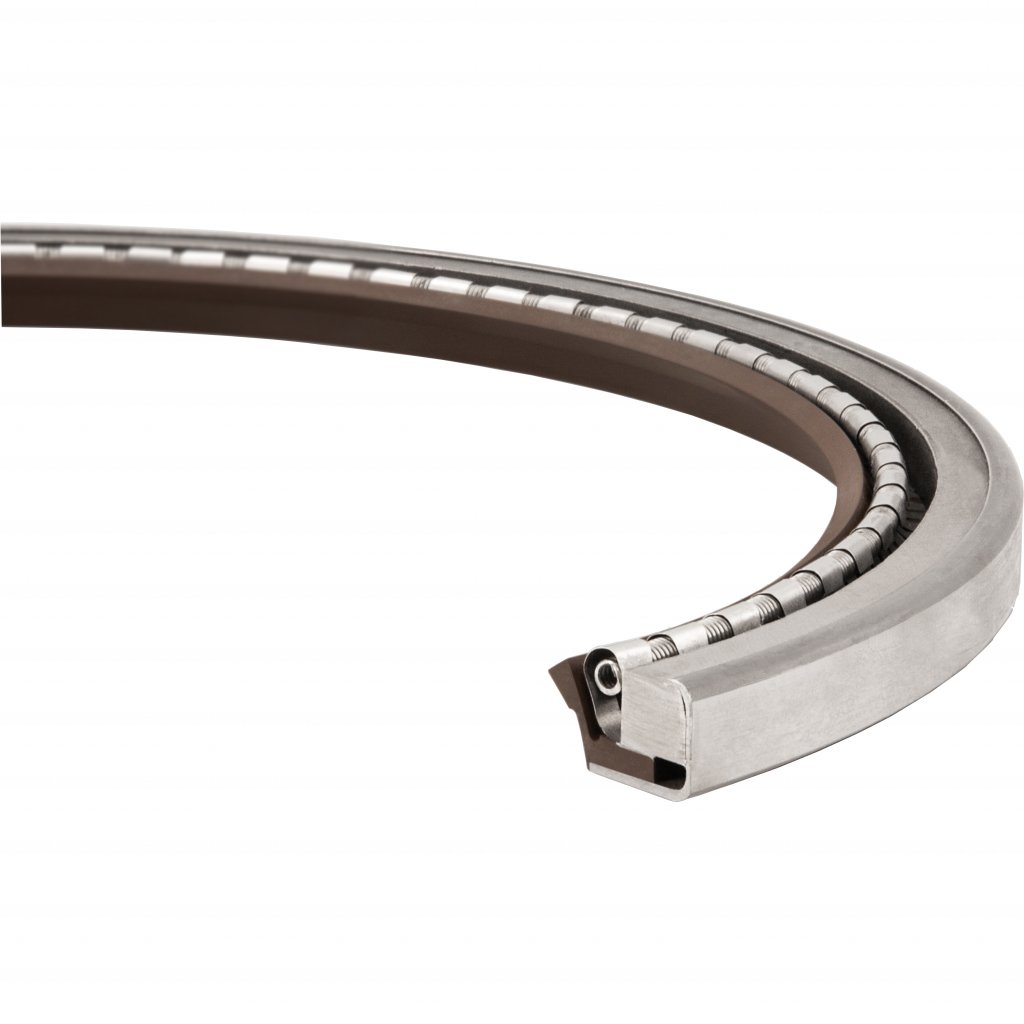
- For extreme heat, consider a non-elastomeric solution like a spring energized seal.
2.4 Chemical Attack
Visual Symptoms: The appearance can vary widely depending on the chemical. The seal may be swollen, soft, and gummy. Alternatively, the industrial seals could be blistered, discolored, or appear to have shrunken or dissolved. Consult the Parker O-Ring Handbook for detailed material compatibility charts.
Probable Causes:
- Material Incompatibility: The seal material is not chemically compatible with the system fluid, a lubricant, or an aggressive cleaning agent.
Solutions:
- This failure requires a material change. Consult a chemical compatibility chart or a sealing expert.
- For aggressive media, an Encapsulated O-Ring with its protective PTFE jacket is often an excellent upgrade.
2.5 Compression Set
Visual Symptoms: The seal’s cross-section is no longer round but has taken a permanent flat or square shape, conforming to the groove. It has lost its “memory” and does not rebound when removed.
Probable Causes:
- Poor Material Properties: The chosen elastomer has a high (poor) compression set rating.
- Excessive Temperature: Heat accelerates the rate at which an elastomer takes a compression set.
- Improper Gland Design: The seal is being over-compressed in its groove.
Solutions:
- Select an elastomer specifically formulated for low compression set.
- Verify the system temperature and ensure the gland is machined to the correct dimensions for the seal cross-section.
2.6 Installation Damage
Visual Symptoms: A clean, precise cut, nick, or peel on the surface of the seal. This is one of the most common failure modes for all O-ring and hydraulic seal types.
Probable Causes:
- Sharp Hardware Edges: The seal was dragged over sharp threads, ports, or burrs during installation.
- Improper Tools: Using tools like screwdrivers or picks to force the seal into place.
- Incorrect Sizing: Excessive stretching of an undersized seal.
Solutions:
- Ensure all hardware edges are chamfered and deburred. Use installation sleeves to protect seals from threads.
- Always use proper, non-marring installation tools.
- Verify the correct seal size and always use a compatible lubricant during assembly.
3. From Analysis to Action: A Proactive Prevention Strategy
Seal failure analysis is not just an academic exercise; it is the data-gathering phase of a proactive reliability strategy. Once you have identified the root cause of the failure, the next step is to implement a lasting solution.
This often means that a simple “like-for-like” seal replacement is the wrong choice. The analysis should guide you toward an upgrade.
- If you diagnose extrusion, the solution is a harder material or a better design.
- If you diagnose heat hardening, the solution is a higher-temperature material.
- If you diagnose chemical attack, the solution is a more resistant polymer.
This intelligent, data-driven approach to maintenance transforms the cycle of repeated failures into a process of continuous improvement.
Need Help with Your Failure Analysis?
Our engineering team can help. Send us your failed seal and application data, and we’ll provide a comprehensive analysis and recommend a robust, long-term solution. Contact QZSEALS today to partner with a reliability expert.
4. The QZSEALS Advantage: Your Partner in Reliability
At QZSEALS, we understand that providing a high-quality industrial seal is only the beginning. Our true value lies in our ability to serve as a reliable industrial partner, offering the deep technical expertise needed to solve our clients’ most persistent and challenging sealing problems.
- Expert Technical Consultation: Our team of engineers thrives on seal troubleshooting. We provide the support needed to move from diagnosis to a definitive solution.
- Advanced Material Science: With a deep understanding of polymers and metals, we can specify the ideal material to overcome challenges of temperature, pressure, and chemical compatibility.
- Flexible and Innovative Solutions: Whether the solution is a standard component made from a superior material or a fully customized seal designed from the ground up, we have the agility and capability to deliver.
Conclusion: Turning Failure into an Opportunity for Improvement
A failed industrial seal should never be seen as just a broken part to be discarded. It is a valuable source of data, an opportunity to learn, and a catalyst for improving the reliability of your entire operation. By mastering the art of seal failure analysis, you can break the reactive cycle of “fix-and-fail” and build a foundation of proactive, data-driven maintenance.
This commitment to a deeper understanding of engineering principles is at the core of the QZSEALS philosophy. Our mission is to deliver not just seals, but certainty. By partnering with us, you gain more than a supplier; you gain an ally in your quest for operational excellence.