

In every industrial facility, from wastewater treatment pump seals troubleshooting in municipal plants to ensuring pharmaceutical grade pump seal zero leakage in sterile labs, the pump is the muscle moving fluids. However, the most vulnerable point of any pump is the “leakage path”—the microscopic gap where the rotating drive shaft enters the stationary wet housing.
At QZSEALS, we are often asked during technical sessions: “How do pump seals work to block this path while the shaft is spinning at 3,000 RPM?” The answer involves solving the physics of pump seals leakage path issues through precise friction management in high RPM pump shafts. According to the principles of Fluid Dynamics, the seal works in one of three distinct ways.
1. The “Interference Fit” Method: Radial Lip Seals
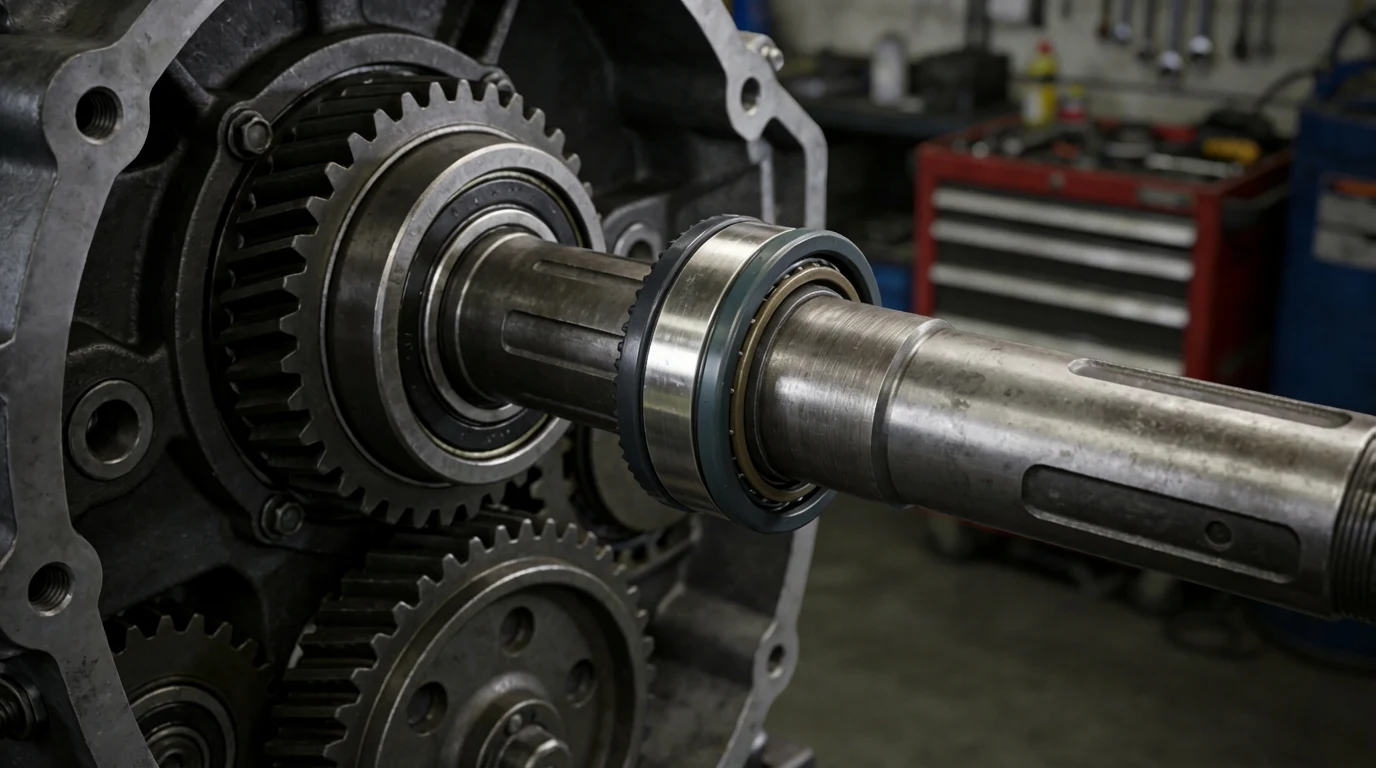
For low pressure oil transfer gear pumps or for protecting bearing housings from external contaminants, we rely on radial lip seals.
How it works:
This seal functions via radial compression. The elastomeric lip is manufactured with an inner diameter slightly smaller than the shaft diameter. When installed, the rubber stretches to fit, creating a tight band of pressure.
- The Spring’s Role: A metal garter spring is is often embedded behind the lip to maintain constant load. If you are looking for how to stop oil seal leakage at 3000 RPM, the spring tension is critical to counteract centrifugal forces.
- The Pumping Action: High-quality seals, like our TC oil seals, feature a hydrodynamic pumping action—a wavy pattern on the lip that actively pumps escaping oil back into the sump.
2. The “Controlled Leakage” Method: Compression Packing
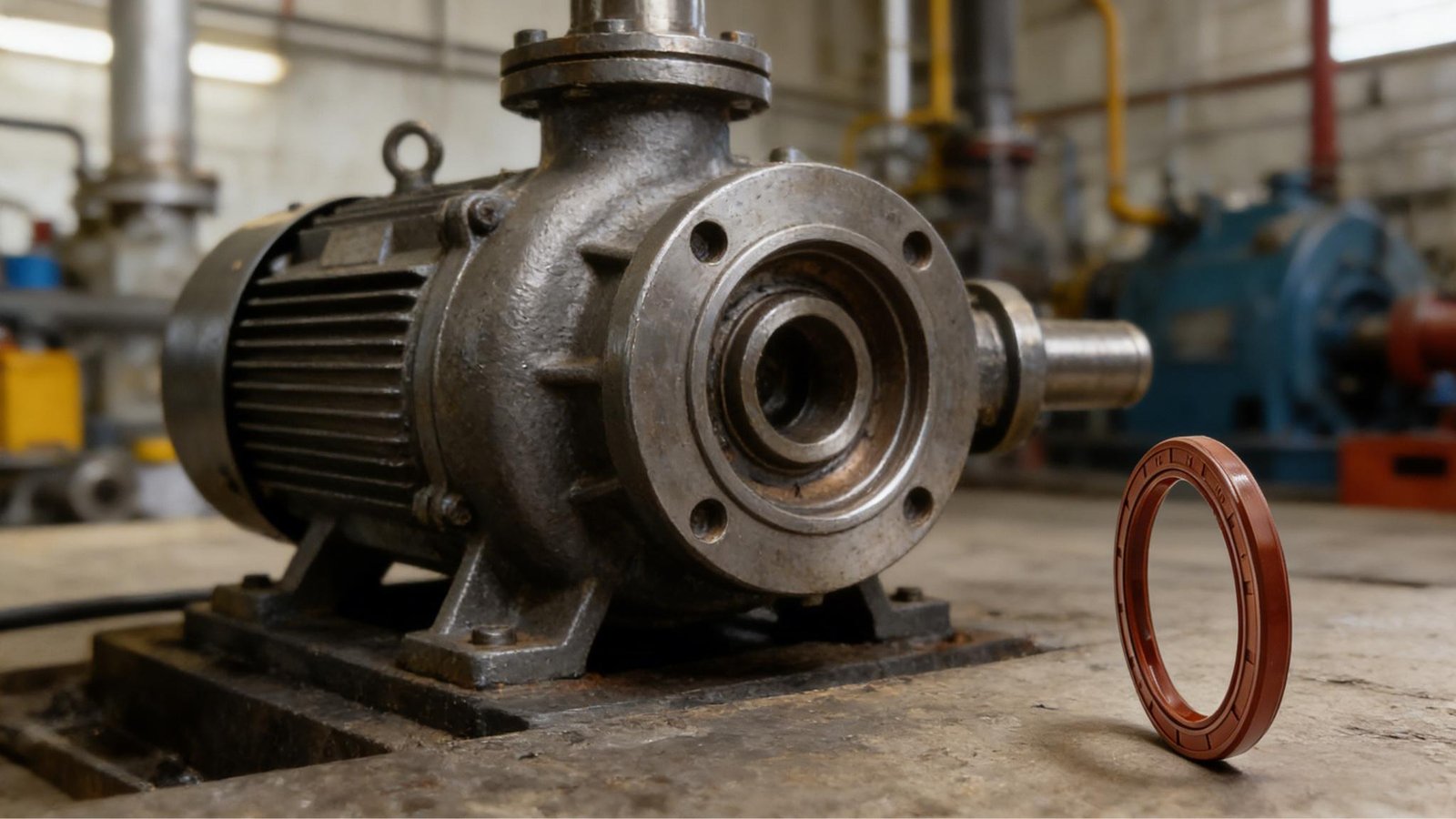
Before modern materials, there was rope. Despite advancements, replacing rope packing with mechanical seals isn’t always the answer; gland packing remains the dominant choice for dredging pump seals for heavy duty solids and large water mains.
How it works:
We stuff braided square ropes made of fibers (PTFE, Graphite, or Aramid) into the “stuffing box” around the shaft. A gland follower is tightened to compress these rings against the shaft.
- The Physics: It blocks the gap with pliable material. However, if you’re wondering, “Why is my gland packing leaking too much?”, it’s often due to improper break-in or over-compression.
- The Catch: Friction creates massive heat. Therefore, gland packing must leak a steady drip to act as a coolant. If you tighten it to stop the drip entirely, you will burn the seal and cause shaft scoring.
For heavy-duty applications, we recommend aramid fiber gland packing which can withstand the friction of slurries better than standard cotton.
3. The “Fluid Film” Method: Mechanical Seals
For 90% of chemical processing pump mechanical seal maintenance scenarios, visible leakage is unacceptable. This is where the mechanical seal utilizes a sophisticated principle: the microscopic fluid film.
How it works:
Instead of sealing against the shaft (which causes wear), a mechanical seal uses two flat, polished faces running against each other perpendicular to the shaft.
1. The Stationary Face: Fixed to the pump housing.
2. The Rotating Face: Fixed to the shaft and spins with it.
The Physics of the Gap: Springs or hydraulic pressure push these faces together, but they don’t actually touch. A layer of fluid—only 0.00001 inches thick—is drawn between them. Understanding how mechanical pump seals work fluid film dynamics is key; the seal “rides” on this film.
Troubleshooting: If this film vaporizes, it causes mechanical seal face heat checking (fine radial cracks), leading to premature failure.
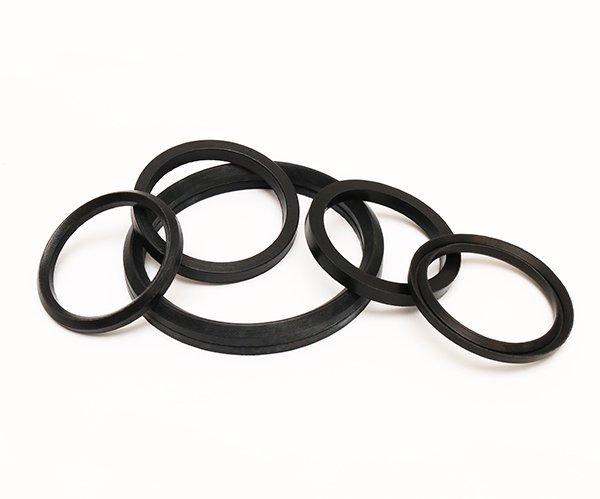
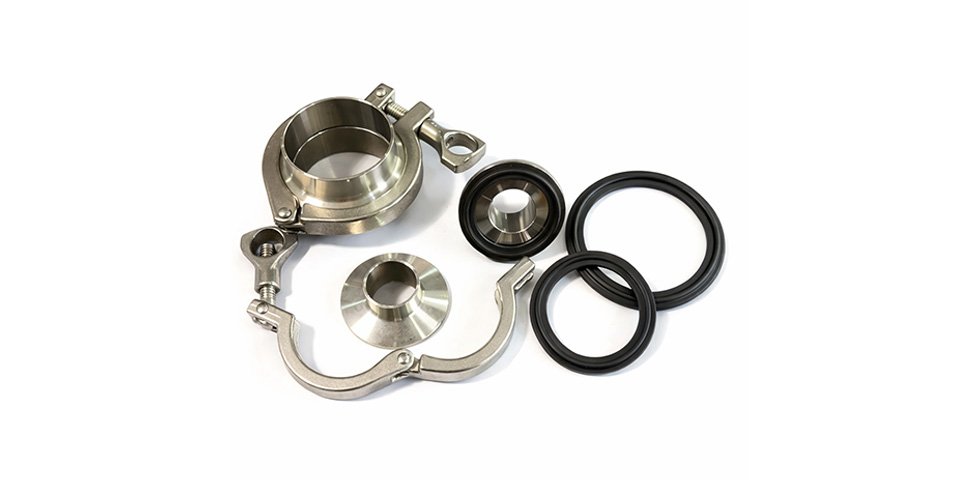
Material Compatibility: For high temperature pump seals,FFKM O-ringcompatibility is vital. These secondary seals ensure that while the faces handle the rotation, the static points don’t degrade under thermal stress.
Special Cases: When Standard Seals Fail
Sometimes, standard mechanisms struggle. For instance, PTFE spring energized seals for viscous adhesives are used when mechanical seals would glue shut. Similarly, cryogenic pump seals spring loaded PTFE designs are required for extreme cold where elastomers turn brittle. These “U-shaped” jackets use a corrosion-resistant spring to provide a constant load, sealing slow-moving or problematic fluids without needing a traditional fluid film.
Technical Comparison: Choosing the Right Mechanism
To help you understand which mechanism applies to your equipment, our engineering team has compiled this comparison table.
| Seal Type | Primary Mechanism | Leakage Rate | Best Application |
|---|---|---|---|
| Lip Seal | Interference fit on shaft | Very Low (seepage) | Bearing protection, gear pumps, low pressure oil. |
| Gland Packing | Compression blocking | Visible Drip Required | Mining slurries, dredging, large water mains. |
| Mechanical Seal | Microscopic fluid film | Zero Visible Leakage | Chemicals, fuels, pharmaceuticals, high pressure. |
| Spring Energized | Spring load + PTFE lip | Near Zero | Dispensing glues, cryogenics, slow rotation. |
Conclusion
So, how do pump seals work? They work by balancing the need for a tight barrier against the reality of friction heat. Whether you are tightening the follower on gland packing or installing a precision pump seal, the goal is the same: maintain the integrity of the system.
At QZSEALS, we ensure that whether your mechanism relies on interference, compression, or a fluid film, the materials used—from Tungsten Carbide to FFKM—are engineered for your specific physics.
Would you like me to create a customized seal maintenance schedule for your specific pump model?