

How is rubber vulcanized?
Rubber vulcanization is the essential chemical process that transforms weak, sticky raw rubber into a durable, elastic, and high-performance material used in O-rings, oil seals, gaskets, and industrial sealing components. Without proper vulcanization, rubber would not withstand heat, pressure, chemicals, or long-term compression, making the process the foundation of modern sealing technology.Introduction — Why Vulcanization Matters in the Sealing Industry.
Rubber is the foundation of modern sealing technology—whether used in O-rings, oil seals, gaskets, hydraulic seals, or custom-molded parts. But raw, unprocessed rubber is weak, sticky, and melts easily under heat. It cannot handle pressure, chemicals, or mechanical stress. Learn more about global rubber standards from ASTM Rubber Standards.
To transform rubber into a durable, elastic, high-performance sealing material, manufacturers rely on a process called vulcanization.
This article explains how rubber is vulcanized, the chemical science behind the transformation, how different curing systems are chosen for sealing applications, and why vulcanization is the backbone of the entire rubber seal manufacturing process.
What Is Vulcanization?
Vulcanization is a chemical process that converts raw rubber—whether natural rubber (NR) or synthetic elastomers—into a strong, stable, and elastic material by forming cross-links between polymer chains.
Before vulcanization, raw rubber is:
soft
sticky
thermoplastic (melts when heated)
weak tensile strength
cannot maintain shape
After vulcanization, rubber becomes:
strong and durable
elastic but dimensionally stable
heat and compression resistant
chemically resistant
suitable for sealing under pressure
In the sealing industry, vulcanized rubber is used to produce:
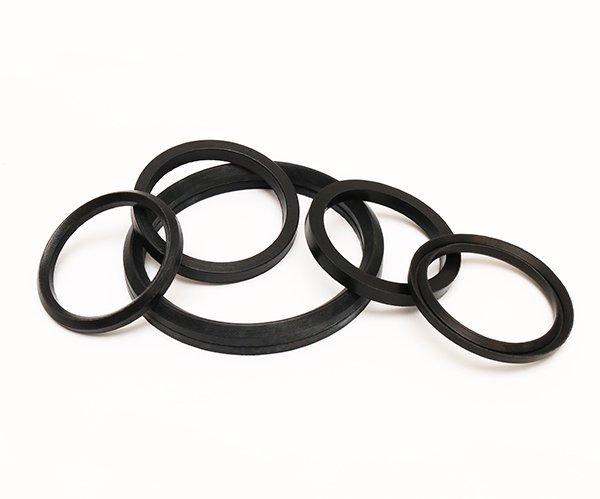
O-rings (NBR, EPDM, FKM, HNBR, etc.)
U-cups, hydraulic seals
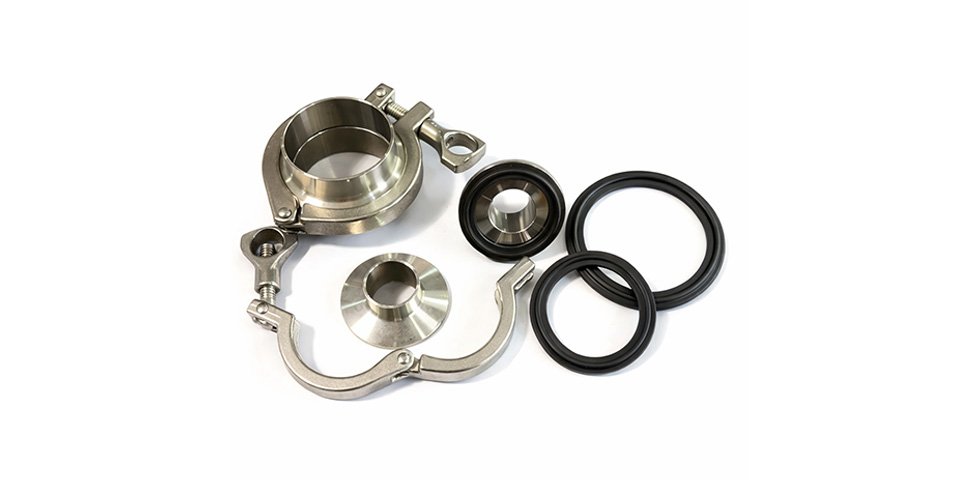
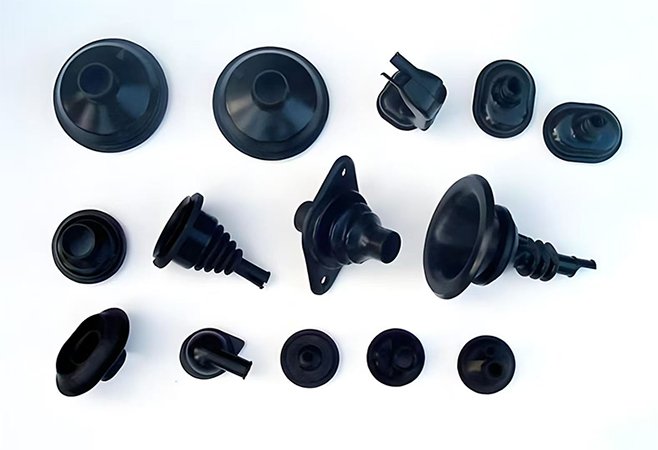
gaskets, molded parts
rubber-to-metal bonded seals
Without vulcanization, modern sealing technology simply would not exist.
The Science Behind Vulcanization
Understanding how rubber is vulcanized requires a look at polymer chemistry.
Stage 1 — Rubber’s Molecular Structure
Natural rubber is made of polyisoprene, long chains with carbon double bonds (C=C).
Many synthetic elastomers contain similar reactive sites.
These double bonds are the “anchor points” where curing chemistry occurs.
Stage 2 — Cross-linking
During vulcanization, a curing agent (traditionally sulfur) forms bridges between individual polymer chains.
This cross-linking creates:
a three-dimensional network
improved elasticity
high tensile & tear strength
compression-set resistance
dimensional stability
The difference can be visualized like cooked vs. uncooked spaghetti:
Uncooked spaghetti = raw polymer chains (easy to pull apart).
Cooked and dried spaghetti = cross-linked network (hard to separate).
Stage 3 — Thermoset Stability
Once cross-linking occurs, rubber becomes a thermoset material—it will not melt again, even under high temperatures.
This stability is essential for applications like:
hydraulic sealing
automotive engines
chemical processing
high-pressure pumps
rotating shaft sealing
How Is Rubber Vulcanized? (Step-by-Step Industrial Process)
This is the core question: how is rubber vulcanized?
Below is the sealing-industry workflow.
1. Raw Material Preparation
Rubber compounds are created by mixing:
base elastomer (NBR, EPDM, FKM, etc.)
vulcanizing agent (sulfur/peroxide/etc.)
accelerators (MBTS, TBBS, TMTD)
activators (ZnO, stearic acid)
fillers (carbon black, silica)
antioxidants
plasticizers or process oils
This mixture determines final O-ring or seal properties.
2. Molding or Extrusion
Before cross-linking occurs, rubber must be shaped into parts such as:
O-rings (compression molding / injection molding)
extrusion (cord stock, tubes, profiles)
The rubber is soft at this stage and can be easily formed.
3. Heating: The Actual Vulcanization
The shaped rubber is heated under controlled conditions.
Key curing parameters:
Temperature: typically 150–200°C
Pressure: depends on mold design
Time: from seconds to minutes (or longer for thick parts)
During heating, the curing system activates, and cross-linking begins.
4. Cooling & Post-Processing
After curing:
parts cool down
flash is removed
post-curing may be done (especially for FKM, silicone, peroxide-cured compounds)
This completes the transformation into fully vulcanized rubber seals.
Types of Vulcanization (Sulfur, Peroxide, and More)
Different sealing applications require different curing systems.
1. Sulfur Vulcanization (Most Common)
Used for:
NR, SBR
NBR
EPDM
HNBR (special systems)
Benefits:
excellent elasticity
high tensile strength
cost-effective
widely used for O-rings & seals
Drawback:
Not suitable for high-temperature applications over ~150–170°C.
2. Peroxide Vulcanization
Used for:
EPDM
silicone rubber
FKM in special formulations
Benefits:
excellent heat resistance
excellent compression set
chemical resistance
suitable for automotive, industrial and high-temperature sealing
Drawback:
Higher cost.
3. Special Curing Methods
Metal oxide curing (for CR)
Radiation vulcanization (EB curing)
Microwave vulcanization (continuous extrusion curing)
Urethane cross-linking systems
These are used in specialized sealing applications.
Industrial Equipment Used to Vulcanize Rubber
Compression molding vulcanizers
Used to produce O-rings, gaskets, molded seals.
Injection molding machines
High efficiency for mass-production of sealing components.
Vulcanizing autoclaves / steam curing tanks
Used for hose, tubing, and continuous profiles.
Microwave vulcanization lines
Used for extruded rubber strips, cords, and sponge rubber.
How Vulcanization Affects Seal Performance
1. Tensile Strength
Prevents tearing during installation.
2. Elasticity
Enables the O-ring to maintain sealing force.
3. Compression Set Resistance
Critical for long-term sealing.
4. Heat & Chemical Stability
Determines material selection (NBR vs. EPDM vs. FKM).
5. Abrasion Resistance
Important for dynamic seals.
Without proper vulcanization, sealing products would:
crack
deform
lose sealing force
fail under pressure
Common Applications of Vulcanized Rubber in the Sealing Industry
O-rings (static & dynamic sealing)
oil seals
hydraulic & pneumatic seals
gaskets
rubber-to-metal bonded seals
extruded cord O-rings (endless rings)
Vulcanization ensures these components maintain structural integrity in:
automotive engines
excavators and agricultural machinery
hydraulic pumps
chemical processing plants
pipeline equipment
compressors and valves
Frequently Asked Questions
Q1: How is rubber vulcanized in O-ring splicing?
Cord stock ends are coated with adhesive, joined, and vulcanized in a heated mold to form endless rings.
Q2: Is vulcanized rubber environmentally friendly?
Vulcanized rubber is durable and can be:
recycled into crumb rubber
reprocessed as filler
used in construction materials
Conclusion — Vulcanization Enables Modern Sealing Technology
The question “How is rubber vulcanized?” is central to understanding how industrial sealing products are made.
Vulcanization:
transforms weak raw rubber into strong industrial materials
gives O-rings and seals the durability needed for extreme environments
allows modern machinery, automobiles, pumps, and reactors to operate safely
For the sealing industry, vulcanization is not just a chemical reaction—it is the foundation that makes precision sealing possible.