

At QZSEALS, we receive calls daily from engineers and maintenance managers facing the same critical issue: a piece of equipment is down because a simple rubber seal has failed, compromising the entire sealing system and causing fluid leakage. Searching for how to seal a leaking O-ring in an emergency often leads to quick fixes like “just add more glue,” but in high-pressure or critical industrial applications, a quick fix can lead to a dangerous blowout.
From our experience on the manufacturing floor and in conducting O-ring failure analysis for industrial seals, a leaking O-ring is rarely just about the rubber itself. It is usually a symptom of a broader issue within the system—chemical incompatibility, incorrect groove dimensions, or thermal expansion. This guide outlines the professional diagnostic steps for hydraulic system fluid leakage, helping you stop the leak safely.
The Hard Truth: Repair vs. Replace
Before we dive into the steps, we must establish a ground rule regarding safety. You cannot permanently repair a severed or cracked O-ring. Once sealing integrity is lost, proper seal replacement is the only reliable solution. However, you can apply temporary measures or perform a hydraulic leak fix for reciprocating piston seals while waiting for a specialized replacement.
Immediate Diagnostics: Why Is It Leaking?
Effective sealing starts with understanding why the failure occurred. Based on our internal O-ring failure analysis for industrial seals, these are the most common root causes:
- Compression set in high temperature rubber seals: The O-ring has taken the shape of the groove and lost its elasticity. Solution: Upgrade material heat resistance. Compression set results in a permanent loss of sealing force, reducing the O-ring’s ability to maintain reliable static sealing.
- Causes of O-ring extrusion and nibbling: High pressure has forced the rubber into the clearance gap, literally “chewing” the edges. Solution: Integrate back-up rings for preventing O-ring extrusion failure.
- Chemical Attack (The Swell): The fluid has reacted with the rubber, causing it to blister or dissolve. Solution: Check chemical compatibility.
How to Seal a Leaking O-Ring: Step-by-Step Guide
If you have identified that the assembly is leaking but the O-ring looks intact, follow this strict protocol to ensure a perfect static vs dynamic sealing performance in industrial pumps.
1. Cleaning and Inspecting O-ring Glands for Leakage Paths
A new seal will not fix a dirty groove. Poor surface finish directly affects static sealing performance and creates leakage paths. Metal burrs, rust, or old sealant residue create paths for fluid to escape.
Action: Clean the mating surfaces thoroughly. If there are scratches on the metal surface, no standard O-ring will seal it. You may need a non-asbestos gasket for irregular flange surfaces or a malleable PTFE gasket to fill the imperfections.
2. Verify the Standard O-ring Compression Ratio for Static Sealing
If the O-ring is too thin for the groove, it won’t compress. For most applications, a standard O-ring compression ratio for static sealing should be between 20-30%.
Check: Measure the groove accurately and select the correct cross-section from our category when replacing damaged rubber rings with PTFE gaskets or new O-rings.
Recommended O-ring compression ratios for static and dynamic sealing are defined in international standards such as ISO 3601, which provides guidance on groove design and sealing performance.
3. Lubrication is Key
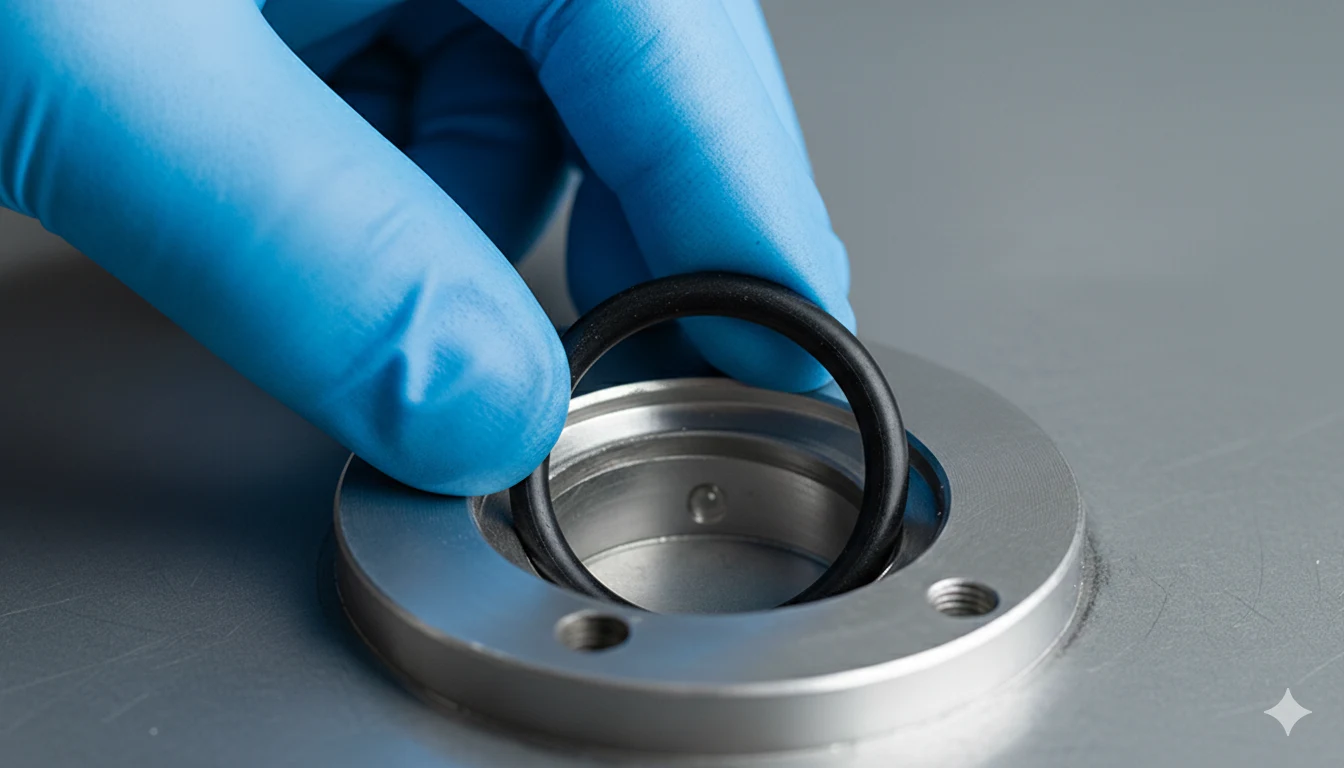
Installing an O-ring dry causes micro-tears and rolling, which leads to immediate leaks.
Action: Apply a thin film of lubricant compatible with the system fluid.
Proper O-ring lubricant selection reduces friction, prevents installation damage, and improves sealing performance.
Warning: Do not use petroleum grease on EPDM O-rings (often used in brake systems), as it will destroy the seal instantly.
4. Address the Extrusion Gap
If the leak occurs only at high pressure, your hardware gap might be too wide.
Fix: Install a Back-up Ring next to the O-ring. If space is tight, switch to a harder durometer, such as an NBR 90A O-ring or HNBR 90A O-ring.
These changes are often essential in high-pressure hydraulic leak fix scenarios.
Advanced Troubleshooting: Material Upgrades
Sometimes, simply replacing “like for like” results in another leak. This means you need an upgrade:
Extreme Heat: If dealing with FFKM vs FKM O-rings for high temperature steam, remember that FFKM can handle up to 327°C, far exceeding standard FKM.
Oil & Gas: For specialized environments, AFLAS FEPM seals for oil and gas applications provide superior resistance to steam and sour gas.
Aggressive Chemicals: If the fluid is highly corrosive, choose encapsulated O-rings for aggressive chemical resistance to get the chemical inertness of PTFE with the elasticity of an elastomer.
Emergency Solutions: The O-Ring Cord
What if you need to seal a leak immediately, but the size is non-standard?
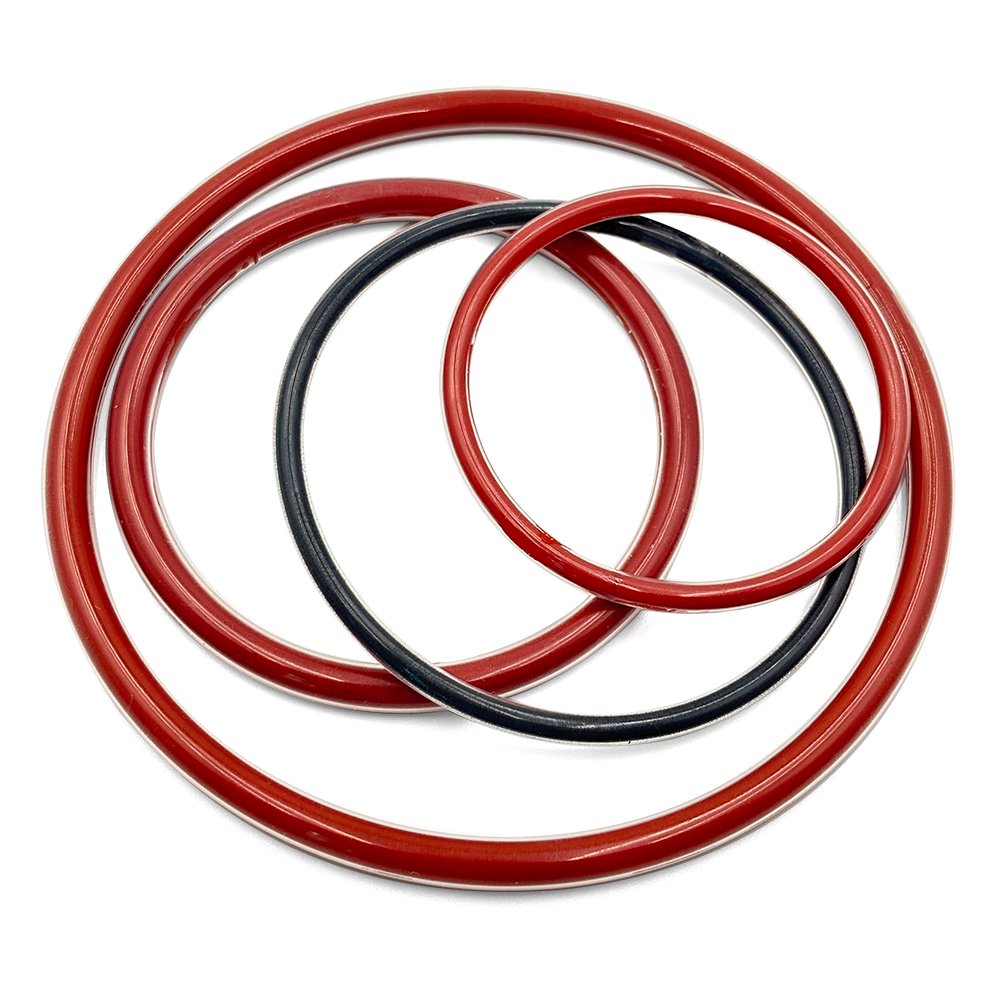
The Solution: Using O-ring cord for non-standard emergency repairs. We recommend keeping various diameters of cord stock in your maintenance inventory. You can cut the cord to length and bond the ends for a quick static fix.
Summary: Prevention is the Best Seal
Knowing how to seal a leaking O-ring is a valuable skill, but preventing the leak is better engineering. At QZSEALS, we emphasize that 90% of leaks are due to improper sizing or material selection, not defective manufacturing.
By ensuring your groove dimensions align with the seal volume and verifying chemical compatibility, you can ensure long-term performance. Whether you need a simple rubber ring or a complex spring energized seal, our technical team is ready to assist you in making the right choice.