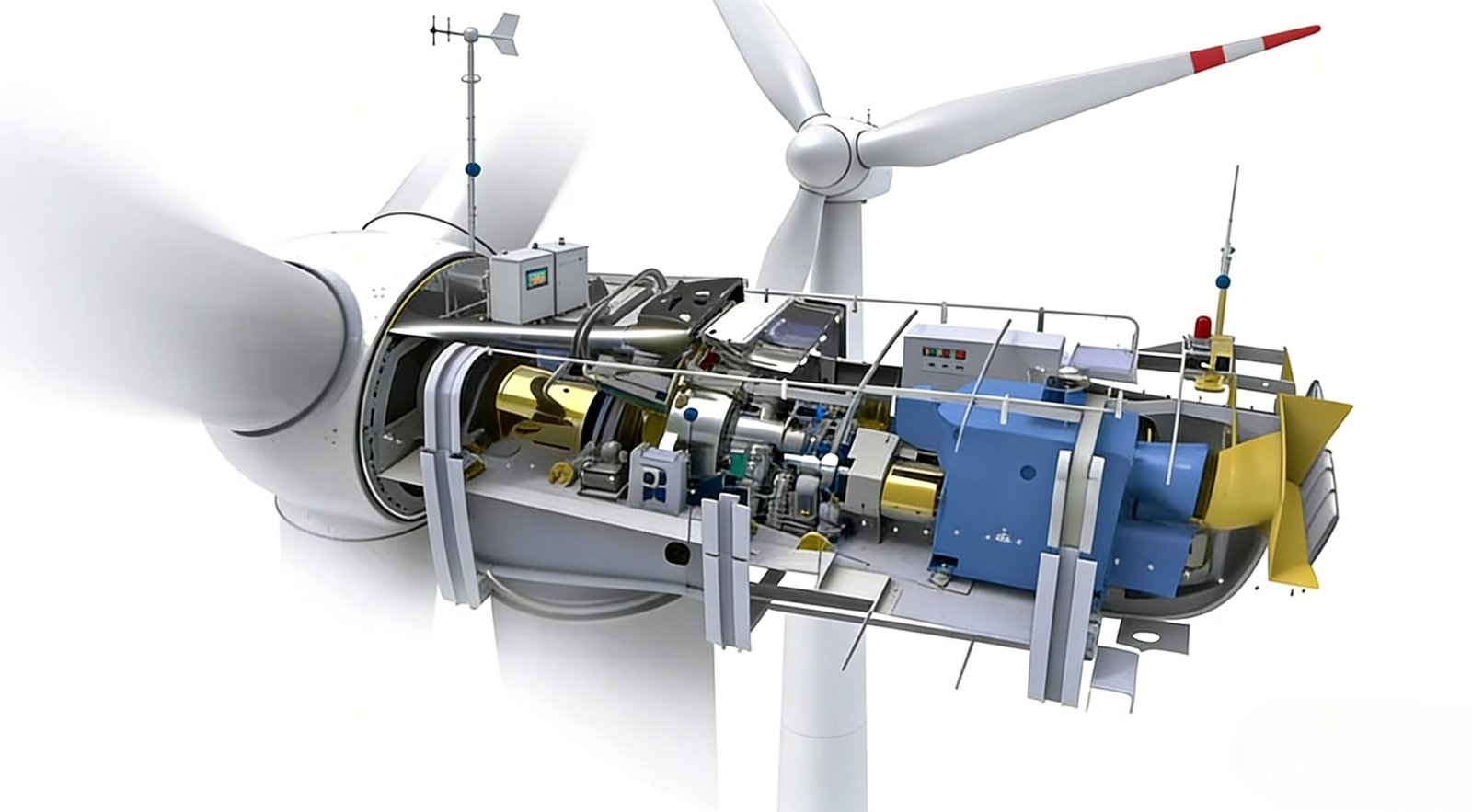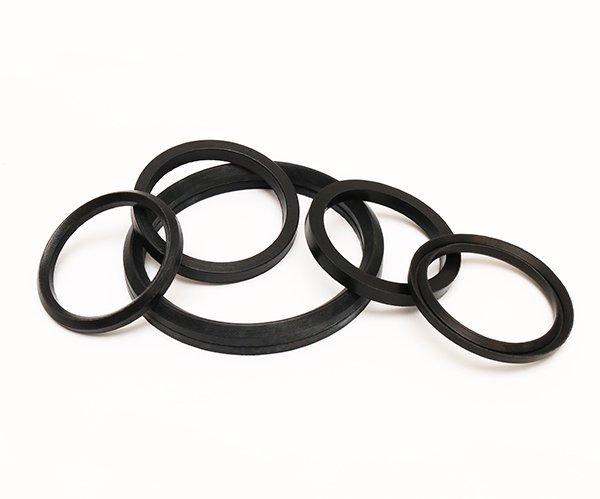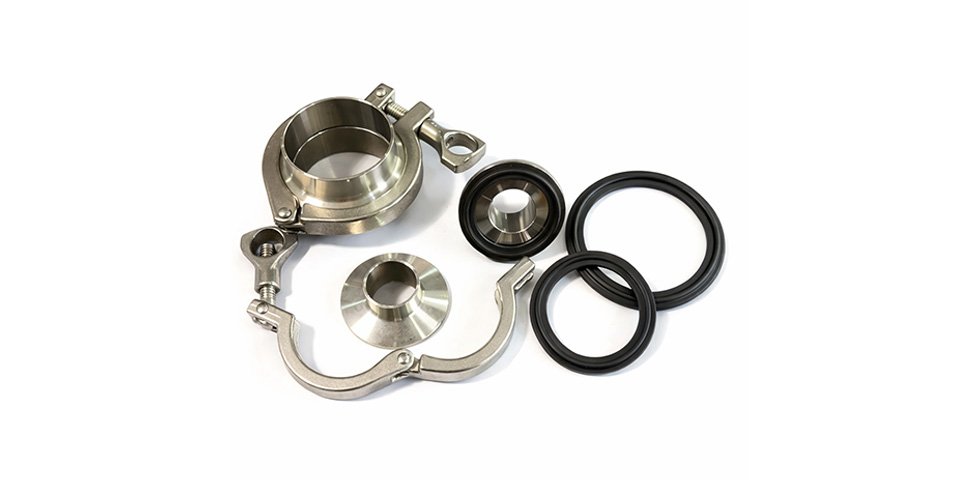


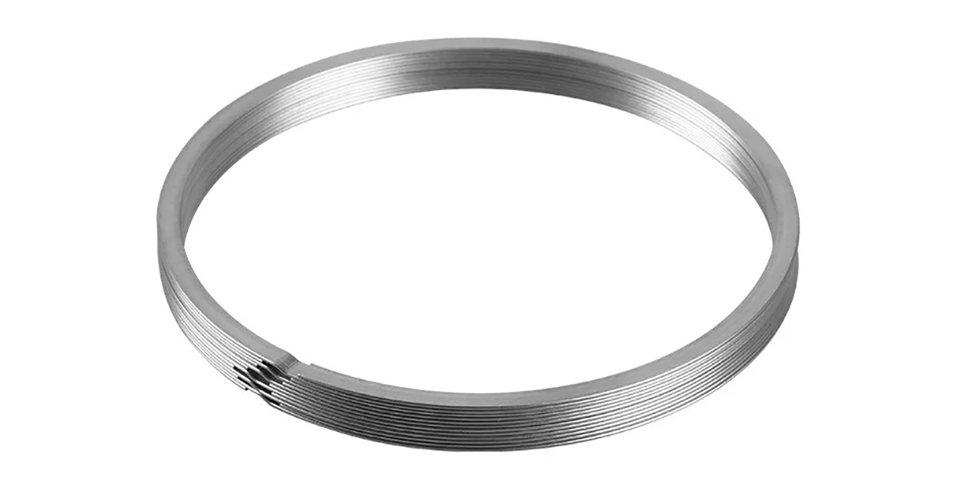
In metallurgical and heavy industrial equipment, reliability often depends on components that are small in size but critical in function. Retaining rings and snap rings, as well as laminar sealing rings, belong to the same engineered ring family designed for axial retention and sealing performance. Whether configured as structural retaining elements or as double sealing rings FK 6 ISD for continuous casting applications, these precision rings play a decisive role in maintaining mechanical stability, lubrication integrity, and long service life under demanding operating conditions.
In continuous casting lines, rolling mills, rotary joints, and transmission systems, sealing and axial retention must work together. A failure in either system can result in lubricant loss, contamination ingress, premature bearing damage, and costly downtime. Understanding the engineering principles behind laminar sealing structures and retaining systems is therefore essential for modern metallurgical operations.
Engineering Principle of Laminar Sealing Rings
Laminar or stacked sealing rings are designed as multi-layer ring assemblies that combine rigidity and flexibility in a single integrated structure. Instead of relying solely on one sealing interface, the system uses multiple ring elements stacked together to create a dynamic and adaptive sealing mechanism.
A typical laminar sealing assembly consists of:
A primary sealing ring made from high-strength metal alloy, directly exposed to media pressure and mechanical load.
A compensating ring, often produced from flexible graphite, PTFE, or other wear-resistant materials, capable of adapting to shaft movement and compensating for gradual wear.
An elastic element, such as a wave spring, which provides continuous axial preload to maintain surface contact.
This structural cooperation enables axial compensation capability and allows the sealing system to respond effectively to pressure fluctuations. When internal pressure increases, fluid penetrates micro-gaps between laminar layers. The resulting reverse force enhances inter-ring contact pressure, creating a self-energizing sealing effect. Unlike traditional packing seals that may experience a pressure leakage turning point, laminar sealing rings improve sealing performance as pressure rises.
In high-speed rotating systems, where shaft speeds can reach thousands of RPM, optimized laminar sealing rings maintain extremely low leakage rates while resisting thermal distortion and abrasive wear. This makes them particularly suitable for harsh metallurgical environments.
FK 6 ISD Double Sealing Rings for CCM Extractors
The double laminar sealing rings FK 6 ISD for continuous casting machine are developed to ensure stable lubrication performance under high-temperature and high-load operating conditions. In continuous casting processes, components are exposed to steam, cooling water, scale particles, and constant vibration, placing strict demands on sealing reliability.
The FK 6 ISD adopts a dual-layer laminar configuration that optimizes pressure distribution across the sealing surfaces. Under fluctuating operating pressure, the layered structure enhances surface contact force, forming a more effective sealing barrier. Its expansion-based design maintains consistent radial contact during thermal cycling, helping to retain grease and minimize contamination ingress into the bearing chamber. Accurate control of inner diameter, outer diameter, and thickness tolerances ensures proper fit and long-term operational stability.
In addition to sealing performance, mechanical positioning within extractor assemblies depends on durable CCM extractors retaining rings. These retaining rings are installed in precision grooves to prevent axial displacement of bearings and rotating components. Designed to withstand vibration, load variation, and temperature changes, they provide secure axial fixation and maintain structural alignment during continuous operation. High-strength materials and controlled elasticity ensure reliable load-bearing capacity without deformation.
Together, advanced laminar sealing rings and precision retaining rings contribute to improved system reliability, reduced maintenance frequency, and enhanced operational efficiency in demanding metallurgical environments.
Retaining Rings in Metallurgical Systems
Mechanical stability in metallurgical systems relies heavily on retaining ring components, commonly referred to as snap rings. These rings are widely used for axial positioning of bearings, gears, and sealing assemblies within shafts and housings, ensuring that rotating and stationary parts remain securely fixed during operation.
Installed in precision-machined grooves, a retaining ring provides reliable axial load support while maintaining compact structural design. In demanding metallurgical environments, it must withstand continuous vibration, thermal expansion, and heavy mechanical stress. High-strength spring steel or corrosion-resistant stainless steel materials, combined with controlled heat treatment, ensure long-term fatigue resistance and dimensional stability.
Proper groove geometry and dimensional accuracy are critical to maintaining uniform stress distribution and preventing deformation under load. In high-temperature rotary applications, including rotating connections exposed to steam, oil, or water, rotary joint retaining rings must also demonstrate strong oxidation resistance and structural integrity. Their performance directly affects system alignment, operational safety, and overall equipment lifespan.
Material Selection and Failure Prevention
Material selection is fundamental to sealing and retaining system performance, particularly when material properties must comply with internationally recognized standards such as ASTM material specifications. In extreme high-temperature environments, nickel-based alloys combined with flexible graphite may be used. For corrosive chemical exposure, silicon carbide and fluorocarbon elastomers provide enhanced resistance.
Studies show that sealing failures often result from thermal stress deformation and abrasive wear. Surface engineering techniques such as hard coating or laser cladding can significantly extend service life. Meanwhile, proper lubrication management and installation precision are equally important to prevent premature failure.
Installation and Operational Monitoring
Even the best sealing design requires precise assembly. Shaft runout, housing concentricity, and spring preload must remain within specified tolerances. Controlled compression and correct axial positioning directly influence sealing efficiency and longevity.
Modern predictive maintenance technologies, including acoustic emission monitoring, enable early detection of sealing surface damage or spring imbalance. Proactive inspection reduces unplanned shutdowns and improves overall equipment efficiency.
Expanding Applications of Laminar Sealing Technology
Laminar sealing rings are widely used in:
Continuous casting machines
Rolling mills
Internal combustion exhaust systems
Rotating worktables
Power generation units
Transmission systems
With maximum operating temperatures reaching up to 600°C and linear speeds up to 10 m/s, stacked sealing structures provide stable performance in steam, water, oil, weak acids, and gas media.
As metallurgical machinery evolves toward higher speed and efficiency, laminar sealing rings, retaining rings, and rotary joint retaining rings are also advancing in precision, material science, and intelligent monitoring integration.
QZSEALS – Your Technical Sealing Partner
At QZSEALS, we understand that every retaining ring, every snap ring, and every set of double sealing rings FK 6 ISD for continuous casting machine represents more than a component — it represents operational reliability.
Our philosophy is built on professionalism, responsibility, collaboration, and continuous innovation. We do not simply supply products; we provide engineering-based sealing and retaining solutions tailored to real working conditions.
Whether you are designing new metallurgical equipment, upgrading laminar sealing rings for metallurgical machinery, or optimizing rotary joint retaining rings, QZSEALS offers technical guidance, material selection support, and structural recommendations to help you achieve long-term performance stability.
We welcome cooperation with equipment manufacturers, maintenance teams, and industrial distributors worldwide. Contact QZSEALS today for professional technical consultation and customized sealing solutions designed to protect your equipment and improve operational efficiency.