

Understanding Large O Ring for Heavy-Duty Sealing Applications
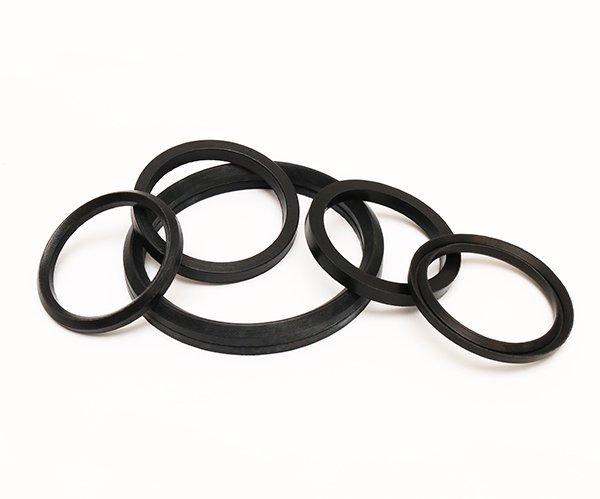
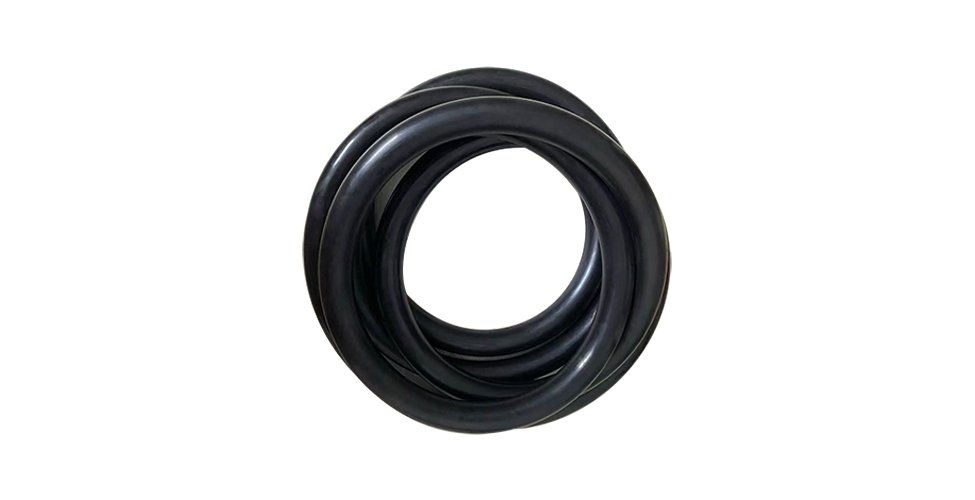
Large O ring—often defined as O-rings with very big inside diameters (ID) or non-standard cross-sections—are essential components in heavy industrial machinery, pressure vessels, vacuum systems, semiconductor equipment, and many other large-scale engineering environments. As equipment continues to grow in size and complexity, so does the need for custom, oversized, and high-performance large O ring that meet strict dimensional and functional requirements.
At QZSEALS, we specialize in producing custom large O ring in a wide range of materials, dimensions, and tolerances. Whether you need fully molded, spliced, bonded, or specially engineered oversized O-rings, our team ensures precision, reliability, and fast delivery for both standard and non-standard applications.
This article provides a comprehensive overview of large O-ring manufacturing methods and gives you a practical guide on how to measure large O rings accurately using professional techniques.
What Are Large O-Rings?
Large O-rings are generally defined as:
O-rings exceeding standard sizes like AS568, ISO 3601, or JIS series
O-rings with ID values of hundreds of millimeters (commonly above 150 mm and up to several thousand mm)
O-rings requiring custom tooling, special molding techniques, or non-standard tolerances
These oversized rings are widely used in:
Large bore hydraulic cylinders
Compressors and valve systems
Oil & gas drilling equipment
Heavy-duty diesel engines
Semiconductor and FPD manufacturing lines
High-pressure containment vessels
Vacuum chambers and large enclosure sealing systems
Because of their size, weight, elasticity, and precision requirements, large O-rings cannot be manufactured or measured using the same approach as small or standard O-rings.
Manufacturing Methods for Large O Ring
Depending on application requirements—pressure, vacuum, chemicals, temperature, sealing performance—large O-rings can be produced using different technologies. Below are the most common industrial methods.
1. Continuous Molding (Premium Quality for Large Diameters)
Continuous molding is one of the highest-quality methods for manufacturing large O-rings. Using this technique, the O-ring is molded in a continuous circular process on specialized equipment.
Advantages
Produces nearly seamless rings
Excellent dimensional stability
Highly consistent cross-section
Ideal for large diameter and critical sealing applications
Suitable for vacuum, high pressure, and dynamic motion environments
Disadvantages
Higher cost than other methods
Longer production cycle
This method is commonly used in semiconductor tools, large vacuum systems, LCD/FPD equipment, and high-precision industrial machines.
2. Fully Molded (Serpentine Molding)
Traditional fully molded methods use a serpentine-shaped mold cavity to accommodate large sizes.
Advantages
No joint line—completely molded
Uniform sealing surface
Disadvantages
High tooling cost
O-ring may retain mold curvature (“memory”), making installation more difficult
Not preferred for high-pressure gases or dynamic sealing
Limited maximum diameter
Continuous molding has largely replaced this method in many industries.
3. Molded Joint O-Rings (Partially Cured Cord Joined in Mold)
The O-ring cord is partially cured, formed into a circle, and re-molded under pressure and temperature.
Advantages
No tooling cost
Good for basic sealing where extreme precision is not required
Disadvantages
Joint may show under-fill or over-fill
Slight misalignment possible
Not recommended for vacuum or high-pressure applications
A cost-effective option for prototypes or low-volume orders.
4. Precision Vulcanized O Ring (High-Grade Bonded Joint)
Extruded cord is cut precisely—usually at an angle—and bonded with a proprietary rubber adhesive system.
Advantages
Clean, strong, and stable joint
Better sealing performance than standard vulcanization
Good option before upgrading to continuous molding
Suitable for large diameters with moderate sealing requirements
Disadvantages
Slight adhesive mark or surface finish differences
Not ideal for high-pressure or dynamic sealing
5. Standard Vulcanization (Economical Bonded Joint)
A basic and cost-effective bonding method for non-critical applications.
Advantages
Fast delivery
Low cost
Flexible for custom large sizes
Disadvantages
Most inconsistent joint quality
Visible joint marks
Only suitable for low-pressure static sealing
This method is typically used for simple sealing tasks or temporary solutions.
How to Measure Large O Rings (Step-by-Step Guide)
Keyword: how to measure large O rings
Accurate measurement is essential for replacing worn-out large O-rings or ordering custom new ones. Because large O ring is flexible and elastic, incorrect methods can easily lead to measurement errors of several millimeters.
Below is the correct industrial method to determine the dimensions of large O ring.
Key Dimensions You Must Measure
Every O-ring—especially large O-rings—must be defined by two primary values:
1. Inside Diameter (ID)
The inner opening of the O-ring.
Measured in millimeters (mm).
2. Cross-Section (CS)
The thickness of the rubber cord.
Measured with calipers.
3. Outside Diameter (OD) (optional)
Calculated using:
OD = ID + 2 × CS
Tools Used to Measure Large O-Rings
Depending on the size of the O-ring, the following tools are recommended:
Digital caliper – for measuring CS
Pi Tape (O-Sizer) – for measuring very large diameters
Diameter gauge (circle gauge)
O-ring cone gauge – for small to medium sizes
V-block measuring board – for destructive measurement
For large O ring, a Pi Tape is the most reliable method.
How to Measure Large O-Rings (Step-by-Step)
Step 1: Lay the O-Ring Flat
Place the O-ring on a clean, flat table and ensure it forms a natural circular shape without stretching or twisting.
Step 2: Measure the Cross-Section (CS)
Using a digital caliper:
Lightly clamp the rubber cord
Do NOT compress or deform the cord
Measure at several points and calculate the average
Accurate CS measurement is critical because even a 0.5 mm difference can affect sealing performance.
Step 3: Measure the Inside Diameter (ID)
For medium sizes (below approx. 150 mm ID)
You can use calipers carefully without stretching the O-ring.
For large O-rings (above approx. 150 mm ID)
Use a Pi Tape:
Wrap the tape around the O-ring’s circumference
Pull it snugly around the outer surface
Read the measurement directly on the scale
Convert if needed (Pi Tape gives diameter directly depending on the model)
A Pi Tape provides millimeter-level accuracy even for very large rubber O rings up to several meters.
Step 4: (Optional) Destructive Development Measurement
For the highest precision:
Cut the O-ring cleanly along a radial line
Lay it in a V-shaped guide
Measure the linear length
Convert using the formula:
ID = (Length / π) – CS
This method destroys the O-ring but provides the most accurate results.
Step 5: Compare Your Measurements to Standards
After measuring:
Compare ID and CS to ISO 3601
Check whether it matches a standard size
If not, it is considered a custom O-ring
Custom sizes are common for large diameters—especially in heavy machinery and industrial equipment.
Why Accurate Measurement Matters for Large O Ring
Precision measurement ensures:
Correct compression
Leak-free sealing
Proper installation
Longer service life
Accurate replacement of existing rings
Incorrect sizing can cause:
Leakage
Equipment damage
Safety hazards
Extra downtime and cost
Large O-rings are often used in critical applications, making proper measurement extremely important.
QZSEALS – Expert in Custom Large O-Rings
At QZSEALS, we manufacture large O ring from 150 mm to several thousand mm in a wide range of materials including NBR, FKM, EPDM, HNBR, silicone, and more.
What we offer:
Fully molded large O-rings
Continuous molded O-rings
Precision vulcanized large O-rings
Custom non-standard diameters
Large cross-sections
Small MOQ
Fast lead times
Whether you need a single custom size or mass production, we support both.
If you need help measuring your O-ring, simply send us photos + your measured ID and CS, and we can confirm the correct size before production.
Conclusion
Large O ring plays a crucial role in sealing large industrial systems, and choosing the correct size and manufacturing method is essential for long-term reliability. Understanding how to measure large O rings ensures accurate replacement and better sealing performance.
With advanced manufacturing capabilities and strong expertise in large diameter O-rings, QZSEALS provides reliable, customized solutions for industrial equipment worldwide.