

In the world of extreme sealing, metal C ring seals are not just passive components; they are active mechanical springs designed to fight against leaks in the harshest environments known to engineering. At QZSEALS, we often see that while engineers choose the right seal, they often overlook the nuances of installation and configuration.
Unlike elastomeric O-rings that are forgiving, metal seals demand precision. A metal C ring seals function by balancing three forces: the clamping load of the flange, the internal pressure of the system, and the inherent elastic recovery and springback of metal seals. This ensures a sustained sealing force even after load relaxation or thermal cycling. This guide dives into the critical engineering factors, such as metal C-ring compression load calculation, that determine whether your seal holds vacuum or fails catastrophically.
1. The Critical Rule: Internal vs External Pressure Metal C-ring Orientation
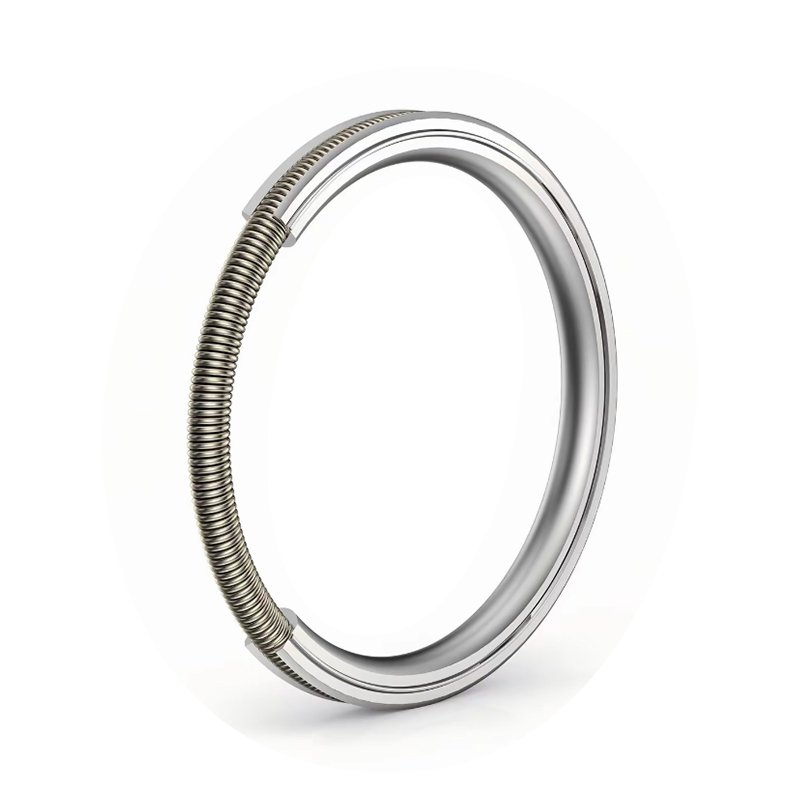
The most distinct feature of metal C ring seals is their open cross-section. This is not just for weight reduction; it is for the self-energizing mechanism of metal C ring seals. However, this design introduces specific directional failure modes in metal sealing rings that do not exist with solid rings: Directionality.
We manufacture two distinct types of C-rings based on pressure direction, and installing them backward is the number one cause of field failure:
- Internal Pressure C Rings (Internal Pressure Metal Seals): The open side of the “C” faces inwards (towards the center). The system pressure enters the C-cavity and pushes the seal legs outward against the flange surface. This makes the seal “self-energizing.”
- External Pressure C Rings (External Pressure Metal Seals) : The open side of the “C” faces outwards. This is critical for metal C-rings for ultra-high vacuum chambers or submarine applications where the higher pressure is on the outside. If you use an internal-style ring here, the external pressure will crush the “C” closed, causing a leak.
2. The Science of Springback (Elastic Recovery)
Why choose a C-Ring over a metal O-ring? The answer lies in its superior springback. In applications like Inconel 718 metal C-rings for jet engines or exhaust manifolds, flanges heat up and expand, causing the gap between them to grow (flange separation).
A rigid seal would lose contact and leak, but metal C ring seals offers significantly greater springback than hollow metal O-rings. Because the “C” shape acts as a more efficient mechanical spring, it can expand further to maintain constant contact as the flange separates. This makes them the premier choice when choosing metal seals for extreme vacuum and temperature ranges (e.g., cryogenic metal seals for liquid hydrogen storage at -253°C up to +600°C), where significant thermal cycling would cause a less flexible seal to fail.
3. The Role of Plating and Surface Finish
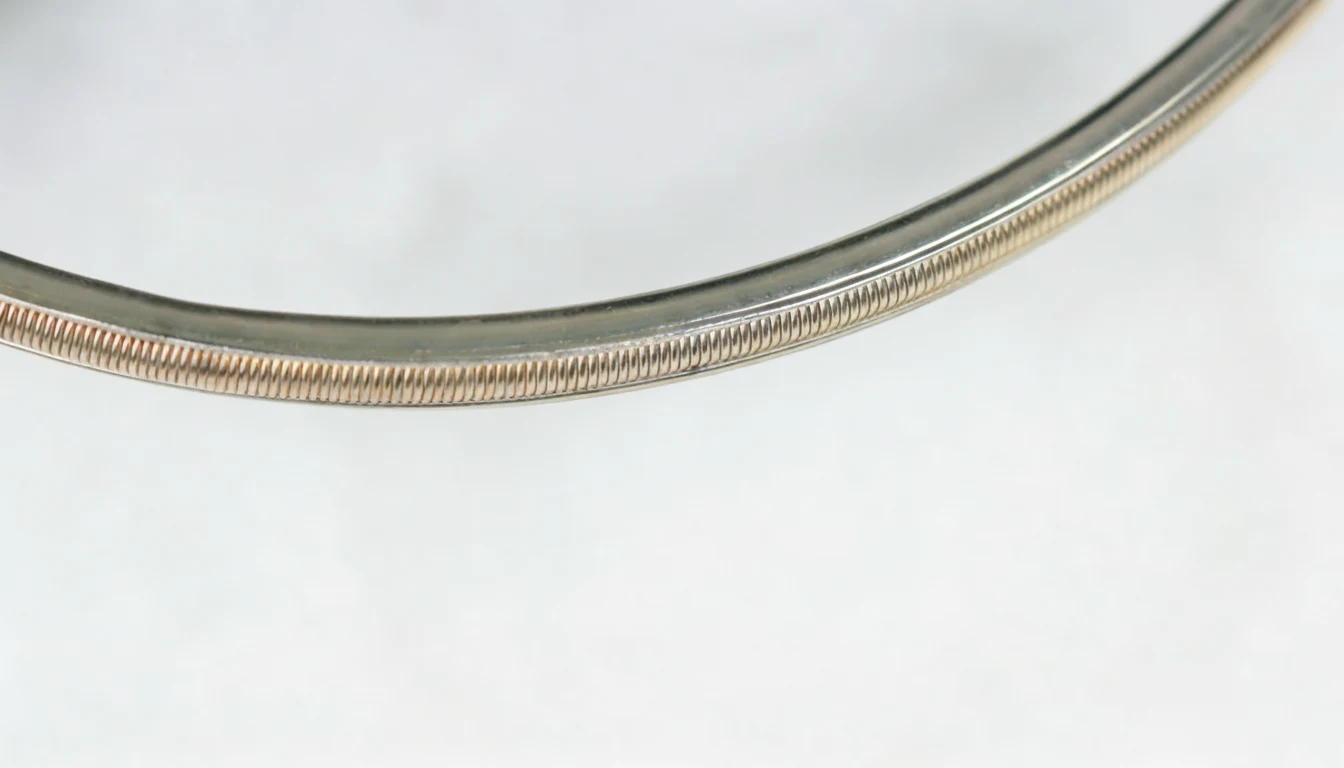
Metal is hard, and even a polished flange has microscopic peaks. This is why metal seal plating types play a critical role. To overcome surface imperfections, a “soft” layer is applied over the hard base metal—allowing the plating to flow plastically into the flange’s microscopic irregularities.
Common Plating Options:
- Silver plating for high temperature metal seals: The industry standard for high-temperature flange sealing applications (up to 450 °C). Silver offers excellent ductility and gap-filling properties, allowing it to plastically deform and seal microscopic flange imperfections under high temperature and pressure.
- Gold plated metal seals for ultra-low leakage: Used for inert environments and high-purity requirements where no oxidation can occur.
- PTFE: Used for spring energized metal seals for corrosive environments where metal plating might react, though it is temperature-limited.
Note on Surface Finish: Because the plating does the sealing, the flange finish must be precise. For aerospace metal sealing rings for weight reduction, we generally recommend a concentric machined finish of 0.4 to 0.8 Ra (16-32 RMS). These requirements are vital for nuclear reactor pressure vessel metal C-ring seals and are consistent with general flange sealing and engineering surface finish standards (Ra vs RMS).
If the surface is too smooth, the plating may slide or fail to “grip” the flange; if it is too rough, the soft plating will not properly conform to the valleys, leading to leak paths. Achieving this balance is non-negotiable for safety-critical systems.
4. Load Considerations
One major advantage of these seals is that they act as low clamping force metal gaskets for light flanges. This allows manufacturers to use lighter flanges and smaller bolts—a crucial weight-saving factor in aerospace.
However, “lower load” does not mean “low load.” You must ensure your bolt torque is calculated to fully compress the seal to its designed height. Failing to reach the “seating load” means the plating will not deform properly. For heavier duty applications requiring higher loads, you might explore our broader metal sealing rings category.
Summary: Precision is Key
Metal C ring seals are the unsung heroes of the high-performance world. They bridge the gap between the flexibility of a spring and the durability of a weld. By paying attention to the orientation (internal vs. external) and respecting the surface finish requirements, you can achieve a leak-free system in environments where no rubber seal could survive.
If your application involves ultra-high vacuum, cryogenic temperatures, or extreme thermal cycling, we recommend reading our related article, The Metal C-Ring: Sealing Solutions for Extreme Vacuum and Temperature, for application-specific insights.