

Introduction: Metal Sealing as a Foundation of Industrial Reliability
Metal O-Ring vs Metal C-Ring sealing solutions are fundamental to modern industrial systems, where sealing technology is no longer a supporting element but a critical safeguard for safety, efficiency, and overall system integrity. From petrochemical processing and nuclear power generation to aerospace, semiconductor manufacturing, and ultra-high-vacuum applications, equipment must operate reliably under extreme pressure and temperature conditions. In these environments, high pressure metal seals are essential to prevent leakage, maintain system stability, and ensure continuous operation under demanding loads.
Metal sealing rings play a central role in delivering effective high pressure sealing solutions across a wide range of industries. Compared with elastomeric seals, metal seals offer superior resistance to pressure, temperature extremes, aggressive media, and long-term aging. Among the many metal sealing ring types available today, solid and hollow metal O-rings, as well as metal C-ring seals, are two of the most widely adopted solutions for critical pressure applications.
Although both are classified as high-performance metal seals, their structural principles and pressure performance of metal seals differ significantly. These differences directly influence sealing behavior, load requirements, and long-term reliability under pressure. A clear metal sealing rings comparison between metal O-rings and metal C-rings is therefore essential for engineers and designers when selecting the most appropriate sealing solution for high-pressure applications.
At QZSEALS, we believe that effective sealing is not achieved by selecting a product alone, but by understanding how seal design, material science, pressure mechanics, and system conditions interact. This article provides a comprehensive comparison of metal O-rings and metal C-rings, with a particular focus on pressure performance, while incorporating real-world industrial experience and QZSEALS’ engineering-driven sealing philosophy.
Metal O-Ring Seals: Stability and Strength Under Extreme Pressure
In high-temperature and high-pressure environments, sealing components must deliver not only strength, but also long-term stability. Metal O-ring seals have become a trusted choice in such demanding applications, often regarded as the “guardians” of critical pressure systems.
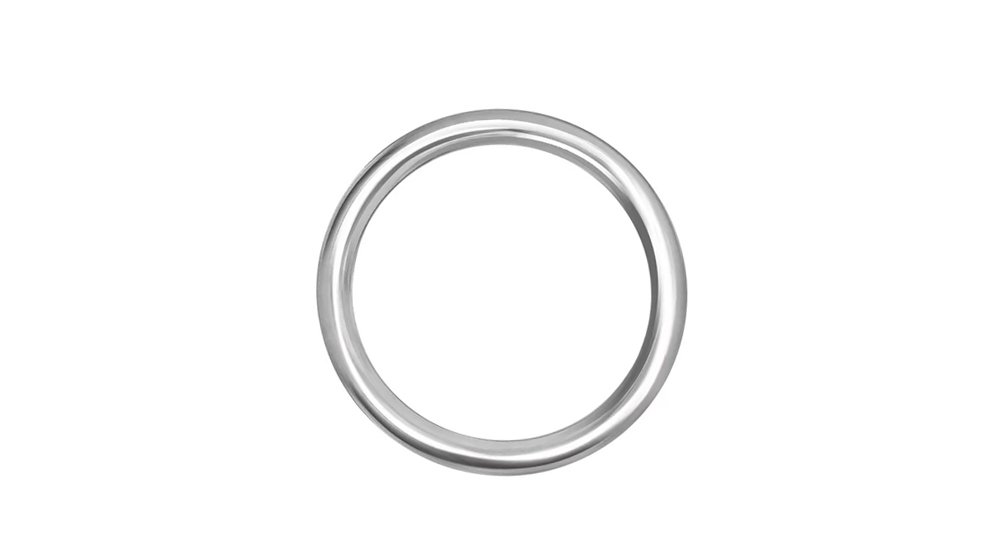
A metal O-ring is typically manufactured from a metal tube or solid metal ring, forming a circular cross-section. Common base materials include stainless steel, Monel alloys, Inconel alloys, and other high-performance metals known for their mechanical strength, corrosion resistance, and thermal stability. In many designs, the surface is further enhanced with a soft metallic or functional coating, improving sealing contact with the flange surface.
From a pressure perspective, metal O-rings excel because they rely on plastic deformation under compression. When installed, the seal deforms uniformly against the mating surfaces, creating a continuous metal-to-metal sealing line. This design allows metal O-rings to withstand extremely high internal pressures, often exceeding 50 MPa (500 bar), and in optimized systems, reaching 100 MPa (1000 bar) or higher.
Another critical advantage lies in pressure distribution. The circular cross-section ensures that stress is spread evenly along the sealing interface, significantly reducing the risk of localized overstress, extrusion, or sudden failure. This makes metal O-rings particularly suitable for static sealing applications where pressure remains high and stable over long operating periods.
In addition to pressure resistance, metal O-rings demonstrate excellent performance in high-temperature environments, ultra-high vacuum systems, and applications requiring extremely low leakage rates. Their full-metal construction eliminates concerns related to elastomer aging, chemical swelling, or gas permeation.
At QZSEALS, metal O-rings are frequently selected for pressure vessels, thermal reactors, heat exchangers, hydraulic systems, semiconductor equipment, and special valves where absolute pressure integrity and long service life are non-negotiable requirements.
However, it is important to note that because metal O-rings depend on plastic deformation to achieve sealing, they typically exhibit limited elastic recovery. As a result, they are best suited for static or semi-static applications, and are usually considered single-use seals once fully compressed.
Metal C-Ring Seals: Controlled Pressure Sealing with Elastic Resilience
While metal O-rings prioritize maximum pressure resistance, metal C-ring seals offer a different engineering approach—one that balances pressure capability with resilience, adaptability, and compact design.
The metal C-ring is characterized by its C-shaped cross-section, which introduces an inherent spring-like behavior into the seal. For a deeper understanding of C-ring structural mechanics, spring behavior, coating options, and real-world application constraints, you may explore our detailed technical guide: Exploring the Applications and Features of Metal C-Ring: A Comprehensive Technical Analysis. Structurally, the C-ring often consists of a high-strength metal framework, commonly based on nickel alloys or stainless steels, combined with carefully engineered sealing surfaces. In many cases, QZSEALS enhances C-ring performance through precision coatings such as silver or other soft metals to improve conformity and sealing reliability.
Under compression, the open “C” structure allows the seal to deform elastically, generating high contact stress at the sealing interface. This elastic response enables the C-ring to maintain sealing performance even under pressure cycling, thermal expansion, and mechanical movement.
In terms of pressure capability, metal C-ring seals typically operate reliably in the range of 20–50 MPa (200–500 bar). While this is generally lower than the maximum achievable pressure of metal O-rings, the C-ring’s design allows it to perform exceptionally well in environments where pressure is combined with temperature fluctuations or dynamic conditions.
One of the defining advantages of the C-ring is its self-energizing behavior. As system pressure increases, the internal pressure can enhance the sealing force, improving contact stress and reducing leakage risk. This characteristic makes C-rings particularly suitable for applications involving pressure cycling or varying operating conditions.
Another notable benefit is the lower required sealing load. Compared with solid metal seals, C-rings require less bolt force to achieve effective sealing. This reduces stress on flanges and fasteners, lowers installation risk, and makes the seal suitable for lightweight or space-constrained systems.
At QZSEALS, metal C-rings are widely applied in aerospace systems, vacuum equipment, semiconductor manufacturing tools, gas turbines, nuclear energy components, and specialized industrial valves. Their compact geometry and resilience make them ideal for applications where space, weight, and adaptability are critical design constraints.
Metal O-Ring vs Metal C-Ring Seals: Pressure Performance Comparison
When comparing metal O-rings and metal C-rings from a pressure performance standpoint, it becomes clear that neither design is universally “better.” Instead, each excels under different pressure-related conditions.
Metal O-rings are unmatched in absolute pressure resistance. Their ability to withstand ultra-high pressure with uniform stress distribution makes them the preferred solution for static systems operating under sustained extreme loads. In environments where pressure stability and zero leakage are paramount, the metal O-ring offers exceptional reliability.
Metal C-rings, on the other hand, provide superior performance in applications where pressure is combined with temperature variation, pressure cycling, or limited assembly load. Their elastic recovery and self-energizing behavior allow them to maintain sealing integrity even as operating conditions fluctuate.
From an engineering validation perspective, the pressure performance of metal seals is also defined by international standards and industry guidelines. Organizations such as ASME, NASA, and leading materials suppliers provide extensive technical references on metal sealing behavior under extreme pressure and temperature conditions, offering valuable guidance for seal selection and system design.
QZSEALS Engineering Philosophy: Pressure Is Only One Part of the Equation
At QZSEALS, we approach sealing selection as a system-level engineering challenge. Pressure rating is a critical parameter, but it must be evaluated alongside temperature, media compatibility, flange design, surface roughness, assembly force, and service life expectations.
Our engineering team works closely with customers to analyze real operating conditions and recommend the most suitable metal sealing solution. In some cases, this means selecting a standard metal O-ring or C-ring. In others, it involves customizing materials, cross-sections, coatings, or tolerances to achieve optimal performance.
This application-driven approach reflects QZSEALS’ commitment to long-term reliability rather than short-term specifications.
Conclusion: Selecting the Right Metal Seal for High-Pressure Applications
Metal O-rings and metal C-rings are indispensable components in modern industrial sealing technology. Each offers distinct advantages in terms of pressure performance, structural behavior, and application flexibility.
Metal O-rings excel in ultra-high-pressure, static environments where uniform stress distribution and long-term sealing stability are essential. Metal C-rings, by contrast, offer elastic resilience, lower sealing loads, and adaptability in systems exposed to pressure cycling and thermal variation.
The key to successful sealing lies not in choosing a seal based on pressure limits alone, but in understanding how pressure interacts with the entire system. With continuous advancements in materials and manufacturing technology, metal sealing solutions will continue to evolve—supporting safer, more efficient, and more reliable industrial operations.
QZSEALS remains committed to delivering precision-engineered metal sealing solutions that perform where failure is not an option.