

Introduction: The Critical Role of the Industrial Seals in Modern Engineering
IIn the complex and interconnected world of modern machinery, countless components must work in perfect harmony to deliver performance, safety, and reliability. Among these, industrial seals stand out as components of foundational importance. The act of sealing is one of engineering’s most fundamental challenges, yet its success is often taken for granted.
So, what is a seal? At its core, a seal is a precisely engineered device designed to create a barrier between two or more surfaces, preventing the escape or entry of fluids, containing pressure, and excluding contaminants. This simple definition barely scratches the surface of modern sealing technology.
From the robust hydraulic seals in a massive earthmover to the microscopic O-rings in medical devices, these components are the silent guardians of operational integrity. A seal failure is rarely a minor inconvenience; it can lead to catastrophic equipment damage, costly production downtime, and severe safety and environmental hazards. Therefore, a deep understanding of sealing technology is not just beneficial—it is essential for engineers, designers, and maintenance professionals across every industry.
This comprehensive guide will serve as a definitive overview of modern sealing technology. We will journey from the basic principles that govern all industrial seals to a detailed exploration of various seal types, including gaskets, O-rings, oil seals, and advanced dynamic seals. We will also delve into the critical role of material science in determining a seal’s performance. As a trusted expert in the design, manufacturing, and global supply of industrial seals, QZSEALS is proud to present this guide, sharing our passion for engineering excellence and our commitment to solving the world’s most demanding sealing challenges.
Chapter 1: The Fundamental Principles of Sealing
Before exploring the vast array of different seal designs, it is crucial to understand the foundational principles that govern how industrial seals function. Every seal, regardless of its shape or material, operates based on a core set of concepts.
Core Functions: What is a Seal For?
The purpose of any industrial seal can be distilled down to three primary functions:
- Containment: Keeping fluids or gases inside a system. A seal contains hydraulic fluid in hydraulic seals to generate force, holds lubricant in a gearbox to prevent wear, and keeps fuel inside an engine.
- Exclusion: This is the inverse of containment. Seals act as a barrier to prevent external contaminants like dust, dirt, moisture, and chemicals from entering a system and damaging sensitive internal components.
- Separation: In some applications, a seal is used to keep two different media apart, preventing them from mixing. An example would be a pump seal that separates the pumped fluid from the bearing lubricant.
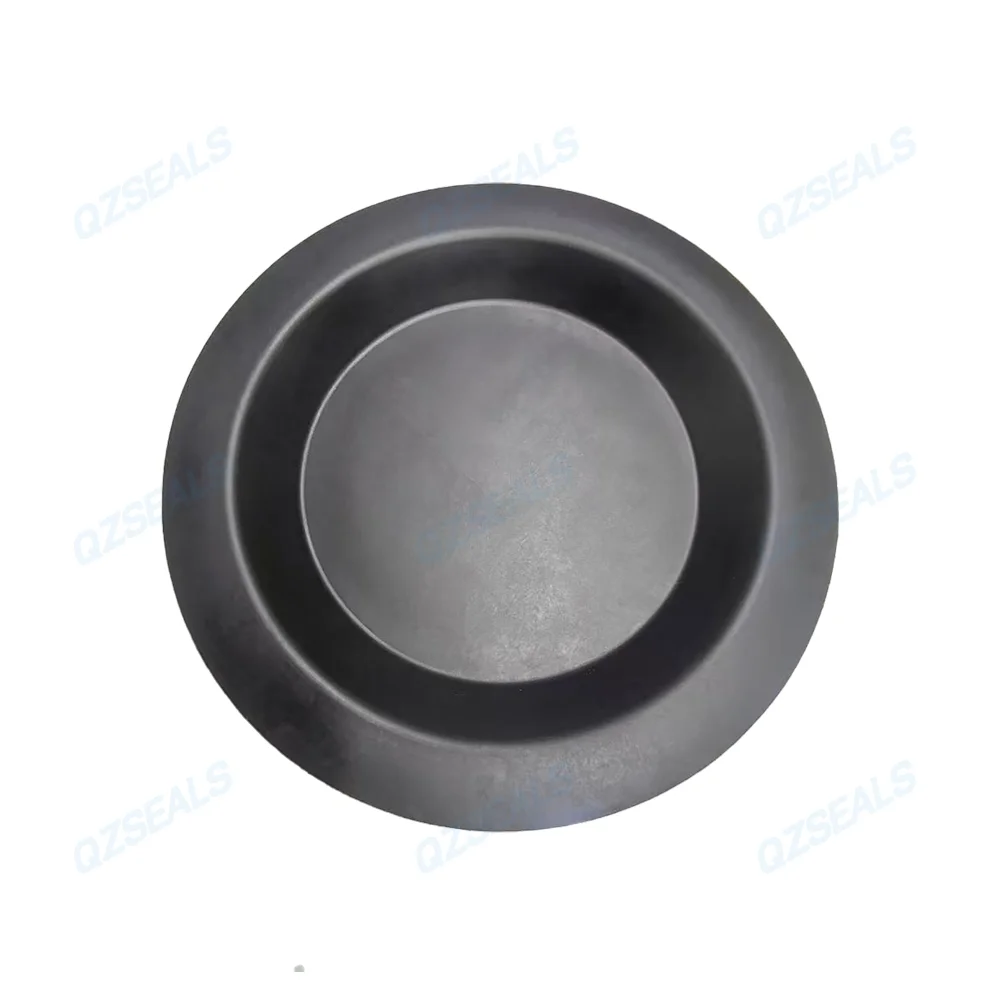
Static vs. Dynamic Sealing: The Great Divide
The most critical distinction in sealing technology is based on motion. This factor dictates the entire design philosophy of industrial seals.
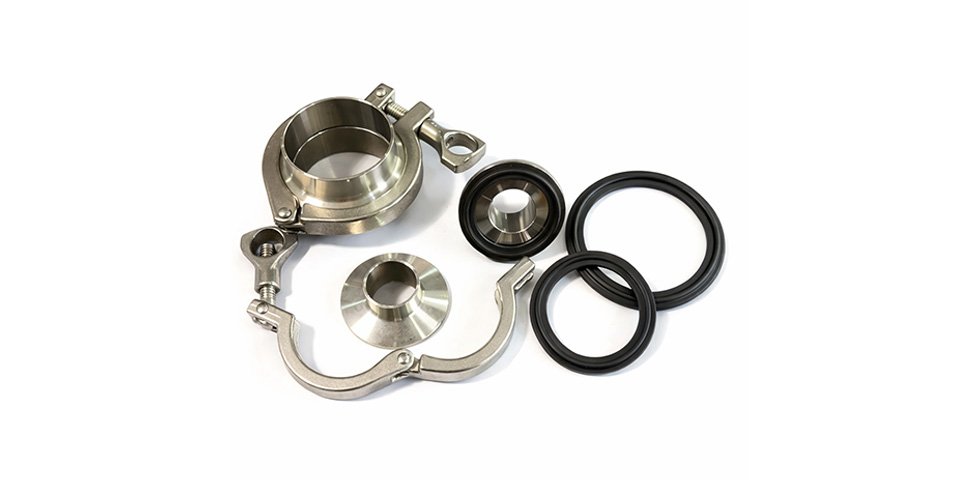
- Static Sealing: A static seal is used in an application where the mating surfaces do not move relative to each other once assembled. The components are fixed. The most quintessential example of a static seal is the gasket. A gasket is a deformable material that is compressed between two stationary flanges, creating a robust, leak-proof barrier. QZSEALS offers a wide array of Gaskets for these critical static applications.
- Dynamic Sealing: A dynamic seal is required when there is relative motion between the sealed surfaces. This is a far more complex engineering challenge, as the seal must maintain its integrity while managing friction, wear, and heat. Dynamic applications are further divided into:
- Reciprocating Motion: Back-and-forth linear movement, such as a piston in a cylinder. This is the domain of Piston Seals and Rod Seals.
- Rotary Motion: A spinning motion, such as a shaft in a housing. This is the primary application for Oil Seals and Mechanical Seals.
Chapter 2: Static Seals in Focus – The Gasket
While the world of dynamic seals is vast, it is important to first understand the cornerstone of static sealing: the gasket. A common point of inquiry is the relationship between a seal for gasket applications and other seal types.
How a Gasket Works
A gasket is a mechanical seal which fills the space between two or more mating surfaces, generally to prevent leakage while under compression. Its sealing mechanism is straightforward:
- It is placed between two stationary flanges.
- A clamping force (usually from bolts) is applied.
- This force compresses the gasket material, causing it to deform and flow into the microscopic imperfections of the flange surfaces.
This creates a continuous, conforming barrier that blocks any potential leak paths. The material must be resilient enough to deform without being permanently crushed or extruded by the clamping force.
Gasket Materials and the Role of Sealers
Gaskets are made from a wide range of materials, including paper, cork, elastomers, and advanced polymers. For chemically aggressive environments, materials like PTFE are essential. Our PTFE Gasket is an excellent example of a solution for corrosive applications. A common supplementary product is a gasket sealer, which is a paste or liquid applied to the gasket to help fill minor scratches on the flange surfaces. However, in high-performance industrial applications, the goal is to have flanges so well-prepared that a sealer is not necessary.
Chapter 3: A Deep Dive into the World of Dynamic Seals
Dynamic sealing is where the true complexity and innovation of modern sealing technology becomes apparent. These seals are highly engineered systems designed to operate reliably for millions of cycles.
Reciprocating Sealing Systems (Hydraulic & Pneumatic)
Hydraulic and pneumatic systems rely on a sophisticated ecosystem of seals to convert fluid power into controlled motion. These seals must work together flawlessly.
Piston Seals
The Piston Seal is the engine of a hydraulic or pneumatic cylinder. It is located on the piston head and seals dynamically against the cylinder bore, preventing fluid from bypassing. This is critical for efficiency and force generation. QZSEALS offers a wide range of advanced Piston Seals, from the versatile SPG Piston Seal to the heavy-duty SPGW Piston Seal, designed for high-pressure applications.
Rod Seals
The Rod Seal is located in the cylinder head and seals against the moving piston rod. Its primary job is to prevent fluid from leaking out of the cylinder into the environment. Designs like the IDI Rod Seals or the compact S8 Rod Seal are engineered for reliable, low-friction performance.
Wiper Seals
The Wiper Seal is the system’s first line of defense. Positioned externally on the cylinder head, its sharp lip scrapes contaminants from the retracting rod, protecting the entire internal system from abrasive damage. A robust A5 Wiper Seal is critical for extending the life of all internal components. View our full range of Wiper Seals for more options.
Wear Rings and Guide Strips
Though not technically seals, these components are indispensable. The wear ring or guide strip is a band of durable, low-friction material that guides the piston and rod, preventing metal-to-metal contact. This stability is essential for the proper performance of the seals. Our Phenolic Resin with Fabric Wear Ring is a prime example of a material designed to absorb side loads and ensure smooth operation. Explore our full category of Wear Rings.
Pneumatic systems use similar principles, but the seals are specifically designed for the challenges of sealing air, which include higher speeds and less lubrication. See our category of Pneumatic Seals for these specialized designs.
Rotary Sealing Systems
Sealing a rotating shaft is a fundamental challenge found in everything from gearboxes to industrial pumps.
Oil Seals (Rotary Shaft Seals)
Commonly known as an oil seal, this component is designed to contain lubricants and exclude contaminants in rotary applications. A critical example is the crankshaft seal in an engine. A typical TC Oil Seal uses a flexible elastomeric lip, energized by a garter spring, to ride on the shaft. It works by maintaining a microscopic film of oil that both lubricates the seal and prevents leakage. For more demanding applications, PTFE Oil Seals offer higher speed and temperature capabilities. See all options in our Oil Seals category.
Pump Seals and Mechanical Seals
For more demanding rotary applications, such as those in industrial pumps, more robust solutions are needed. Mechanical seals are complex, multi-part devices that can handle higher pressures and speeds than standard oil seals. Our specialized Gear Pump Seals are engineered for the tight tolerances and high pressures found in these applications. Explore more solutions in our Pump Seals category.
V-Rings
A V ring is a unique all-rubber seal that seals axially against a counterface. It is an excellent excluder seal, often used to protect bearings in heavily contaminated environments. We offer a variety of profiles, including the VA Ring, in our V-Rings category.
Chapter 4: The O-Ring – The Universal Sealing Component
No discussion of sealing technology would be complete without a dedicated focus on the O-ring. Its simplicity, reliability, and versatility make it the most widely used industrial seals in the world.
How O-Rings Work
An O-ring is a torus-shaped loop of elastomer designed to be seated in a groove and compressed. This initial squeeze creates the seal. A key feature is that system pressure further energizes the O-ring, pushing it against the groove wall and increasing the sealing force. This makes it highly effective in a vast range of static and dynamic applications. Explore our standard O-Ring Rubber Seals.
O-Ring Variants
- O-Ring Cord: For large or non-standard static sealing applications, O-Ring Cord provides a flexible solution. It is an extruded cord of elastomer that can be cut to length and bonded to create a custom-sized O-ring.
- Encapsulated O-Rings: This innovative design combines the best of both worlds. An Encapsulated O-Ring features an elastomeric core for flexibility, which is covered by a seamless jacket of chemically inert FEP or PFA. This provides the chemical resistance of PTFE with the resilience of an O-ring. See more options in our Encapsulated O-Ring category.
Chapter 5: Advanced Sealing for Extreme Environments
When an application’s conditions—temperature, pressure, or chemical media—exceed the capabilities of conventional industrial seals, advanced solutions are required. These seals are engineered for the most demanding industries, such as aerospace, nuclear, and energy.
Spring-Energized Seals
A Spring Energized Seal is designed for performance in extreme environments. It consists of a precision-machined polymer jacket (often PTFE-based) and a corrosion-resistant metal spring energizer. The spring provides a constant force on the sealing lips, ensuring a reliable seal from cryogenic temperatures to extreme heat. The type of sealing springs can be tailored to the application, from a flexible Meander V-Spring to a high-load Helical Spring. Discover the full range in our Spring Energized Seals category.
Metal Sealing Rings
For the absolute most extreme conditions, only metal seals will suffice. These are required in applications with ultra-high temperatures, high radiation, or hard vacuums where any polymer would fail. Metal sealing rings work by deforming under a high clamping load to create a permanent, robust metal-to-metal seal. A common type is the Hollow Metal O-Ring, which offers unparalleled durability. Explore our full category of Metal Sealing Rings.
Chapter 6: The Critical Role of Material Science
A seal’s performance is fundamentally tied to its material. Sealing technology depends on matching design with appropriate materials.
Key Material Families
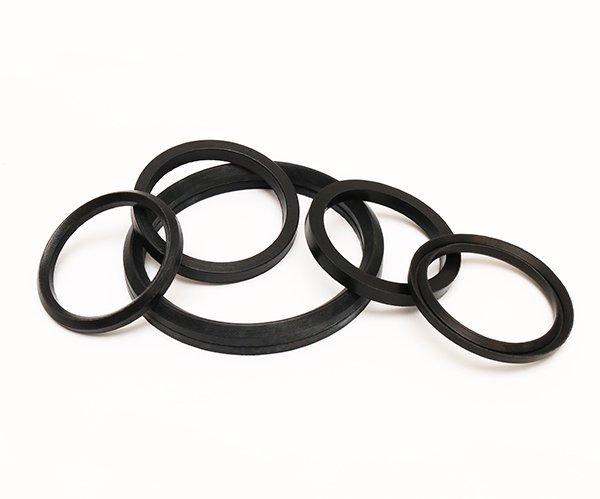
- Elastomers (Rubbers): The most common material family, valued for its elasticity. A standard rubber seal or black seal is typically made from an elastomer like Nitrile (NBR) for oil resistance or EPDM for weather resistance.
- Fluoropolymers: This family, led by PTFE, is known for its extreme chemical resistance and low friction. It is the material of choice for applications involving corrosive media.
- Engineering Plastics: Materials like PEEK offer superior mechanical strength and temperature resistance. They are used for high-stress components, such as the PEEK Valve Plate in our Compressor Spare Parts line.
- Diaphragms: Often made from fabric-reinforced rubber, a Fabric-Reinforced Rubber Diaphragm is engineered for flexibility and strength, used to separate two chambers or fluids. Explore our range in the Diaphragm category.
At QZSEALS, our deep expertise in material science allows us to offer both standard and Customized Rubber Products to meet any challenge. Learn more about our raw materials in our Sealing Material section.
Conclusion: Your Partner in Sealing Excellence
The world of industrial seals reveals remarkable diversity and sophistication. From gaskets to high-speed rotary seals, each component is critical to machine reliability. Success lies in understanding sealing technology principles and selecting the right seal for each application.
QZSEALS delivers trusted sealing solutions worldwide, offering expert consultation, flexible design, and rigorous quality control. Across automotive, aerospace, energy, and pharmaceutical industries, our mission remains clear: provide industrial seals that ensure safety, performance, and reliability.