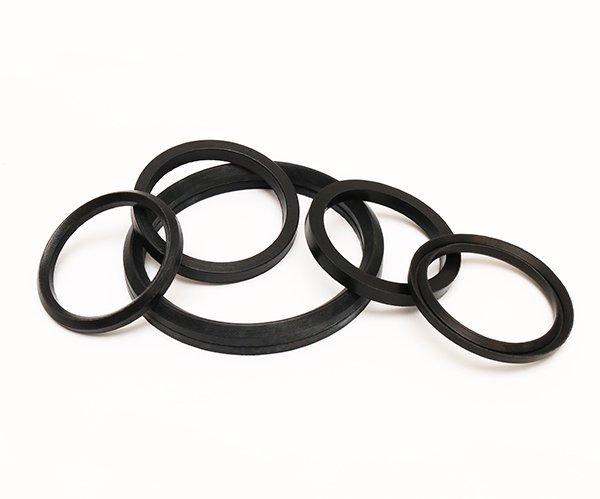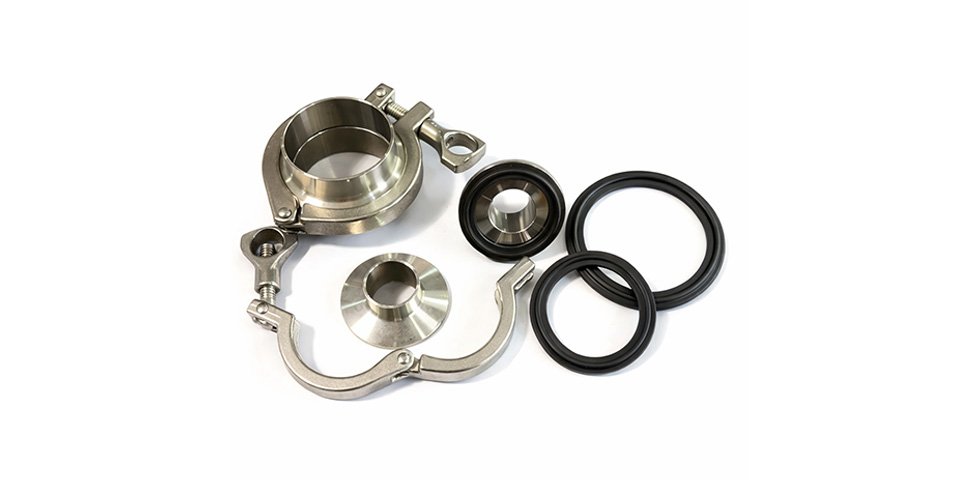


O-ring cord plays a critical role when sealing applications move beyond standard sizes. In the ideal world of engineering, every groove is machined to a standard ISO 3601 or AS568 dimension, and every replacement seal is sitting on the shelf. In reality, non-standard groove O-ring cord solutions are often the only way to handle massive flanges that exceed mold sizes or urgent “machine down” situations. This is where custom length rubber seals for heavy duty equipment become the hero of the workshop.
At QZSEALS, while we pride ourselves on our precision molded parts, we also produce kilometers of high-quality extruded rubber profiles for industrial sealing. This guide explains how to utilize this versatile material to solve sealing headaches that molded rings simply cannot.
What is O-Ring Cord?
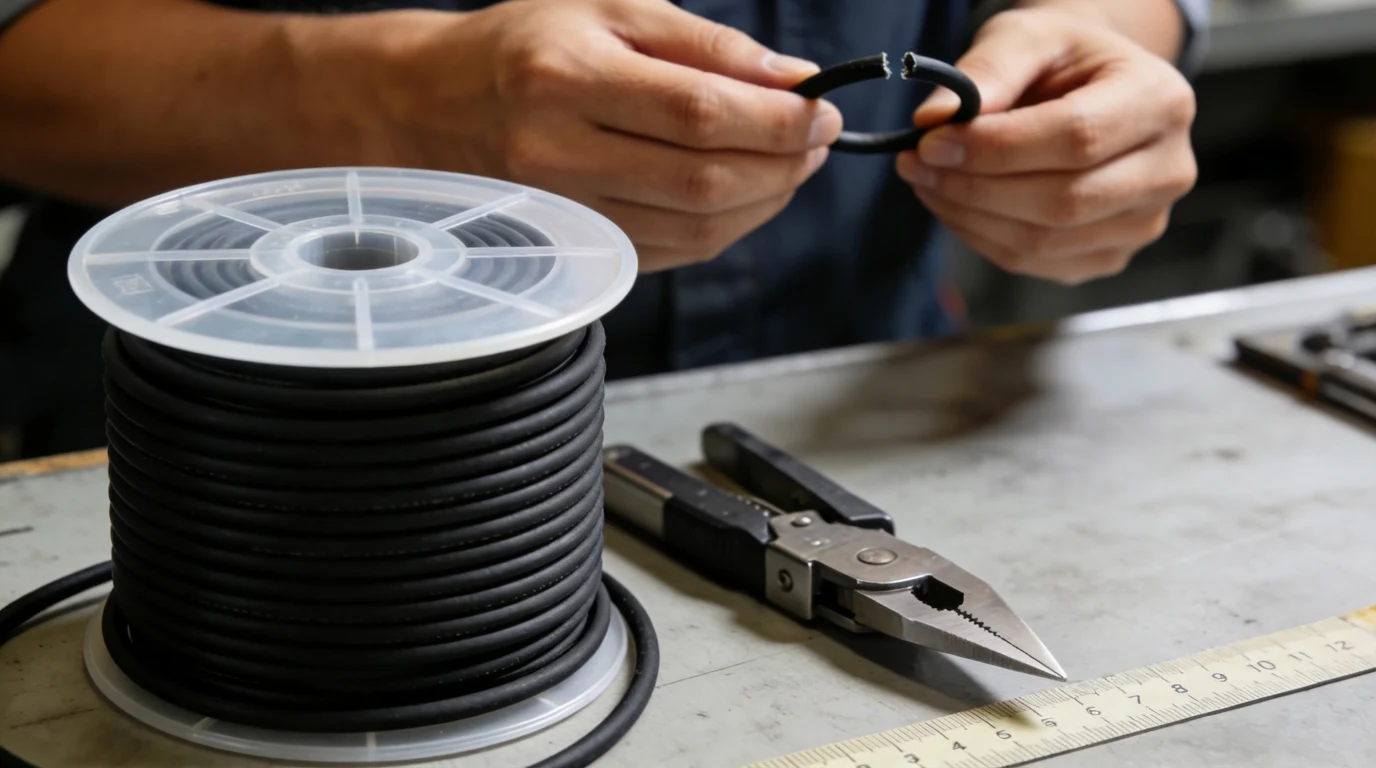
Unlike a molded O-ring which is created in a specific circular die, O-ring cord is produced via continuous extrusion. It is essentially an O-ring with no beginning and no end—until you cut it.
We supply various metric vs imperial O-ring cord stock sizes on spools to help you fabricate custom diameter O-ring seals for large flanges. To ensure performance, our production adheres strictly to O-ring cord diameter tolerances ISO 3601, ensuring the cross-section is consistent enough to maintain a reliable seal.
Explore our inventory here: O-Ring Cord Category.
When to Use O-Ring Cord (And When Not To)
It is crucial to understand the limitations when replacing molded O-rings with vulcanized cord seals.
The “Green Light” – Ideal Applications
- Large Static Flanges: For lids, container seals, or pipe flanges where the diameter is huge (e.g., >500mm). Molding tools for these sizes are prohibitively expensive.
- Emergency Seal Repair Kit: When a machine is leaking and you don’t have the part number. You can measure the groove, cut the cord, and fix it in minutes.
- Non-Standard Grooves: When the hardware design doesn’t match any standard chart.
The “Red Light” – Avoid Use
- Dynamic Applications: Do not use cord for pistons or rotating shafts. The joint (splice) is a hard spot that will suffer from friction fatigue and fail rapidly. For these, use proper piston seals or oil seals.
- High Vacuum/High Pressure: You might wonder, “Why do glued O-ring joints fail in high pressure?” The answer lies in the stress concentrations at the bond point which cannot match the molecular integrity of a molded ring.
The Joining Method: Vulcanized Spliced O-rings vs Glued Joints
How you join an O-ring cord matters. Understanding how to join an O-ring correctly is critical to seal performance, especially for large-diameter and non-standard applications. There are two common methods to turn an O-ring cord into a closed ring.
1. Cold Bonding (Super Glue)
This is the field repair method. You use a cyanoacrylate adhesive. It is fast and cheap.
Pros: Instant fix on-site.
Cons: The glue is hard and brittle. It has poor chemical and heat resistance compared to the rubber. If the glue fails, the seal fails.
2. Hot Vulcanization (Factory Made)
For a permanent solution, we recommend the hot vulcanization process for large diameter O-rings. We cut the O-ring cord to the required length, apply a raw rubber compound to the ends, and place the joint into a heated die for vulcanization.
Pros: The joint becomes chemically bonded rubber. It is nearly as strong as the cord itself and retains flexibility.
Cons: Requires factory equipment.
If you need reliable large-diameter seals, ask us for vulcanized rings with a vulcanized O-ring joint, made from our O-ring cord stock.
Material Options for Rubber Cord Stock
We extrude cord in various polymers to match your specific environmental needs:
Fuel resistant NBR nitrile rubber cord for oil pumps: The standard for general industrial oil and water applications.
High temperature FKM Viton O-ring cord for kiln seals: Essential for high-heat maintenance jobs in industrial ovens or engines.
Soft silicone O-ring cord for low closure force enclosures: Ideal for large light-fitting seals or delicate electronics.
EPDM rubber cord for HVAC and water treatment: Excellent resistance to weathering, ozone, and steam.
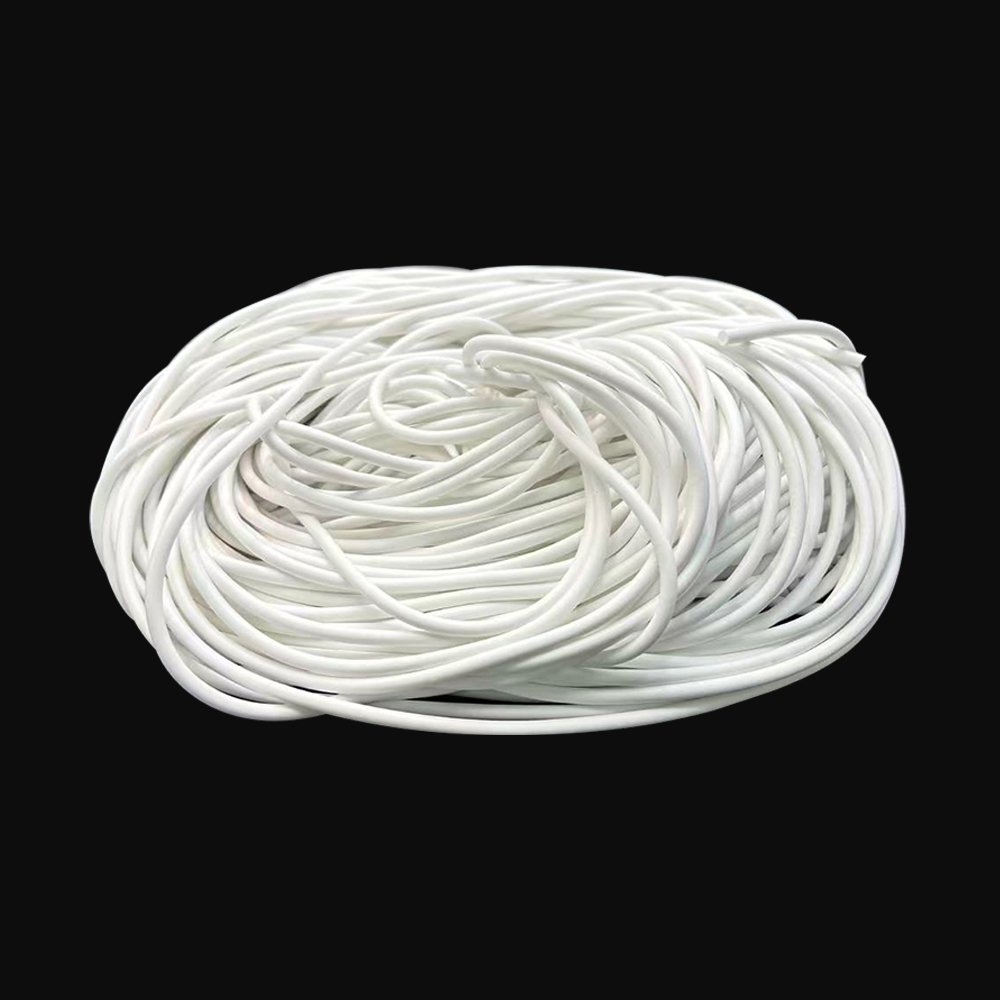
Chemically resistant solid PTFE cord for valves: Unlike rubber, PTFE cannot be glued. We offer 3.2mm PTFE round cord for the most aggressive chemical environments.
How to Calculate Cut Length
If you are making your own ring, accuracy is key. Do not just wrap it around the groove and cut. You must calculate the Cut Length (L) based on the Neutral Axis.
The Formula:
L = (Groove Diameter + Cross Section) × 3.1416
It is usually better to cut slightly longer (1-2%) to ensure the cord is in compression (pushed together) rather than tension (pulled apart) when installed. Tension causes joints to pop open.
Alternatives to Rubber Cord
In some heavy industrial valves or pumps, a rubber cord might extrude. In these cases, you might look at braided packing.
For example, high pressure graphite gland packing rope is effectively a “cord” made of woven fibers and graphite, designed for dynamic sealing in pumps where rubber O-ring cords would fail.
Conclusion
O-Ring cord is the “Swiss Army Knife” of the sealing world and one of the most versatile forms of extruded rubber profiles. It empowers maintenance teams to solve leaks instantly and allows engineers to seal massive equipment without tooling costs.
Whether you need a spool of custom rubber cord for your workshop inventory or a pre-vulcanized large-diameter ring, QZSEALS delivers precision extrusion with tight tolerances. Always keep a few meters of NBR and FKM cord in stock—it will save your production line one day.