

Introduction: The Unsung Hero of Modern Machinery
In the vast and intricate world of modern engineering, countless components work tirelessly behind the scenes to ensure the reliability and efficiency of the machines we depend on every day. Among these, one component stands out for its elegant simplicity and profound impact: the O-rings. Though it may appear to be a simple rubber seal, the O-rings are marvel of precision engineering. It is the quintessential answer to the fundamental question, “what is a seal?” It is a device designed to prevent the passage of fluids, creating a secure barrier that is essential for everything from a household faucet to the fuel lines of a jet engine.
Despite its ubiquity, the science and technology behind the O rings are often underestimated. Its performance is a delicate balance of physical design, advanced material science, and precise manufacturing. Understanding the principles that govern this humble component is crucial for engineers, designers, and technicians who strive for operational excellence. A correctly specified and installed O-ring is a silent guardian of reliability; an incorrect one can be a catalyst for catastrophic failure.
This comprehensive guide will take you on a deep dive into the world of the O rings. We will explore its fundamental design, demystify its terminology, examine the critical materials that give it life, and analyze the common reasons it fails. We will also shine a spotlight on specialized O ring solutions designed for the most demanding applications. As a trusted global partner in sealing technologies, QZSEALS leverages decades of expertise to provide not just the components, but the knowledge needed to solve the most critical sealing challenges. Join us as we explore the world’s most versatile seal.
Table of Contents
Chapter 1: The Anatomy of an O-Rings – What is it and How Does it Work?
To understand the power of the O-rings, we must begin with its fundamental design and sealing mechanism. Its simplicity is its greatest strength.
The Basic Design: A Torus of Precision
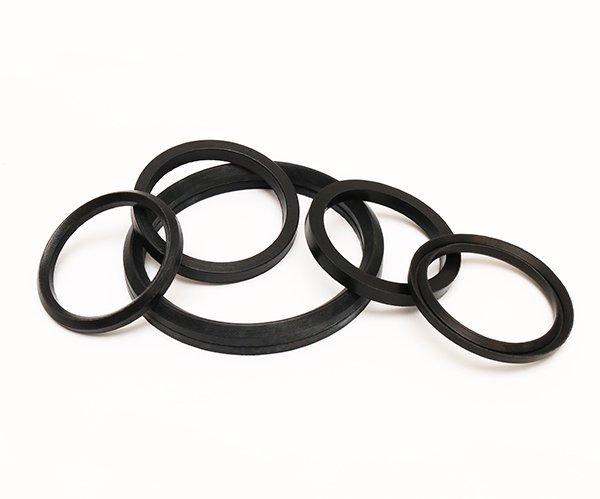
An O-ring is a torus, or doughnut-shaped, loop of elastomer. It is defined by its circular cross-section, which gives it the “O” in its name. It is designed to be seated in a precisely machined groove, or “gland,” and compressed between two or more parts. This simple geometry allows it to be used in a wide variety of sealing applications, making it one of the most common seal types in existence. For the industry standard specifications on O-Ring, see ISO 3601 – O-Ring Seals
The Sealing Mechanism: Compression and Pressure Energization
The genius of the O-ring lies in how it creates a seal. The process occurs in two stages:
- Initial Compression (Squeeze): When an O-ring is installed in its groove, the groove dimensions are smaller than the O-ring’s cross-section. This compresses the O-rings, forcing it to deform and fill the gland. This initial “squeeze” creates a tight, positive barrier that provides the initial seal, effective even at zero pressure.
- Pressure Energization: This is the key to the O-ring’s effectiveness in pressurized systems. When system pressure (from a liquid or gas) is applied, it acts on the entire surface of the O-rings. Because elastomers are essentially incompressible fluids, this pressure is transmitted uniformly throughout the O-ring’s cross-section. The pressure pushes the O-rings against the far wall of the groove, increasing the sealing force and distorting its shape from a circle to a more D-like profile. The higher the system pressure, the tighter the O-ring seals. This self-energizing capability makes the O-ring an incredibly efficient and reliable dynamic and static seal.
Chapter 2: The Language of O-Rings – Key Terminology
To select and specify an O-rings correctly, it is essential to understand its key parameters. These measurements and properties are the language of O-rings design.
- Inside Diameter (ID): The distance across the empty center of the O-rings. This is typically the most critical dimension, as it often corresponds to the diameter of a shaft or piston.
- Outside Diameter (OD): The distance across the O-rings from one outer edge to the other.
- Cross-Section (CS): The diameter of the O-ring’s rubber cross-section itself. The CS must be correctly matched to the dimensions of the groove to ensure the proper amount of squeeze.
- Groove (Gland): The machined channel in the hardware where the O ring sits. The design of the groove—its depth and width—is just as critical as the O ring itself for a successful seal.
- Durometer: This is a measure of the hardness of the elastomer. It is typically measured on the Shore A scale. A lower durometer (e.g., 50A) indicates a softer, more pliable material, while a higher durometer (e.g., 90A) indicates a harder, more rigid material. The standard durometer for many general-purpose O ring is 70A. Harder durometers are often used in high-pressure applications to resist extrusion.
QZSEALS offers a vast range of standard and custom-sized O-Ring Rubber Seals, and our technical team can provide expert guidance on selecting the perfect dimensions and durometer for your specific application.
Chapter 3: Material Science – The Heart of O-Rings Performance
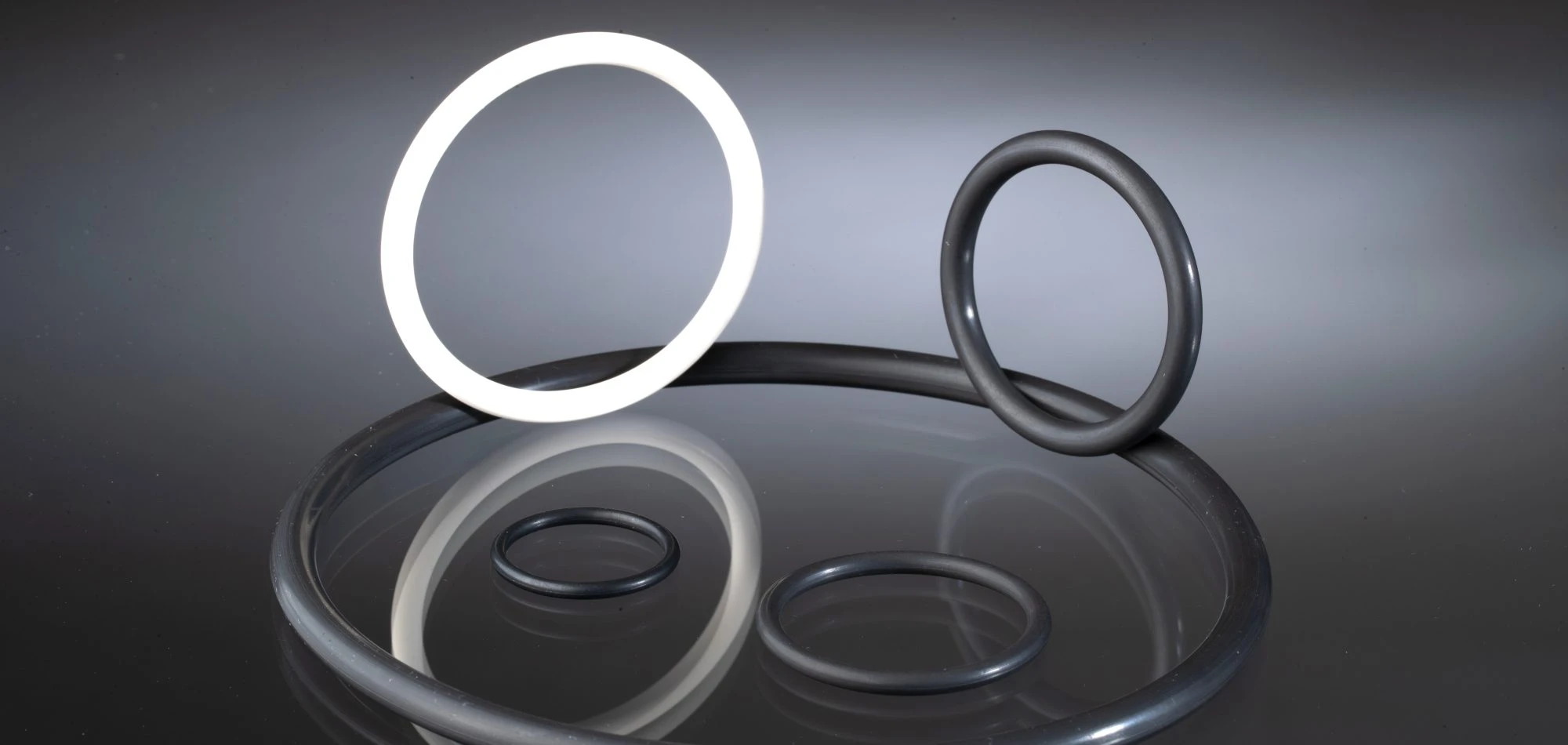
An O-ring’s physical shape is only half the story. Its ability to withstand temperature, chemicals, and physical wear is entirely determined by the elastomer it is made from. Choosing the right material is the most critical decision in O rings selection. Below are some of the most common materials used.
Nitrile (NBR) – The Versatile Workhorse
- Properties: Nitrile, also known as Buna-N, is the most widely used and cost-effective O-rings material. Its primary strength is its excellent resistance to petroleum-based oils, fuels, and hydraulic fluids. NBR O-rings have good mechanical properties, including abrasion and tear resistance.
- Common Applications: It is the standard choice for general-purpose sealing in the automotive industry, hydraulic systems, and a vast range of industrial equipment.
- Limitations: NBR has poor resistance to sunlight (UV), ozone, and weathering. It is not suitable for use with brake fluids or in applications with high temperatures, as its typical service range is -40°C to 120°C (-40°F to 250°F).
Fluoroelastomer (FKM) – The High-Performance Champion
- Properties: Commonly known by the trade name Viton®, FKM is a high-performance fluoroelastomer prized for its exceptional resistance to high temperatures, a broad spectrum of chemicals, oils, and fuels. FKM O-rings have excellent resistance to weathering and ozone.
- Common Applications: FKM is the material of choice for demanding applications where NBR would fail. This includes sealing in automotive fuel systems, high-temperature engine applications, chemical processing equipment, and the aerospace industry.
- Limitations: The primary limitations of FKM are its higher cost and its poor performance at very low temperatures.
Silicone (VMQ) – The Temperature Specialist
- Properties: Silicone’s standout feature is its vast operating temperature range. It remains flexible at temperatures from -60°C up to 230°C (-75°F to 450°F). Silicone O-rings are physiologically inert and have excellent resistance to weathering and ozone.
- Common Applications: Its clean, non-toxic nature makes silicone a top choice for sanitary applications in the food & beverage and pharmaceutical industries. Its wide temperature range also makes it ideal for static seals in aerospace applications.
- Limitations: Silicone has poor mechanical properties, including low tensile strength and poor abrasion resistance. This makes it unsuitable for most dynamic sealing applications. It is also not compatible with petroleum-based oils and fuels.
Ethylene Propylene Diene Monomer (EPDM) – The Outdoor Expert
- Properties: EPDM’s primary strength is its outstanding resistance to environmental factors. It is highly resistant to weathering, ozone, sunlight, water, and steam. EPDM O-rings also have good performance in automotive brake fluids.
- Common Applications: It is the preferred material for outdoor applications, such as seals in water systems and the automotive door weather seal. It is also widely used in steam systems and for sealing phosphate-ester based hydraulic fluids.
- Limitations: EPDM has extremely poor resistance to all petroleum-based products (oils, greases, and fuels). Exposure to these substances will cause the material to swell and rapidly fail.
Chapter 4: Beyond the Standard – Specialized O-Rings Solutions
While the standard solid elastomer O-ring is a master of versatility, some applications present challenges that require an even more specialized design. QZSEALS is at the forefront of providing these innovative solutions.
Encapsulated O-Rings: The Best of Both Worlds
Some applications require the elasticity and resilience of rubber O-rings but operate in a chemical environment that would destroy the elastomer. The Encapsulated O-Ring is the ingenious solution to this problem.
- Construction: This is a hybrid seal. It consists of a core of a standard elastomer (like Silicone or FKM) which provides the flexibility and “memory.” This core is completely enclosed in a seamless, protective jacket of a durable fluoropolymer, typically FEP or PFA.
- Benefits: The result is a seal that combines the best of both materials. The core provides the energizing force needed for a reliable seal, while the outer jacket provides a barrier that is chemically inert to almost all industrial chemicals. Our FEP Encapsulated O-Ring is a perfect example of this technology, ideal for the chemical processing and pharmaceutical industries where both performance and purity are essential. Explore more options in our dedicated Encapsulated O-Ring category.
O-Ring Cord: The Solution for Custom Static Seals
Sometimes, a seal is needed for a very large or non-standard groove, such as on the lid of a large industrial vessel, where a molded O-ring would be prohibitively expensive or unavailable.
- What it is: O-Ring Cord is an extruded length of elastomer cord with a circular cross-section, available in standard O ring diameters.
- How it is used: The cord is simply cut to the required length and the two ends are bonded together using a cyanoacrylate adhesive (super glue) to form a custom-sized O ring. This method is highly effective and provides a fast, cost-effective solution for large-diameter, static sealing applications. Discover our range of options in our O-Ring Cord section.
Chapter 5: Troubleshooting Common O-Rings Failure Modes
Even a perfectly chosen O-rings can fail if the system is not designed or maintained correctly. Understanding the common modes of O-rings failure is crucial for troubleshooting and preventing future downtime. By examining the failed ring, you can diagnose the root cause of the problem.
Compression Set
- Visual Clues: The O-rings have taken a permanent flat or square shape, conforming to the groove. It has lost its “memory” and does not rebound when removed.
- Primary Causes: The material has poor compression set resistance for the application; system temperature was too high; the O ring was over-compressed due to improper groove design.
- Solution: Select a material with a lower (better) compression set rating and verify that system temperatures and groove dimensions are within specification.
Extrusion and Nibbling
- Visual Clues: The O ring has a “chewed” or “nibbled” appearance on the low-pressure side. The edges look rough and chipped.
- Primary Causes: System pressure is too high for the O-ring’s hardness; the clearance gap between the hardware is too large.
- Solution: Use a higher durometer (harder) O ring. Incorporate an anti-extrusion backup ring on the low-pressure side. Check and reduce hardware clearances if possible.
Spiral Failure
- Visual Clues: The O-ring exhibits a series of deep, 45-degree angle cuts or marks, appearing as though it has been twisted.
- Primary Causes: This is a dynamic failure mode, often seen in long-stroke reciprocating applications. It can be caused by inconsistent lubrication, a rough surface finish, or an O ring that is too soft.
- Solution: Improve surface finish and lubrication. Consider a harder durometer O ring or switch to an alternative seal type designed to resist rolling, such as a Quad-Ring®.
Installation Damage
- Visual Clues: A clean, precise cut, nick, or peel on the surface of the O-ring. This is one of the most common failure modes.
- Primary Causes: The O-ring was dragged over sharp threads, ports, or burrs during installation; improper tools were used.
- Solution: Ensure all hardware edges are chamfered and deburred. Use installation sleeves and proper, non-marring tools. Always lubricate the O-ring before installation.
Facing a Persistent O-Rings Failure?
Our engineering team specializes in troubleshooting complex sealing challenges. Contact us with your application data and failed part, and we’ll help you find a robust, long-term solution. Let QZSEALS be your partner in reliability.
Chapter 6: Conclusion: The Enduring Power of a Simple Circle
The O-ring’s journey from a simple geometric concept to a critical component in the world’s most advanced machinery is a testament to the power of elegant design. Its ability to create a reliable, pressure-energized seal has made it an indispensable tool for engineers across every industry. However, its simplicity can be deceptive. A successful O ring application is a holistic process, requiring careful consideration of size, material, hardware design, and operating conditions.
This is where a partnership with an expert becomes invaluable. At QZSEALS, we were created from a passion for delivering high-quality sealing solutions. Our mission is to provide not just the parts, but the technical support and innovative thinking to help our clients solve their most critical sealing challenges. With a commitment to strict quality control, fast sampling, and responsive customer service, we ensure that every O ring we deliver—whether a standard part from our vast inventory or a fully customized solution—is a component our clients can trust to protect their valuable equipment. In the world of sealing, the simplest circle, when executed with precision and expertise, is the strongest line of defense.