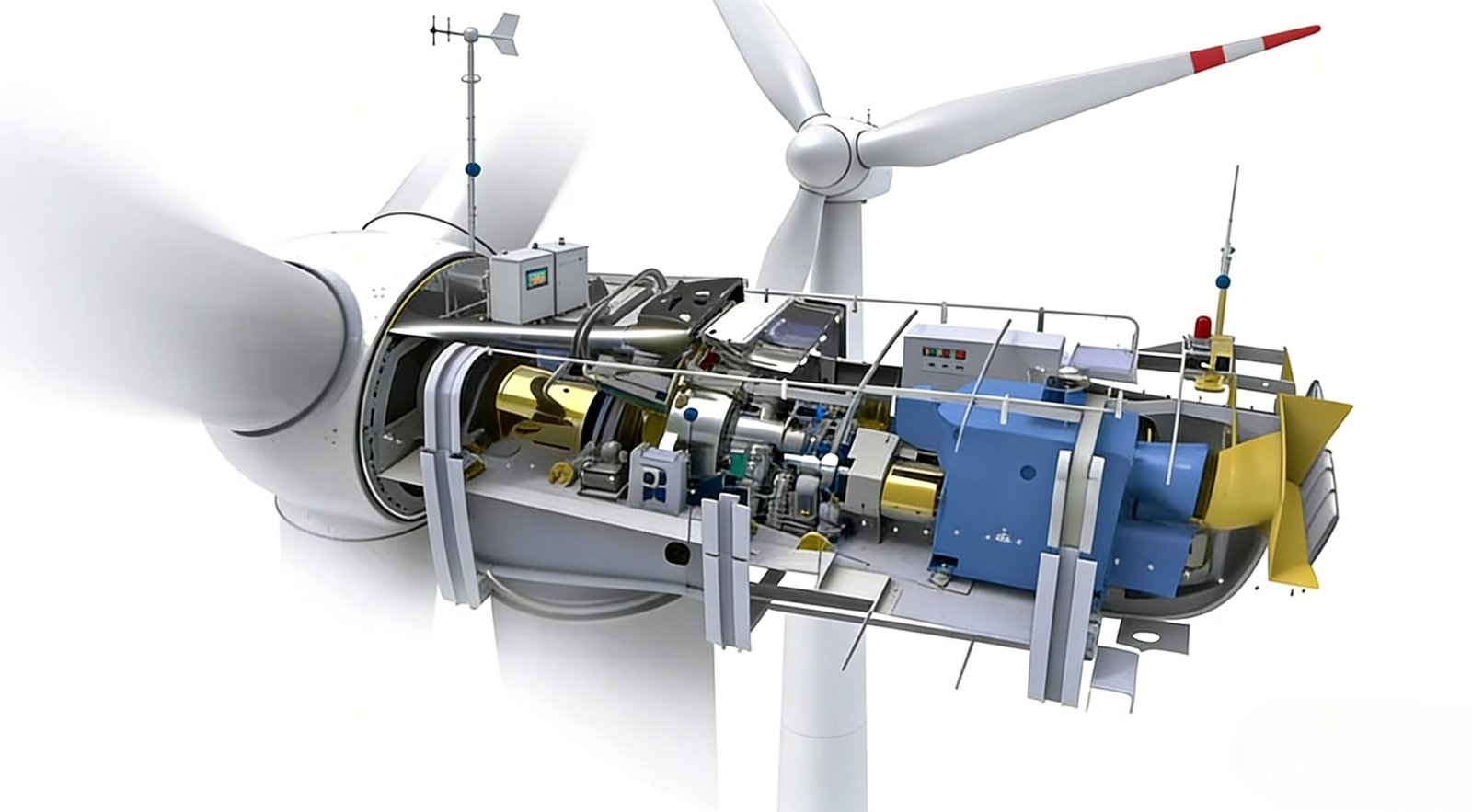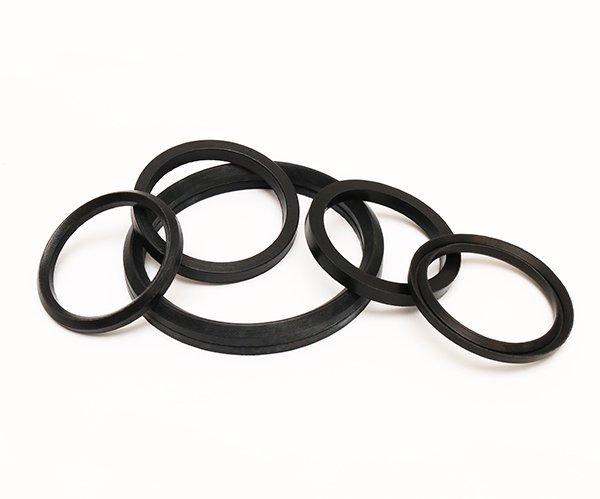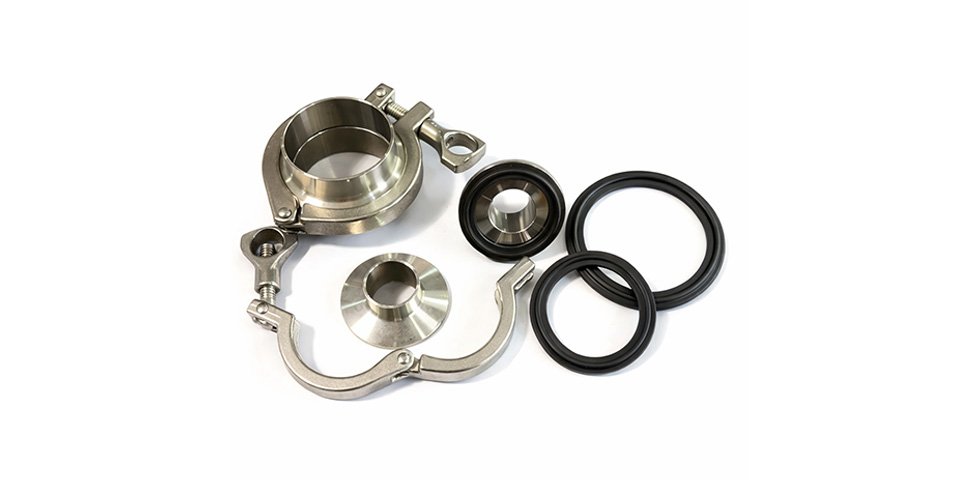


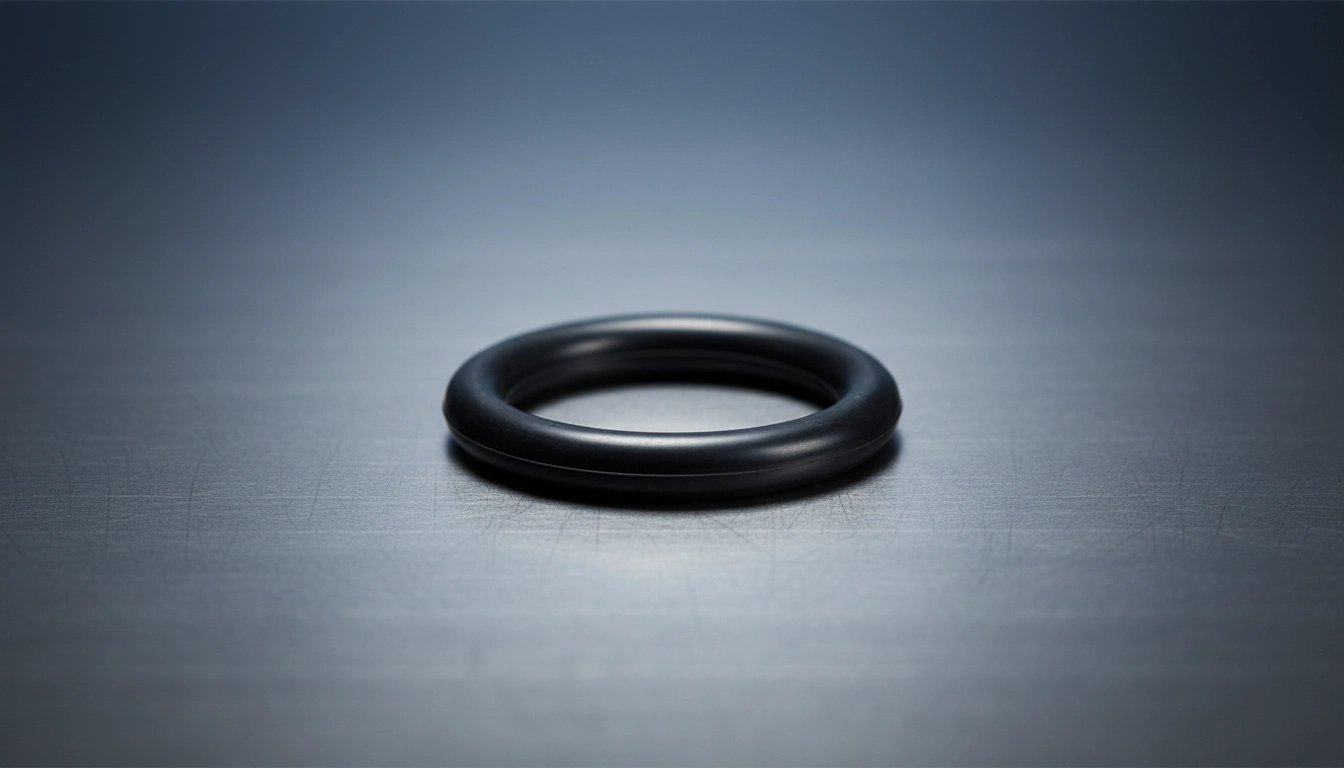
In the intricate machinery that powers our modern world, reliability is often dictated by the smallest components. From the colossal hydraulic actuators in mining excavators to the precision fuel systems in aerospace engineering, the integrity of a system rests on its ability to contain pressure and exclude contaminants. At the heart of this engineering challenge lies industrial sealing—the discipline that ensures controlled fluids, protected systems, and long-term operational stability. QZSEALS stands as a global leader and trusted expert in the design, manufacturing, and supply of industrial sealing solutions and critical sealing components.
This comprehensive guide serves as a definitive resource for engineers, procurement officers, and industrial partners seeking a deeper understanding of industrial sealing technology. We will explore the vast landscape of sealing systems, moving beyond simple definitions into detailed technical analysis. We will answer the fundamental question—what is a seal in industrial sealing applications? We will dissect the various types of industrial seals, analyze material properties from PTFE to advanced elastomers, and showcase how QZSEALS’ Flexible Sealing Solutions drive performance across automotive, energy, and heavy industries.
Chapter 1: The Fundamentals of Sealing Technology
To select the correct component, one must first understand the physics and terminology of the field. A seal is not merely a rubber ring; it is a dynamic engineering device.
Defining the Seal: Purpose and Function in Industrial Sealing
By strict definition, a seal is a device used in industrial sealing systems to join components or mechanisms together in order to prevent leakage (leakage control), contain pressure, and exclude foreign materials. The sealing function is inherently dual-directional: keeping the working fluid (such as hydraulic oil or process media) inside the system, while preventing environmental contaminants (such as dust, mud, moisture, and particles) from entering.
In critical industrial sealing applications—such as nuclear reactors, vacuum chambers, and semiconductor manufacturing equipment—the requirement is for a system to be hermetically sealed. This implies an airtight condition in which no gas or liquid can enter or escape over time, even under extreme pressure or vacuum conditions.
This level of performance contrasts with standard sealing solutions, such as door or enclosure weather seals, which are designed to reduce airflow and environmental exposure but are not intended for hermetic industrial sealing.
Static vs. Dynamic Sealing
The primary classification of seals depends on the relative motion between the mating surfaces:
- Static Seals: These are used where there is no movement between the sealing surfaces. The seal functions solely through the compression of the gasket or ring. Examples include the seal for gasket applications on pipe flanges.
- Dynamic Seals: These are used where there is motion between surfaces. This includes reciprocating motion (pistons in cylinders), rotary motion (shafts), or oscillating motion. This category encompasses hydraulic seals, mechanical seals, and oil seals.
Chapter 2: Hydraulic Sealing Solutions (Reciprocating)
Fluid power systems rely on hydraulic seals to convert fluid pressure into linear force. A failure here results in a loss of power and environmental contamination. QZSEALS offers a comprehensive suite of hydraulic solutions designed for extreme durability.
1. Piston Seals: The Power Generators
The piston seals are located on the piston head and seals against the cylinder bore. It must withstand the full system pressure.
- Heavy Duty Applications: The SPGW Piston Seal also know as PS08 piston seal, it is a flagship product. Its multi-component design (PTFE face, rubber energizer, and back-up rings) allows it to handle high pressure and shock loads with minimal extrusion.
- Compact Solutions: For systems with limited axial space, the SPG Piston Seal provides a robust sealing solution in a reduced footprint.
- Low Friction & High Speed: Stick-slip is the enemy of precision. The GSF Piston Seal Glyd Ring utilizes a PTFE slide ring to ensure smooth operation, essential for servo-hydraulics.
- Double Acting Capabilities: The KR Piston Seal is specifically engineered for double-acting cylinders, effectively sealing pressure from both directions.
- Pneumatic Specialization: Air behaves differently than oil. The Z8 Pneumatic Seal features a profile optimized for low lubrication conditions found in pneumatic cylinders.
2. Rod Seals: The Critical Barrier
The rod seal is often considered the most important seal in the cylinder. It prevents fluid from leaking out of the system. If this seal fails, the hydraulic fluid contaminates the environment.
- Primary Rod Seals: The GSJ Seal Step Seal is designed to return the microscopic oil film to the system on the retract stroke, preventing leakage buildup.
- U-Cup Technology: The IDI Rod Seal and the UNS Piston Rod Seal utilize a U-shaped profile. As pressure increases, the lips are forced tighter against the rod and groove, increasing sealing efficiency.
- Integrated Solutions: The S8 Rod Seal and the One Way Compact Seal S8 combine sealing and anti-extrusion functions into a single, easy-to-install unit.
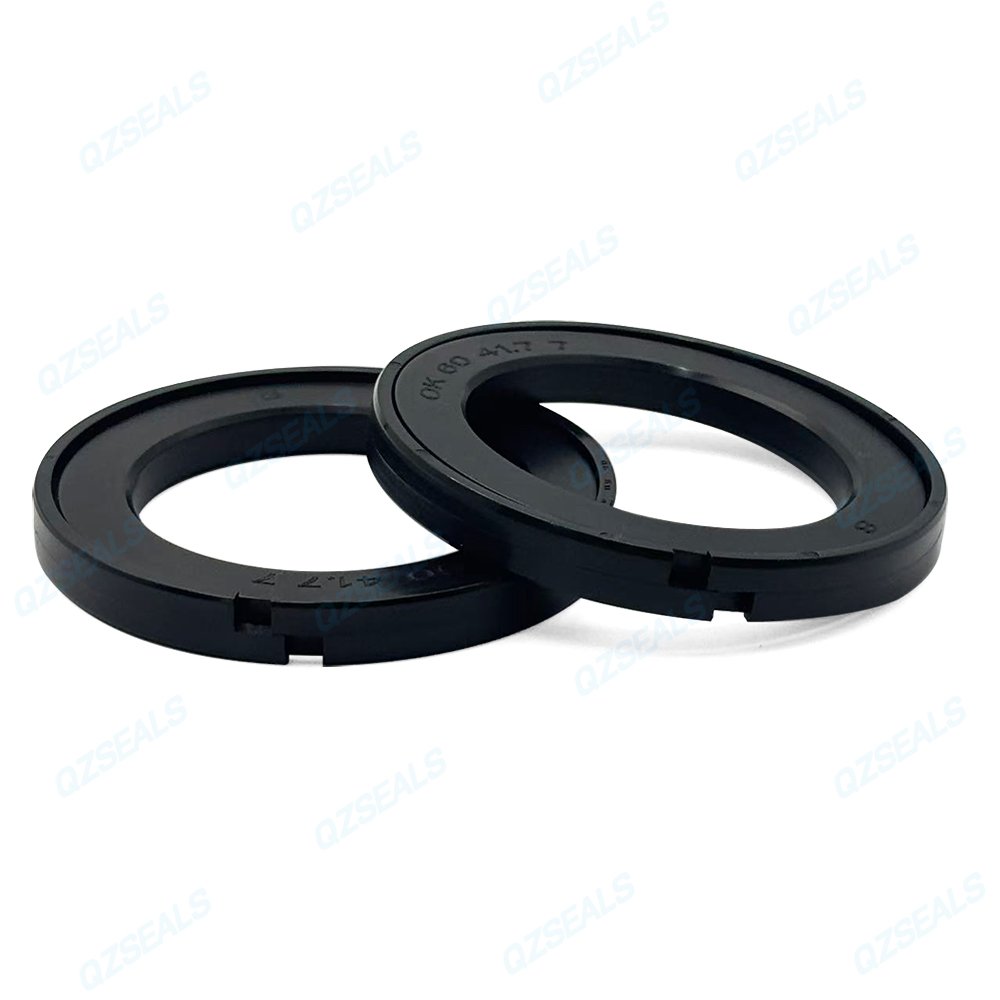
3. Wiper Seals and Scrapers
Hydraulic cylinders often operate in dirty environments like mines and construction sites. Wiper seals are the first line of defense.
- Double Lip Protection: The GPTA Wiper Seal features a scraping lip to remove dirt and a sealing lip to retain residual oil.
- Metal-Cased Wipers: For a secure press-fit in open grooves, the DKBI dust seals includes a metal housing for added rigidity.
- Standard Wipers: The A5 Wiper Seal and PDR wiper seal are versatile solutions for general industrial sealing applications.
4. Guiding and Cushioning
Metal-to-metal contact between the rod and cylinder head leads to catastrophic scoring. To prevent this, we use Wear Rings.
- Load Bearing: The Phenolic Resin with Fabric Wear Ring and Phenolic Resin with Fabric Wear Ring (Strip) offer immense compressive strength.
- Guidance: Phenolic Resin with Fabric Guide Tape ensures concentricity.
- Shock Absorption: To protect the cylinder at the end of its stroke, Buffer Seals (COP) are employed to dampen pressure spikes.
Chapter 3: Rotary and Shaft Sealing (Oil Seals)
Sealing a rotating shaft presents unique challenges, primarily heat generation due to friction. Oil seals, also known as rotary shaft seals, must retain grease or oil while the shaft spins at high RPMs.
Standard and Custom Oil Seals
The most ubiquitous rotary seal is the TC Oil Seal. The TC oil seal features a rubber sealing lip, a metal case for structural integrity, and a garter spring to maintain radial force.
However, not all housings are standard. QZSEALS specializes in customization. The Custom L2M Oil Seal is designed for heavy-duty applications, such as rolling mills and large gearboxes.
For steel and metallurgical equipment, Danieli Double Lip Seal is engineered to provide enhanced protection in high-speed rolling mill environment. Featuring a primary sealing lip for oil retention and a secondary lip for contamination exclusion, this double lip design ensures stable sealing performance under line speeds up to 80–160 m/s and rotational speeds reaching 13,000 rpm, making it a proven solution for Danieli-type rolling mills and similar heavy-duty installations.
In addition to custom designs, QZSEALS also provides dimensionally equivalent replacements for well-known SKF (CR) oil seals, including CR 21670 Oil Seal (55×90×8 mm) and CR 11366 Oil Seal (28.58×52.37×7.95 mm). These seals are engineered to match original housing and shaft dimensions, ensuring direct interchangeability while offering cost-effective alternatives for maintenance and overhaul projects.
High-Performance Rotary Solutions
In applications involving aggressive chemicals or extreme surface speeds, standard NBR or FKM rubber may fail. QZSEALS engineers solutions using advanced materials.
- PTFE Rotary Seals: The PTFE Oil Seal with Stainless Steel housing offers superior chemical resistance and low friction, making it ideal for the food and chemical industries.
- V-Rings: These are all-rubber axial face seals. They mount on the shaft and rotate with it. The VA Ring, VS Ring, and VL Ring act as centrifugal slingers, actively repelling dust, water, and dirt from the main seal area.
- Automotive Applications: Essential components like the transmission seal and crank seal ensure vehicle reliability.
Chapter 4: Static Sealing – O-Rings and Gaskets
While dynamic seals handle motion, static seals are responsible for sealing fixed joints, flanges, and assembly interfaces in industrial sealing systems. Among all static sealing solutions, the O-rings remain the most widely used sealing element in industrial sealing applications due to its simple design, ease of installation, and reliable performance.
The Versatile O-Ring
QZSEALS manufactures millions of O-Rings annually to support a wide range of industrial sealing requirements across hydraulics, pneumatics, chemical processing, energy, and general machinery.. For general purpose sealing, O-Ring Rubber Seals made from NBR, FKM, and EPDM are widely used. Depending on pressure and extrusion risk, higher hardness grades are available, including NBR 90A O-Ring and FKM 90A O-Ring, which provide improved resistance to deformation and extrusion in high-pressure static applications.
For applications requiring enhanced mechanical strength and resistance to heat, oil, and aggressive media, HNBR O-Rings are offered in multiple hardness options. HNBR O-Rings 70A are suitable for standard static sealing with better elasticity, while HNBR O-Rings 90A are designed for high-pressure and anti-extrusion requirements, commonly used in hydraulic systems, compressors, and energy-related equipment.
For chemical processing industries, we offer the FEP Encapsulated O-Ring. This hybrid seal features an elastomeric core (Silicone or FKM) for memory, covered by a seamless FEP/PFA jacket for chemical inertness.
Flexible Solutions: Cords
When a standard size is unavailable, or for large flange sealing, O-Ring Cords are the answer. These can be cut to length and vulcanized on-site.
- Rubber Cords: Available in various shore hardnesses.
- PTFE Cords: The PTFE Cord provides a non-aging, chemically inert solution for static sealing.
Gaskets and Flange Sealing
A seal for gasket applications seals flat mating surfaces. A gasket sealer or physical sheet fills the surface irregularities.
- High-Temperature Piping: Oil Resistant Asbestos Gaskets are used in legacy industrial piping systems.
- Automotive and Gearboxes: The Red Steel Paper Gasket is a cost-effective, reliable solution for oil pans and covers.
- Chemical Purity: For applications requiring absolute purity, the PTFE Gasket is the industry standard.
Chapter 5: Advanced Sealing for Extreme Environments
Standard elastomers have limits. Extreme cold (cryogenics), high heat, or high radiation require advanced engineering. QZSEALS leads the way in these high-performance sectors.
Spring Energized Seals
Elastomers lose elasticity at low temperatures or set permanently at high temperatures. A spring energized seal solves this by using a metal spring to provide the sealing force.
- Helical Springs: The helical spring offers high unit load, ideal for static or slow dynamic sealing in vacuum applications.
- Meander (V) Springs: The meander spring provides a wide deflection range, suitable for dynamic rod and piston applications.
- Material Quality: We use stainless steel garter springs for reliable radial loading and Elgiloy springs for superior corrosion resistance and fatigue performance in demanding environments.
- Applications: These are critical in dispensing machines, HPLC pumps, and aerospace valves.
Metal Sealing Rings
For temperatures exceeding 300°C or high radiation zones, polymers are unusable. metal sealing rings are the only option. The hollow metal O-ring utilizes the elasticity of the metal tube itself to create a seal, often coated with silver or nickel to improve micro-sealing.
Chapter 6: Material Science and Selection
A seal is only as good as the material it is made from. Choosing the wrong compound is the leading cause of seal replacement.
In industrial sealing applications, material selection and performance requirements are often governed by internationally recognized standards, such as ISO material testing standards.
PTFE and Composites
PTFE (Polytetrafluoroethylene) is valued for its ultra-low friction and chemical inertness. However, pure PTFE can “creep” under load. QZSEALS modifies PTFE with fillers like bronze, carbon, and glass.
For example, PTFE filled bronze guide tape combines the lubricity of PTFE with the compressive strength of bronze, making it the standard for hydraulic cylinder guidance.
Rubbers and Elastomers
QZSEALS offers Customized Rubber Products in a vast array of compounds. Whether you need a standard black seal (NBR) for oil resistance or a colored silicone part for aesthetics, we have the molding capability.
Compressor and Pump Components
Materials like PEEK are used where high fatigue strength is needed. The PEEK Valve Plate offers significantly longer life than metal plates in air compressors. For pumps, the gear pump seal ensures volumetric efficiency is maintained.
Chapter 7: Specialized Industrial Applications
QZSEALS serves a global market with tailored solutions for specific industries.
Food, Beverage, and Pharmaceuticals
Hygiene is non-negotiable. Seals must be non-toxic and cleanable (CIP/SIP). We manufacture fabric reinforced rubber diaphragms for dosing pumps. Additionally, PET Balls are used in check valves to control fluid direction without risk of contamination.
Compressors and Fluid Handling
We supply essential compressor spare parts to keep air systems running. In heavy fluid transfer, High Pressure Graphite Gland Packing and Aramid Fiber Gland Packing are used to seal stuffing boxes on pumps and valves handling abrasive slurries.
Bespoke Engineering
Sometimes, a catalog part does not fit. QZSEALS excels in bespoke engineering. We design Custom Inflatable Seals for hermetic doors, autoclaves, and aerospace canopies. Our Fabric Reinforced Rubber Membrane solutions are tailored to specific pressure response requirements.
Conclusion: The QZSEALS Advantage
In the world of industrial engineering, the seal is a small component with a massive impact. Understanding the difference between a mechanical seal, a duct sealing system, and a hydraulic seal ensures you select the right component for the job. Neglecting seal quality leads to expensive downtime, environmental hazards, and safety risks.
QZSEALS is more than just a manufacturer; we are a strategic partner. Driven by innovation and engineering excellence, we deliver sealing solutions built to withstand extreme pressures, temperatures, chemicals, and dynamic environments. From the automotive sector to nuclear energy, our products stand up to the test.
Explore our full range of rod seals, piston seals, wiper seals, and O-rings today. Contact QZSEALS for expert technical consultation, fast sampling, and tailored industrial sealing solutions that support your long-term success.