

In the boardroom, the humble seal is rarely a topic of discussion. It is often viewed merely as a “C-Class” consumable—a low-cost item on a Bill of Materials. However, this perspective is a costly mistake. How sealing strategy impacts total cost is frequently underestimated. While a hydraulic seal represents only a fraction of a machine’s initial price, it directly dictates the reliability, energy efficiency, and environmental footprint of the entire industrial asset.
QZSEALS partners with global industry leaders who understand a fundamental truth: the purchase price of a seal is the tip of the iceberg. The real costs lie below the surface—in energy consumption, maintenance downtime, and environmental liability. This holistic view is what we define as the Total Cost of Ownership (TCO) in modern industrial sealing technology.
This strategic guide explores the economic and environmental impact of sealing technology. We will demonstrate how investing in advanced types of seals—from low-friction piston rings to leak-proof rod systems—delivers a measurable Return on Investment (ROI).
Part 1: How Sealing Strategy Impacts Total Cost Through Fluid Leakage Prevention
Fluid leakage is not just messy; it is expensive. In hydraulic systems, even a single drop of oil per second can equate to more than 400 gallons lost per year. Ineffective fluid leakage prevention strategies drive up the total cost in three critical ways: replacement fluid expenses, cleanup labor, and potential environmental or regulatory fines. From a Total Cost of Ownership perspective, fluid leakage prevention is not a maintenance issue—it is a core economic and sustainability concern.
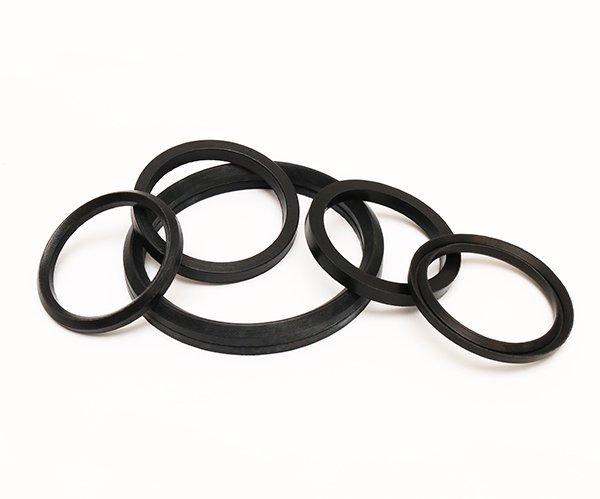
Industry standards such as ISO 3601 define dimensional and performance requirements for O-rings, helping manufacturers control leakage and lifecycle cost across hydraulic systems.
The Zero-Leak Strategy
To minimize fluid loss, the rod seal configuration is paramount.
- Primary Defense: The GSJ seal step seal is engineered to pump microscopic oil films back into the cylinder, preventing them from accumulating externally.
- Redundancy: Pairing a Step Seal with a secondary IDI rod seal creates a tandem system that offers near-zero leakage reliability.
- Wiping: Contaminants cause seals to fail, leading to leaks. A high-performance GPTA wiper seal prevents the ingress of grit that scores the rod and opens leak paths.
Part 2: Energy Efficiency and Friction Reduction
Friction is the enemy of efficiency. In hydraulic and pneumatic systems, high seal friction forces the pump to work harder, consuming more fuel or electricity. This “parasitic load” adds up significantly over the life of a machine.
The Solution: Low-Friction Materials
QZSEALS promotes the use of advanced low-friction materials as a core sealing strategy.
- Piston Efficiency: The GSF piston seal glyd ring offers significantly lower breakout friction than standard rubber hydraulic seals. In servo-hydraulics and robotics, this translates to smoother control and less energy waste.
- Rotary Efficiency: On rotating shafts, friction generates heat, which degrades oil. PTFE oil seals with stainless steel run cooler and with less drag than traditional rubber lips, improving motor efficiency.
- Balanced Low Friction & Stable Sealing:
For applications requiring both low friction and reliable sealing under varying pressures, the PS08 piston seal provides an optimized solution. Its PTFE sealing ring, elastically energized by an O-ring, ensures smooth piston movement while maintaining consistent sealing performance. Compared with conventional rubber piston seals, PS08 reduces friction and stick-slip behavior, making it suitable for mobile hydraulics, machine tools, and injection molding equipment where efficiency and durability must be balanced. - Pneumatics: Air systems are highly sensitive to friction. The Z8 Pneumatic Seal uses a special lip profile to maintain a seal with minimal contact pressure, preserving air power.
Part 3: Durability as a Cost Driver
The most expensive seal is the one that shuts down your production line. Unplanned downtime costs thousands of dollars per hour in lost productivity. Extending the Mean Time Between Failures (MTBF) is the fastest way to improve ROI.
Engineering for Longevity
Upgrading from standard to premium materials extends service intervals.
- Heavy Load: In mining, standard seals extrude and fail quickly. The SPGW piston seal uses robust anti-extrusion rings to survive pressure spikes, lasting 3x longer than standard O-rings in the same application.
- Compressor Life: Metal valve plates fatigue and snap. The PEEK valve plate offers superior impact resistance, keeping compressors running for thousands of extra hours.
- Extreme Environments: In chemical dispensing, rubber seals fail weekly. Switching to spring energized seals with stainless steel 301 helicoil springs can turn a weekly maintenance task into a yearly one.
Part 4: Supply Chain and Inventory Economics
Holding inventory costs money. Managing hundreds of SKUs is a logistical burden. QZSEALS helps partners rationalize their inventory.
Standardization and Flexibility
Smart product choices reduce the number of parts you need to stock.
- Universal Chemical Seals: Instead of stocking multiple rubber compounds for different media, FEP encapsulated O-rings provide broad chemical compatibility, simplifying inventory and supporting consistent sealing solutions.
- On-Demand Sizing: Rather than stocking huge O-rings that may expire, keep rolls of O-ring cord or PTFE Cord. You can make any size seal instantly for emergency repairs.
- Kitting: We provide “cylinder kits” containing matched sets (e.g., SPG piston seal + UNS piston rod seal + wear rings). This reduces picking errors and speeds up repair turnaround.
Part 5: Environmental Sustainability
Modern industry must meet strict environmental standards (ESG). Sealing plays a direct role in compliance.
Containing Hazardous Fluids
In industries like Oil & Gas, fugitive emissions are a major liability.
- Flange Integrity: Using high-quality oil resistant asbestos gaskets (or eco-friendly alternatives) ensures pipes do not leak hydrocarbons into the soil or atmosphere.
- Pump Safety: Leaking pumps are a primary source of pollution. high pressure graphite gland packing ensures that aggressive fluids stay inside the volute.
- Clean Tech: In clean energy sectors like Hydrogen or Nuclear, hollow metal O-rings provide the hermetic sealing required to handle dangerous gases safely.
Part 6: The QZSEALS Value Proposition
Price is what you pay; value is what you get. QZSEALS offers a partnership focused on maximizing value.
We do not just sell a seal replacement; we sell an engineered solution. Whether it is a custom L2M oil seal designed to save a vintage machine or a mass production run of compact seal S8 for a new OEM line, our focus is on quality.
Why Quality Matters
A cheap seal that fails in 3 months is infinitely more expensive than a QZSEALS component that lasts 3 years.
- Reduced Labor: Less time fixing leaks means more time producing.
- Equipment Protection: Proper wear rings save cylinders from expensive re-chroming costs.
- Brand Reputation: For OEMs, your machine’s reliability depends on our seals.
Conclusion
The economics of sealing are clear. Investing in high-performance, application-specific solutions reduces Total Cost of Ownership, boosts energy efficiency, and ensures environmental compliance.
Don’t let “cheap” components drain your profitability. Partner with QZSEALS to implement a sealing strategy that pays dividends. Explore our rod seals, piston seals, and O-rings to start optimizing your operations today.