

In the world of industrial engineering, few components are as deceptively simple yet critically important as the O-ring seal. At QZSEALS, we have spent decades manufacturing, testing, and refining these circular gaskets. We know that a seal failing is not just an inconvenience; in sectors like aerospace or oil and gas, it can be catastrophic.
This guide is built on real manufacturing data and field feedback. Rather than offering generic definitions, we focus on material selection, seal failure analysis, and proven sealing solutions used in demanding applications. Whether you are an engineer developing a new hydraulic assembly or a maintenance manager diagnosing recurring leakage, this article is designed to support informed, engineering-level decisions.
The Anatomy of a Reliable Seal
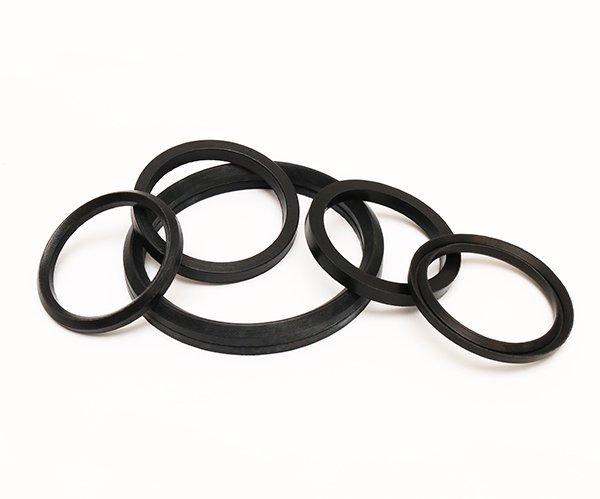
An O-ring seal functions on a principle of deformation. When placed in a gland (groove) and compressed between two surfaces, the material attempts to return to its original shape. This “memory” creates a barrier that blocks the passage of liquids or gases.
However, achieving a perfect seal requires more than just rubber in a hole. It requires a precise balance of three factors:
- Groove Dimensions: The space must allow for thermal expansion and volume swell.
- Compression Ratio: Too little results in leakage; too much leads to material stress and fracture.
- Material Compatibility: The chemical interaction between the seal and the media.
For general applications, standard solutions often work. However, for specialized machinery, we often recommend looking into our specific O-Rings category to find the exact compound required.
Material Science: Selecting the Right Compound
At QZSEALS, we process advanced knowledge in rubber, silicone, plastic, and metal materials. Choosing the wrong material is the number one cause of seal failure. Here is a breakdown based on our manufacturing data.
1. FFKM (Perfluoroelastomer): The Chemical King
When customers approach us with applications involving aggressive solvents, steam, or temperatures exceeding 300°C, standard elastomers fail. In these scenarios, we deploy FFKM. It possesses a chemical structure similar to PTFE but retains the elasticity of rubber.
These chemical resistance seals are often specified where even FKM cannot survive. You can view our high-performance options here: FFKM O-rings.
2. FKM (Viton™) and HNBR
For the automotive and oil industries, resistance to fuels and lubricants is non-negotiable. Standard NBR is good, but Hydrogenated Nitrile Butadiene Rubber (HNBR) offers superior heat and oxidation resistance.
- FKM: Excellent for high heat and chemicals. See our specifications: AS568 FKM 90A O-ring.
- HNBR: Ideal for high-pressure oil applications. Check our AS568 HNBR O-rings (90A).
3. Silicone and Fluorosilicone
In food, beverage, and medical sectors, purity and temperature flexibility are key. Silicone offers excellent low-temperature flexibility but poor abrasion resistance. For applications requiring fuel resistance and low-temperature performance (common in aerospace), Fluorosilicone (FVMQ) is the superior choice.
Learn more about our compliant materials:
4. EPDM (Ethylene Propylene Diene Monomer)
EPDM is the go-to material for steam and water sealing. It is vital to note that EPDM must never be used with petroleum-based oils, as it will swell and disintegrate rapidly. See our EPDM O-rings for water handling specifications.
Advanced Sealing Designs: Beyond the Standard O-Ring
Sometimes, a standard rubber torus is not enough. Based on our project history with global heavy industry sectors, we often implement modified designs to solve specific issues.
Encapsulated O-Rings
In scenarios where you need the chemical inertness of PTFE (Teflon) but the elasticity of Viton or Silicone, we use an encapsulated design. This features a rubber core covered by a seamless FEP or PFA jacket. This solves the problem of “cold flow” often seen in solid PTFE seals. Explore our encapsulated O-ring solutions.
Spring-Energized Seals
For dynamic applications involving slow movement or extremely low temperatures where rubber loses flexibility, a metal spring is used to provide the sealing force. The jacket is typically usually made of PTFE. These are critical in dispensing machines and cryogenics.
View our technical guide on spring energized seals.
Seal Failure Analysis: Diagnosing Common O-Ring Failures
As a manufacturer, QZSEALS does more than supply parts—we perform systematic seal failure analysis to help customers prevent repeat issues. Below are the most common failure modes observed in our laboratory.
1. Compression Set
The Symptom: The O-ring flattens out and does not return to its circular shape causing a leak.
The Cause: The seal was exposed to excessive heat or the material was not properly cured. It effectively “baked” into the groove shape.
The Solution: Switch to a material with a higher operating temperature, such as upgrading from NBR to FEPM/AFLAS O-rings for steam and base resistance.
2. Extrusion and Nibbling
The Symptom: The edges of the O-ring look chewed or chipped.
The Cause: High pressure forces the material into the gap between mating metal parts.
The Solution: Increase the hardness (Durometer) of the seal, for example, moving from 70A to 90A. Alternatively, use a Backup Ring to close the clearance gap. You can compare hardness options here: HNBR 70A vs. NBR 90A.
3. Abrasion
The Symptom: One side of the O-ring is flattened or scratched.
The Cause: This occurs in dynamic applications (pistons or rods) where lubrication is poor.
The Solution: Improve lubrication or switch to materials with internal lubricants (like PTFE-filled compounds). For heavy-duty piston applications, we often recommend switching from a simple O-ring to a dedicated piston seal.
Sizing and Custom Fabrication
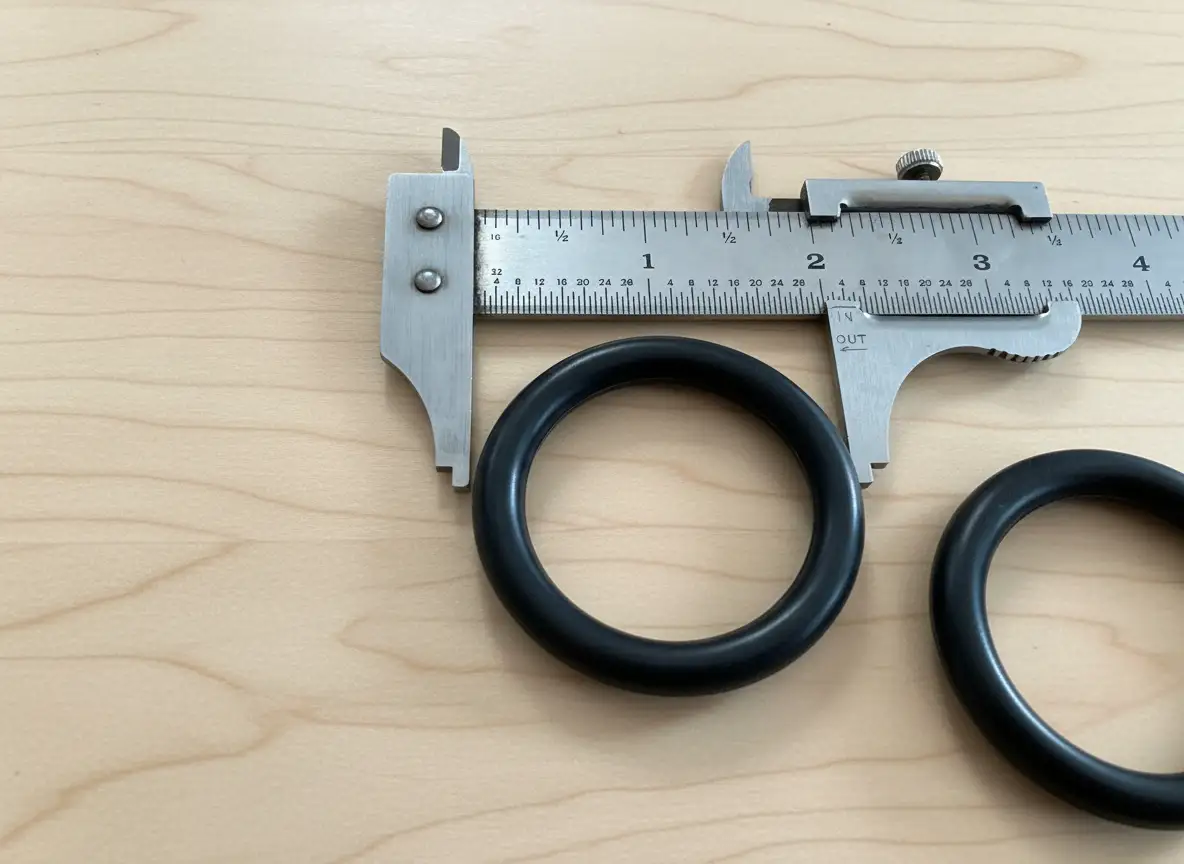
Standard sizes (like AS568 or ISO 3601) cover 80% of market needs. However, legacy machinery and specialized equipment often require custom molded seals.
Splicing and Vulcanizing
For large-diameter static seals where molding is cost-prohibitive, we use O-ring cord. We cut the cord to the exact length required and vulcanize the joint. This is a rapid solution for flange sealing and lid seals.
Check our raw materials here: O-ring cord category.
Custom Molded Solutions
QZSEALS specializes in full customization. Whether it is a custom L2M oil seal or a unique geometry for an aerospace valve, our lean and agile team can design the tooling and produce the part. We ensure that every product meets international standards before delivery.
Complementary Sealing Technologies
While the O-ring is versatile, it is not always the standalone answer. Complex systems often require a combination of sealing elements.
- Hydraulic Systems: O-rings are often used as static seals, while rod seals and wiper seals handle the dynamic cylinder movement.
- Rotary Shafts: An O-ring cannot handle high-speed rotation. For this, oil seals (like the TC profile) are required.
- Flange Sealing: For uneven surfaces, gaskets provide better conformity than O-rings. We offer everything from non-asbestos gaskets to PTFE gaskets.
Quality Assurance in Manufacturing
Our approach at QZSEALS is built on a “Lean and Agile” philosophy. Manufacturing a reliable O-ring involves strict process control:
- Raw Material Mixing: Precise weighing of polymers and curing agents.
- Molding: Using compression or injection molding at controlled temperatures.
- Post-Curing: Baking the seals to maximize physical properties.
- Inspection: Checking for flash, voids, and dimensional accuracy.
We apply this rigor to everything from standard rubber rings to specialized metal O-rings used in extreme vacuum environments.
Conclusion: The Trusted Partner for Sealing Technology
The O-ring seal is a marvel of engineering efficiency. Yet, its performance is entirely dependent on correct material selection and precise manufacturing. Whether you require a PTFE O-ring for chemical resistance or a robust rubber ring for general use, the expertise of your industrial O-ring manufacturer and the availability of custom sealing solutions play a decisive role in long-term reliability.
At QZSEALS, our mission is to deliver reliable, cost-effective, and innovative sealing solutions. We help clients worldwide solve critical sealing challenges in automotive, mining, and food sectors. By prioritizing quality control and offering technical support in design, we ensure your systems remain leak-free and efficient.