

In the hierarchy of sealing technology, there is a distinct “line in the sand.” On one side, you have elastomers like NBR and FFKM, which handle the vast majority of industrial applications. On the other side, you have extreme environment sealing solutions beyond elastomers—environments so hostile, be it -270°C cryogenics or extreme radiation, that polymer chains simply disintegrate. This is where the metal C ring becomes the only viable option.
At QZSEALS, we engineer these nickel-based superalloy seals for the energy industry and other sectors that have pushed standard materials to their breaking point. Unlike a solid metal washer, a metal C-ring is designed with a specific elasticity, allowing it to function as a high-performance spring. This guide explores why and how we deploy this specialized component.
The Physics of the “C” Profile
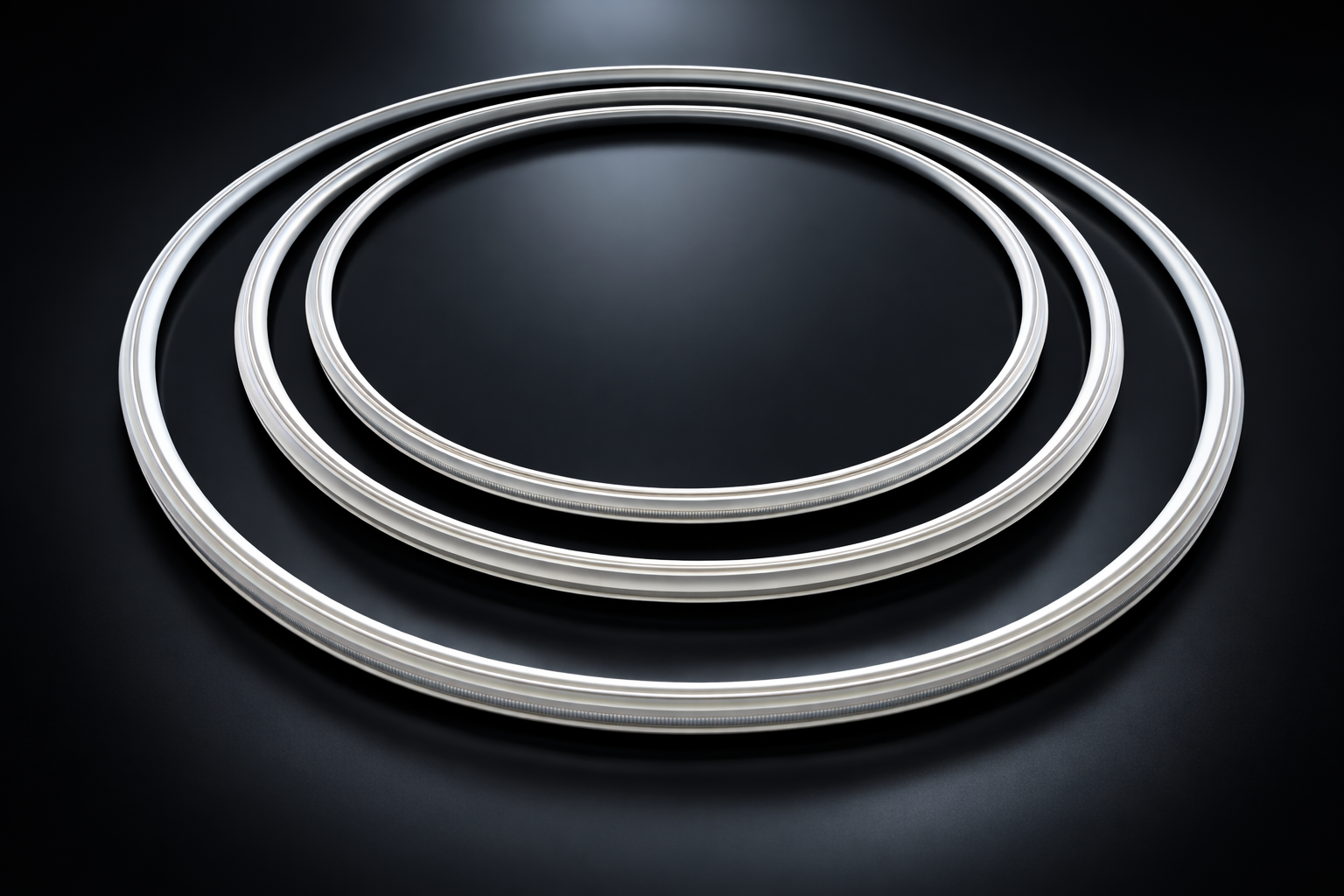
The defining characteristic of a metal C ring is its open cross-section. Imagine a metal tube cut in half. When installed in a groove and compressed, the open “C” shape compresses, generating a robust spring-back force of metal C-ring vs O-ring designs, ensuring constant contact against the mating surfaces.
Why choose a “C” profile over a standard metal O-ring? It comes down to metal C-ring vs hollow metal O-ring selection criteria:
- Low sealing load gaskets for delicate hardware: C-rings require significantly less compressive force to seal than solid or hollow metal O-rings. This makes them ideal for lighter flanges or delicate hardware.
- High Springback: The open geometry allows for greater elastic recovery in thermal cycling applications, which is critical when the flange expands and contracts.
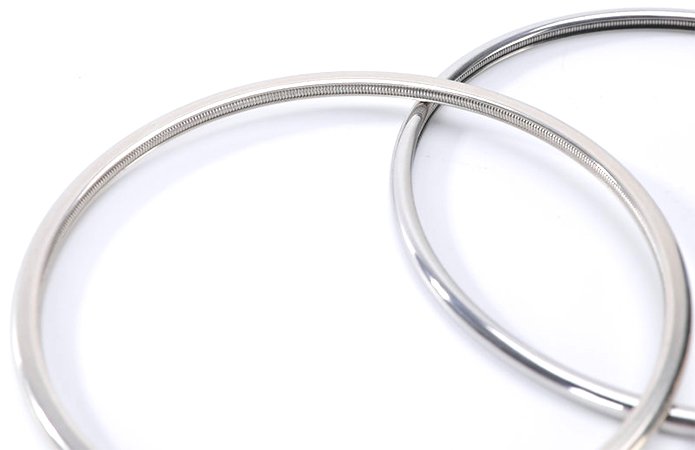
The “Self-Energizing” Effect
One of the most brilliant engineering features of this component is the self-energizing static seal mechanism for high pressure. As a rule, the metal C-ring orientation for internal pressure must be installed with the open side of the “C” facing the pressure source.
As the internal pressure of the system rises, it enters the cavity of the C-ring and pushes the walls outward against the sealing surfaces. This means the higher the pressure, the tighter the seal becomes. This self-energizing capability is why they are a staple in Inconel 718 C-rings for aerospace valves and stainless steel 316 C-rings for nuclear cooling lines.
You can view our specific specifications here: metal C-rings.
Material Selection: Beyond Steel
Manufacturing a metal C ring is not just about shaping steel. It involves selecting superalloys that retain strength at extreme temperatures. At QZSEALS, we typically utilize:
- Inconel 718 / X-750: These are the industry standard materials, offering exceptional high-temperature oxidation resistance of Inconel X-750 and fatigue performance in aerospace and vacuum systems.
- Stainless Steel (304/316): Used for cryogenic sealing solutions for liquid nitrogen, offering reliable performance in accordance with ASTM standards for metal sealing materials, providing a lower material cost for less aggressive environments.
The Importance of Plating
Metal-to-metal sealing is difficult because metal does not “flow” into surface imperfections. To solve this, we provide silver and gold plating for metal-to-metal sealing. Under compression, this soft plating flows into microscopic scratches, providing gas-tight sealing for ultra-high vacuum systems. We also offer PTFE coated metal C-rings for chemical resistance in specialized processing environments.
Comparison: Metal C-Ring vs. Other Metal Seals
Choosing the right seal is critical for radiation resistant seals for nuclear applications:
- vs. Metal O-Rings: metal O-rings (hollow or gas-filled) are more robust and handle higher pressures but require much higher clamping force. If your bolts cannot handle the load, switch to a C-Ring.
- vs. Hollow Metal O-Rings: hollow metal O-rings are excellent, but the C-ring offers better “springback” to compensate for flange separation during thermal shock.
Installation Criticalities
The number one cause of failure is ignoring surface finish requirements Ra 0.4 for metal seals. Unlike a rubber ring, a metal seal requires a polished finish. Furthermore, preventing leak paths in metal C-ring installation requires meticulous handling; a single scratch across the seal face will create a path that cannot be fixed by tightening the bolts.
Conclusion
The metal C ring is an elite component for elite applications. Whether you are sealing liquid nitrogen or high-pressure steam, understanding the relationship between the “C” profile orientation and the system pressure is key to success.
At QZSEALS, we provide the technical support needed to transition from failing elastomer seals to permanent metal sealing solutions. For specialized designs, including varying wall thicknesses and plating options, explore our Metal Sealing Rings Category.
Would you like me to recommend the specific plating thickness required to achieve gas-tight sealing for your ultra-high vacuum system?