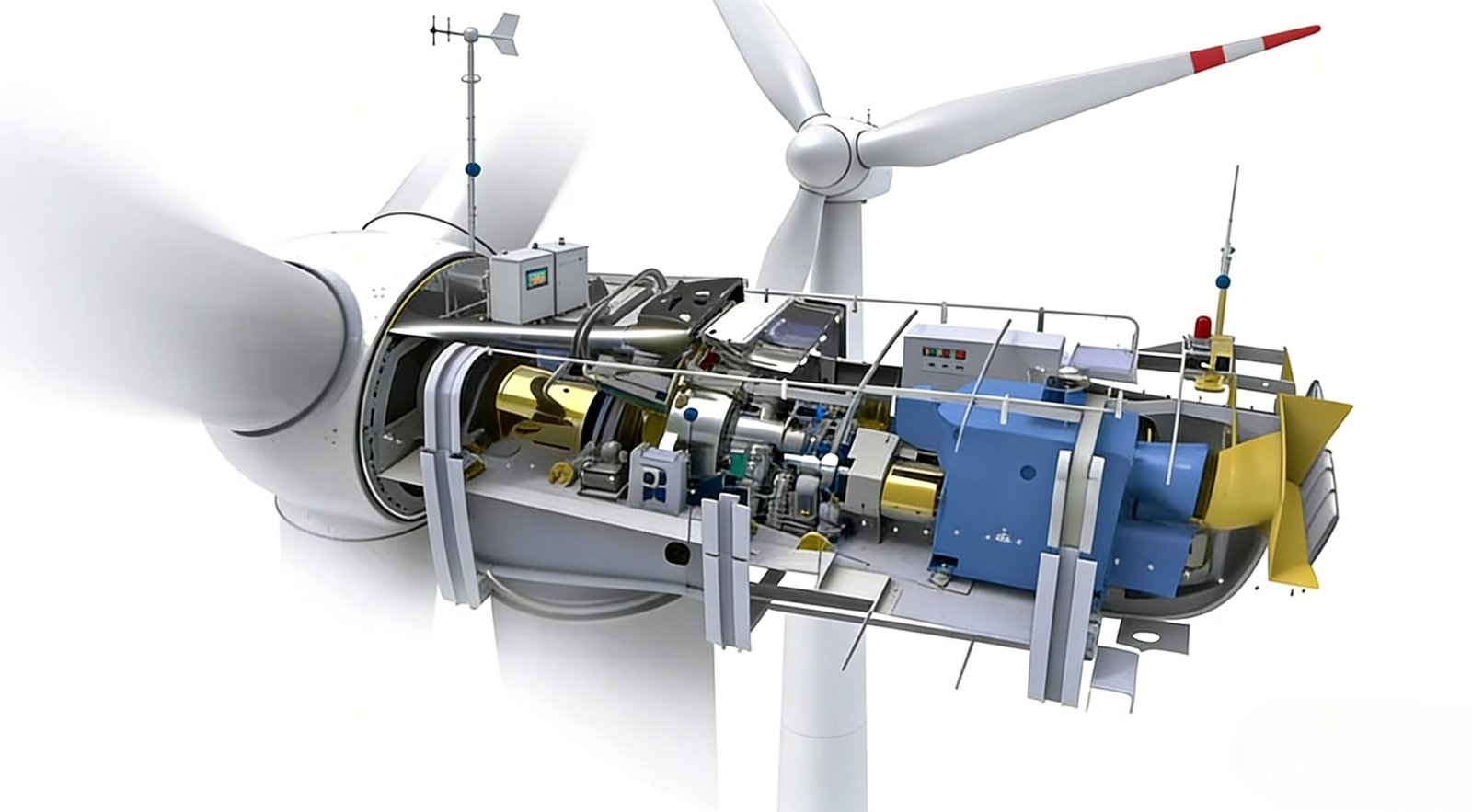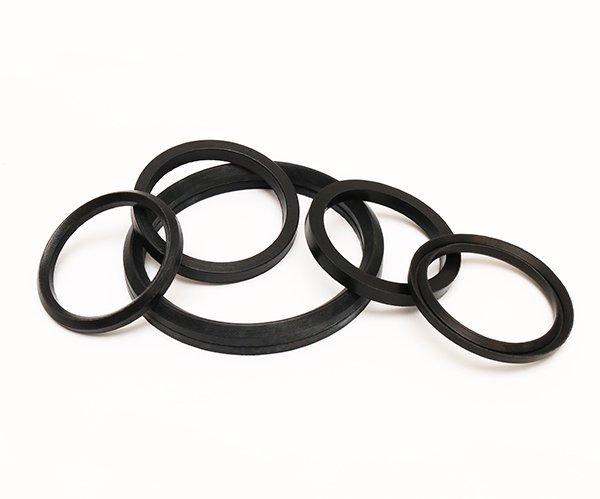



In the vast machinery of modern industry, the humble O-ring is often invisible, yet it is arguably one of the most critical components in engineering history. At QZSEALS, we manufacture millions of these torus-shaped seals annually. When clients ask us, “What are O-rings used for?”, the answer goes far beyond “stopping leaks.”
They are used to maintain pressure, separate diverse media (like oil and water), and ensure the safety of systems ranging from deep-sea drilling rigs to the coffee machine in your kitchen. In fact, these O-ring applications span a wide range of industries and equipment. Drawing from our production data and field experience, we have categorized the primary uses of O-rings to help you understand their pivotal role in your equipment.
The Fundamental Function: Creating the Barrier
Before diving into specific industries, it is essential to understand the engineering utility. An O-ring is used to block a path that fluid or gas would otherwise escape through. When placed in a groove (gland) and compressed between two surfaces, the material’s elastic memory pushes back, creating a seal.
O-ring dimensions and tolerances are critical to this performance. According to ISO 3601 standards, proper sizing ensures effective sealing in both static and dynamic applications.
From a design standpoint, O-ring applications are generally divided into static vs dynamic sealing environments, depending on whether relative motion exists between the sealed components:
- Static Applications: The parts do not move (e.g., a pipe flange or a container lid).
- Dynamic Applications: The parts move relative to one another (e.g., a hydraulic piston moving inside a cylinder).
1. Hydraulic and Pneumatic Power Systems
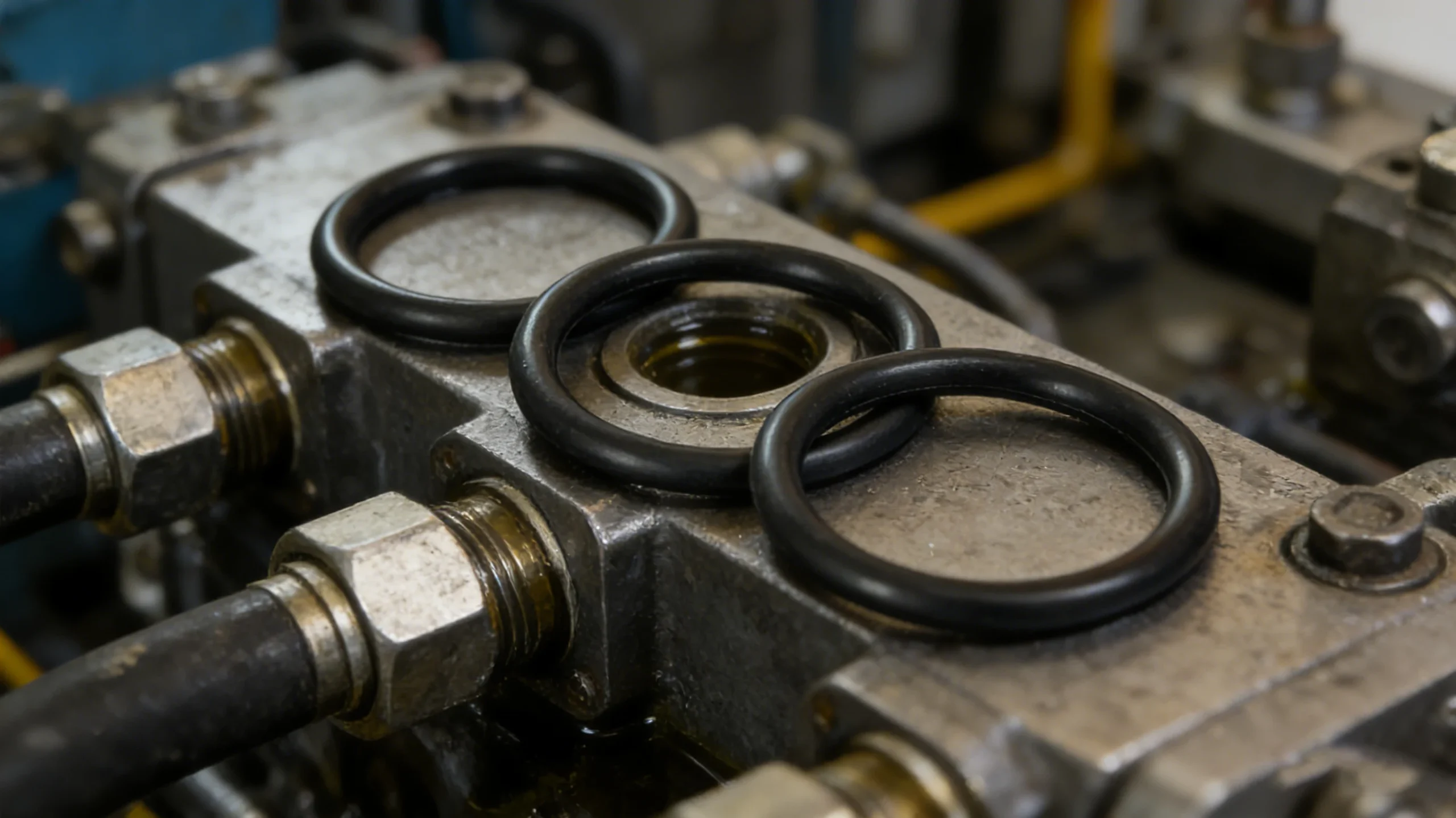
One of the most demanding areas for O-ring applications is fluid power equipment. In these systems, O-rings form a critical part of hydraulic system seals, where failure can result in pressure loss, reduced efficiency, or complete equipment shutdown.
In hydraulic cylinders, O-rings are often used as the primary static seal for the cylinder head, or as an energizer for more complex seals. For example, in our GSF piston seal (glyd ring), an O-ring is used to push a PTFE ring against the cylinder wall. Without the O-ring’s elasticity, the system would lose pressure, and the heavy machinery would fail to lift.
Similarly, in pneumatic (air) systems, minimizing friction is key. Here, specialized pneumatic seals utilize O-ring principles to ensure air compressors operate efficiently without leakage.
2. The Automotive Industry: Precision and Resistance
Modern vehicles rely on hundreds of O-rings. In this sector, they are used to handle extreme temperature fluctuations and aggressive chemical exposure.
- Fuel Systems: O-rings used here must resist gasoline and diesel. We specifically engineer HNBR O-rings for these applications because standard rubber would degrade and cause dangerous fuel leaks.
- Air Conditioning: The refrigerant in your AC unit is highly pervasive. We use HNBR and specialized EPDM grades to prevent refrigerant gas from escaping into the atmosphere.
- Engine Blocks: With temperatures rising, FKM (Viton) O-rings are used to seal oil passages where heat would destroy lesser materials.
3. Aerospace and Defense: Failure is Not an Option
In aerospace, O-rings are used for life-critical systems as part of aerospace sealing solutions. The challenge here is the extreme temperature range—a jet might take off at +40°C on the runway and experience -50°C at cruising altitude minutes later. These seals must also withstand pressure differentials and chemically aggressive fuels to ensure reliable operation under all conditions.
For these applications, we utilize Fluorosilicone (FVMQ) O-rings. They are used in fuel control systems because they resist jet fuel while remaining flexible in freezing upper-atmosphere conditions. Furthermore, in rocket propulsion, where chemical resistance is paramount, FFKM O-rings are used to withstand aggressive oxidizers that would dissolve standard rubber instantly.
4. Food, Beverage, and Pharmaceutical Processing
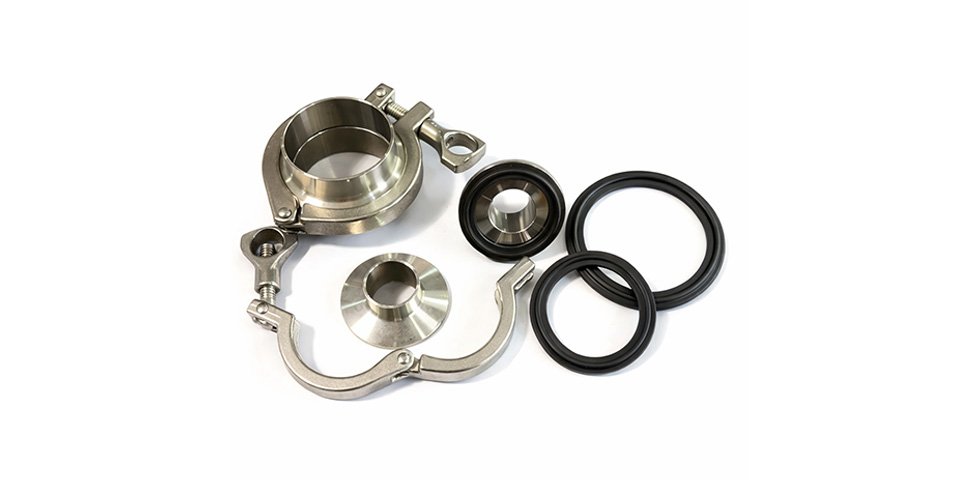
What are O-rings used for in a bottling plant? Hygiene and purity. In these sectors, the seal must not contaminate the product. That’s why food grade O-rings are essential.
We supply FDA silicone O-rings and EPDM seals that are used in pipe unions and dispensing valves. These seals are designed to withstand “Clean-in-Place” (CIP) procedures, where high-temperature steam and caustic soda are flushed through the system to kill bacteria. A standard industrial seal would break down, potentially contaminating the food.
5. Heavy Industry and Oil & Gas
In drilling and mining, O-rings are used to keep contaminants out as much as keeping fluids in. A mud pump on an oil rig operates in an abrasive slurry, making O-rings critical for sealing in extreme environments.
Here, O-rings are often used in conjunction with wiper seals and wear rings. The O-ring provides the static seal, while the wiper cleans the mud off the retracting rod to protect the system. For extreme high-pressure valves deep underground, we recommend FEPM/AFLAS O-rings for their resistance to sour gas and steam.
6. Custom and Maintenance Solutions
Sometimes, O-rings are used for rapid repair of unique machinery. When a large flange or non-standard lid needs sealing, engineers cannot wait weeks for a molded part, especially when large size seals are required.
In these cases, O-Ring Cord is used. Maintenance teams cut the cord to length and vulcanize the ends to create a custom-sized ring on the spot. This is a vital use case for older factories with legacy equipment.
Summary: A Universal Engineering Component
So, what are O-rings used for? They are the unsung heroes used to bridge the gap between mechanical design and physical reality. They allow metal parts to expand, contract, and move without losing integrity.
Whether you are designing a high-speed turbine requiring metal O-rings or a simple water pump requiring EPDM O-rings, the application dictates the material. At QZSEALS, our expertise lies in matching the specific use case to the perfect polymer, ensuring your systems remain safe, efficient, and dry.